







Pelton Turbine
3 min read
Lester Allan Pelton
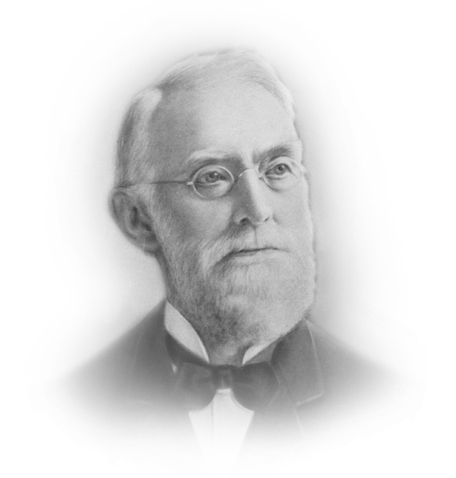
Lester Allan Pelton
5. 9. 1829, Vermilion, Ohio, U.S.
14. 3. 1908, Oakland, California, U.S.
Lester Pelton was an American inventor specialising in water turbines. While working in California, he experimented with different designs of water wheels and buckets. He observed that a water jet striking the edge of a bucket rather than its centre could increase the speed of the wheel. This observation contributed to the development of his characteristic split-bucket design.
Pelton found that the kinetic energy of a water jet could be efficiently captured by spoon-shaped buckets when the jet was directed tangentially to the path of the runner. He patented his turbine in 1880.
Pelton Turbine
Online 3D Model › Hydropower Plant
Free Downloads › Online 3D › Hydropower Plant
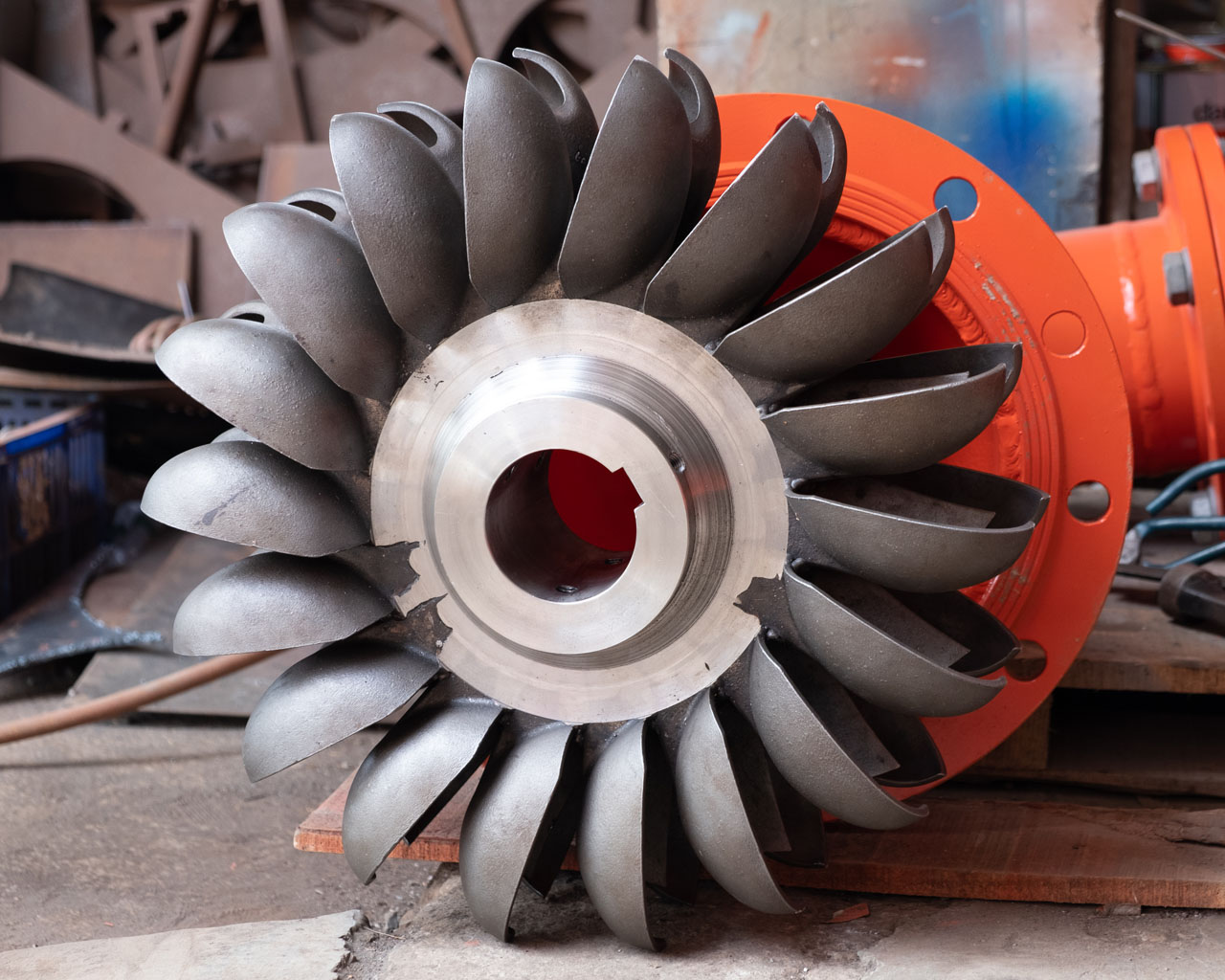
The Pelton turbine is an isobaric impulse turbine with water flowing tangentially to the path of the runner. The term isobaric means that the water passes through the runner buckets at approximately atmospheric pressure.
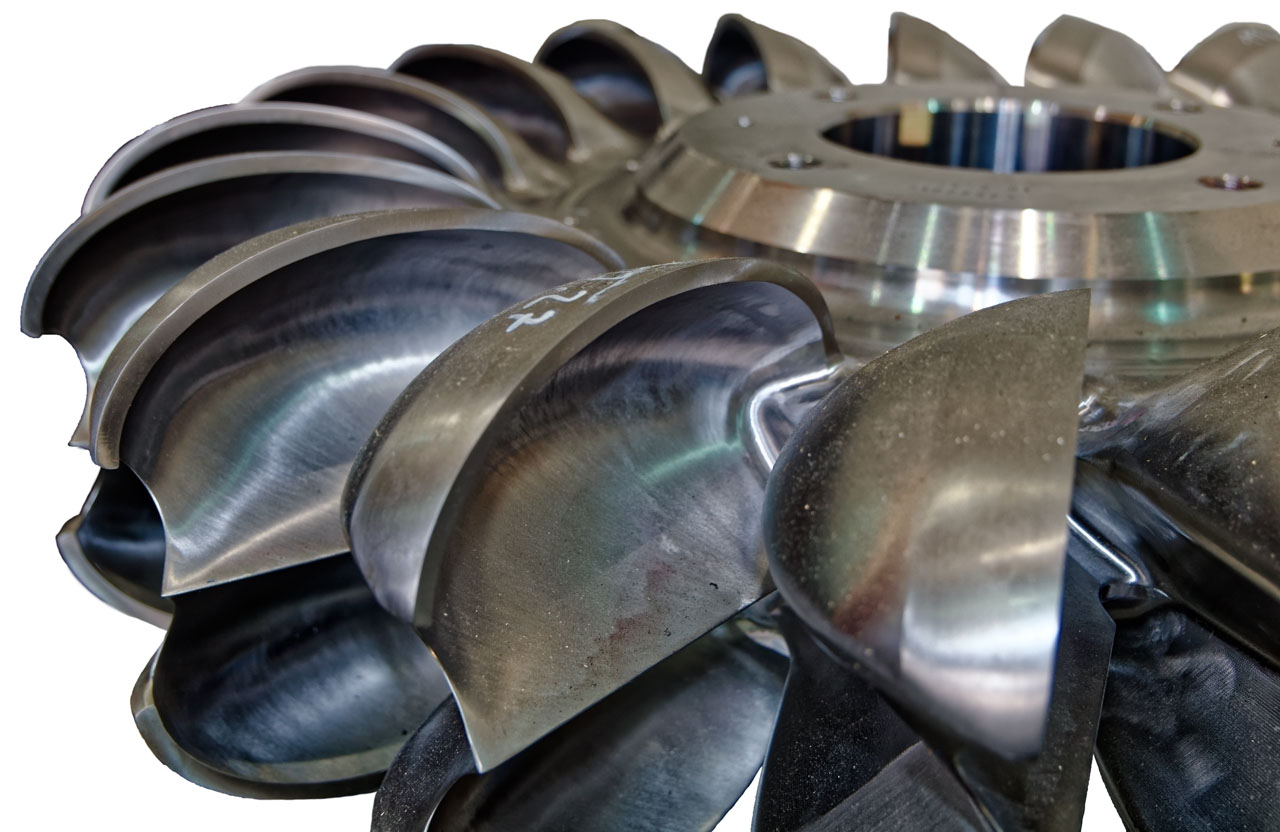
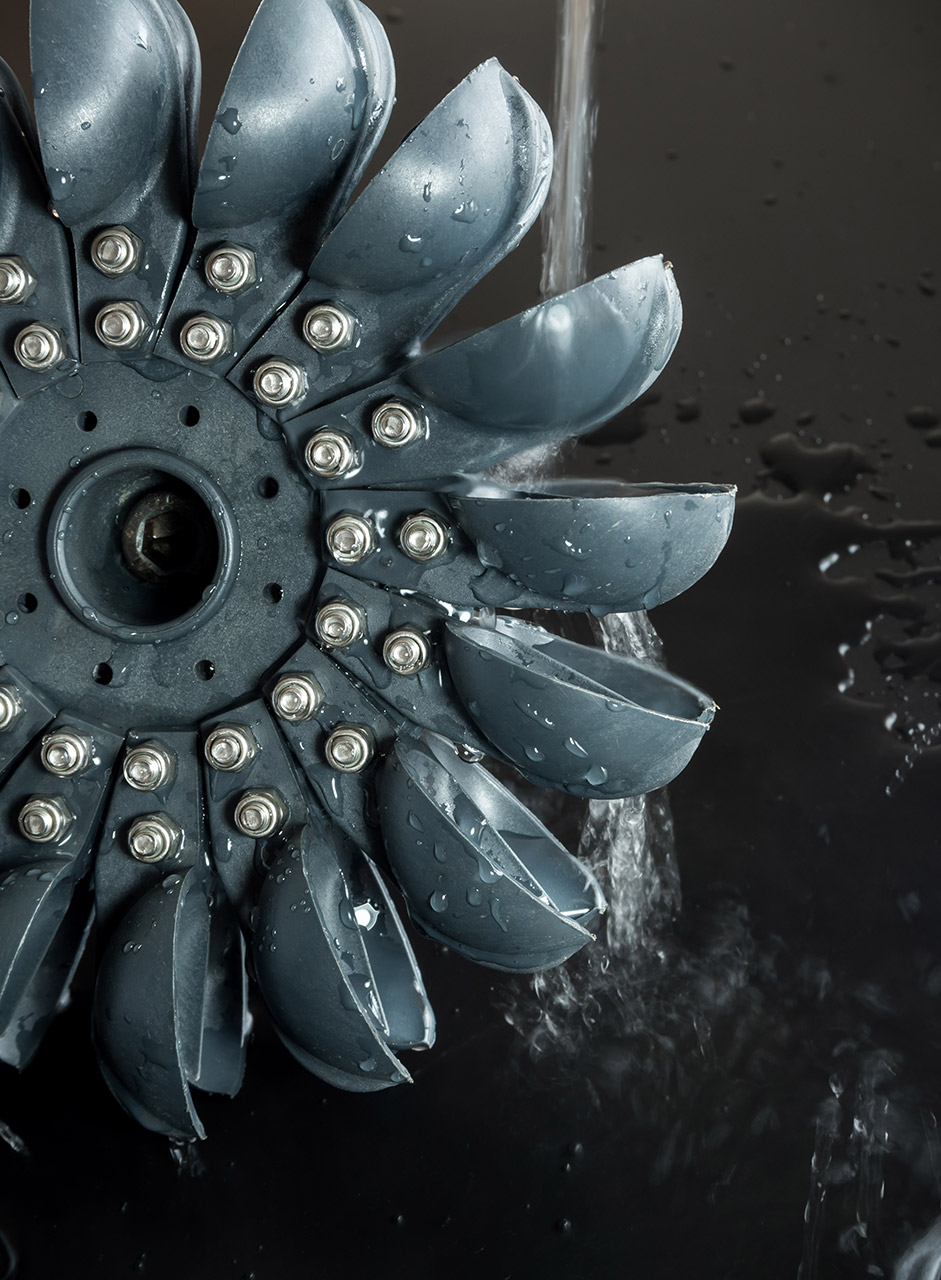
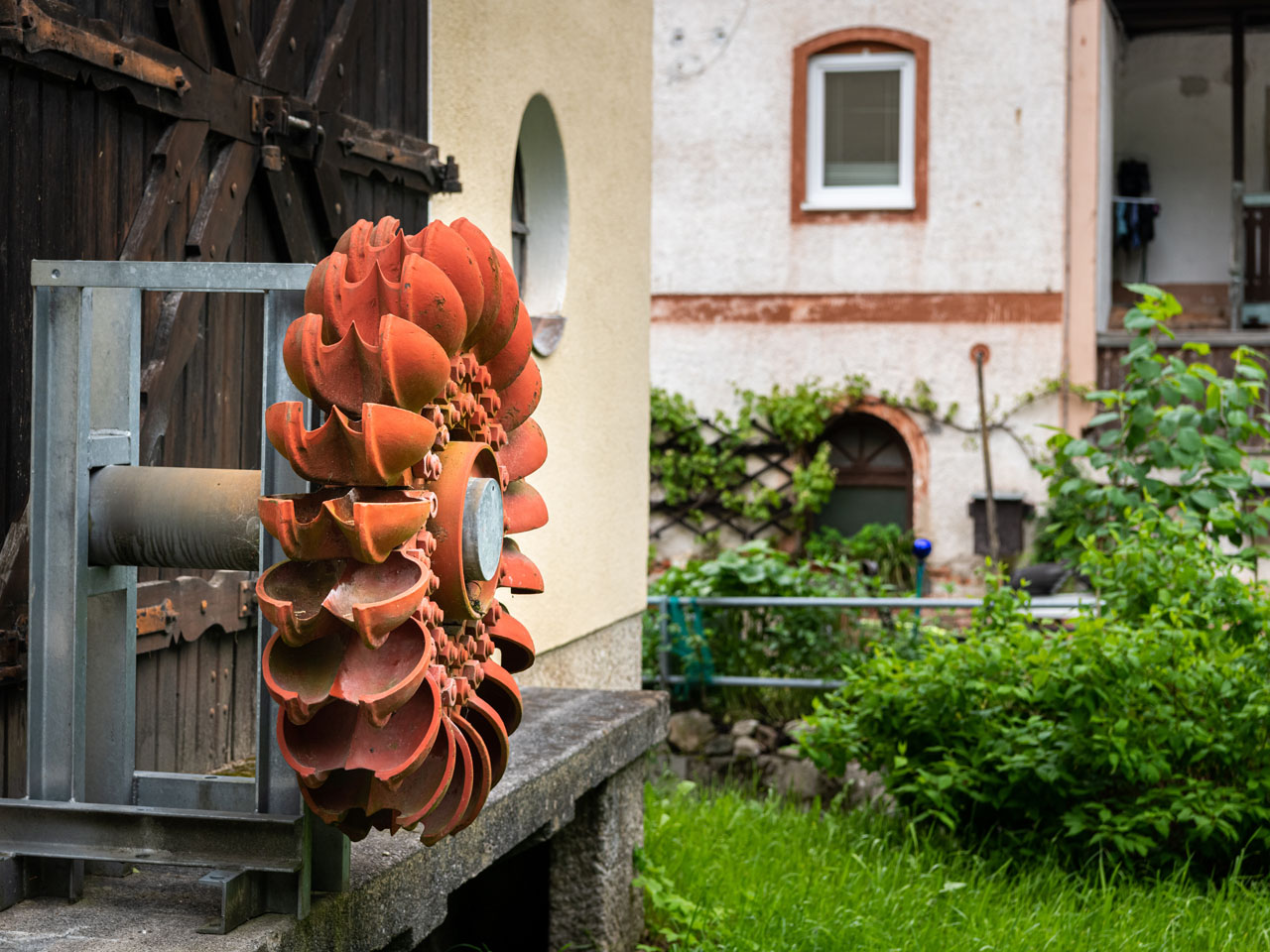
The water coming from the penstock is led into nozzles which direct high-velocity water jets tangentially onto the spoon-shaped buckets of the runner. In the nozzles, the hydraulic energy of the water is converted mainly into kinetic energy. A central ridge in each bucket splits the jet in two and turns the water through a large angle, transferring most of its kinetic energy to the runner. With an optimum relationship between the velocity of the water jet and the speed of the runner, the water leaves the turbine with only a low residual velocity.
The turbine power output is regulated by changing the nozzle opening using a regulating needle. When a rapid reduction in power or complete shutdown is required, a jet deflector diverts the water away from the runner.
Pelton turbines can achieve efficiencies exceeding 90% and are designed for high hydraulic heads and relatively low flow rates. They are produced with horizontal or vertical shafts and are commonly used at heads ranging from several hundred metres to more than 1,000 metres, with large units reaching outputs of hundreds of megawatts. They are therefore particularly suitable for mountainous regions like Austria or Switzerland with large differences in elevation. Depending on the required flow rate and turbine design, Pelton turbines may use from one to six nozzles.
4 pictures
4 pictures