







Geothermal Systems
7 min read
Varying geological conditions and properties in different locations require different approaches togeothermal systems. Natural hydrothermal systems require three basic elements: a sufficiently accessible heat source, fluid that can absorb and transport the heat, and permeable rock through which the fluid can circulate. Where natural permeability or fluid is insufficient, these conditions can be enhanced artificially.
Geothermal resources can be broadly divided into several types:
Free Downloads › Images
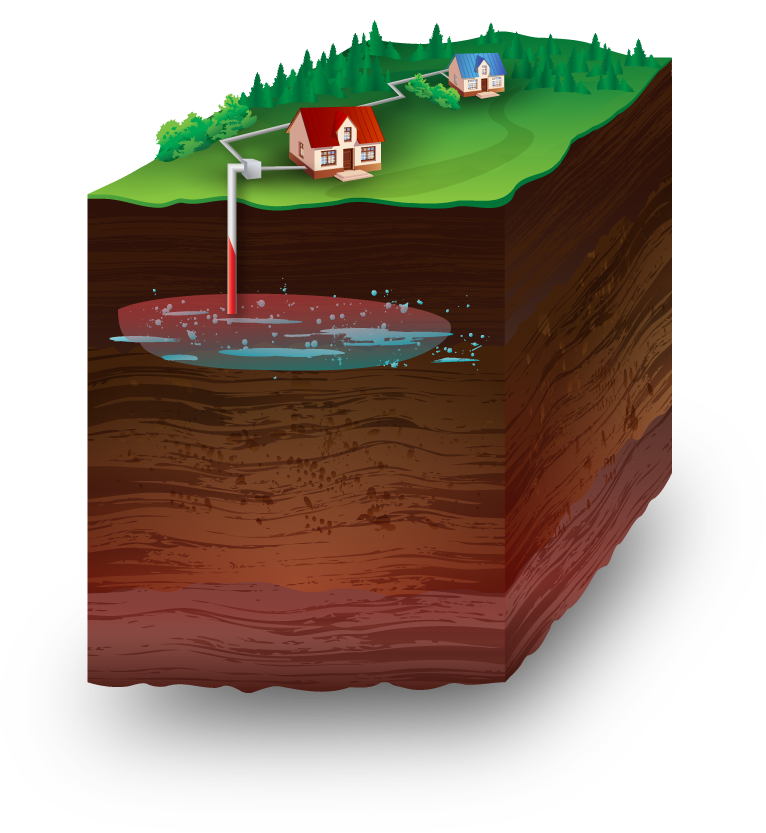
Hot Water (Binary Cycle)
Hot-water geothermal systems consist of natural underground reservoirs containing water heated by surrounding hot rock. Because the water is under pressure at depth, it can remain liquid at temperatures well above 100 °C. Lower-temperature resources are often used directly for heating, while some can also generate electricity in binary-cycle power plants. Hot-water geothermal reservoirs may occur from relatively shallow depths to several kilometres below the surface, depending on local geology.
Free Downloads › Images
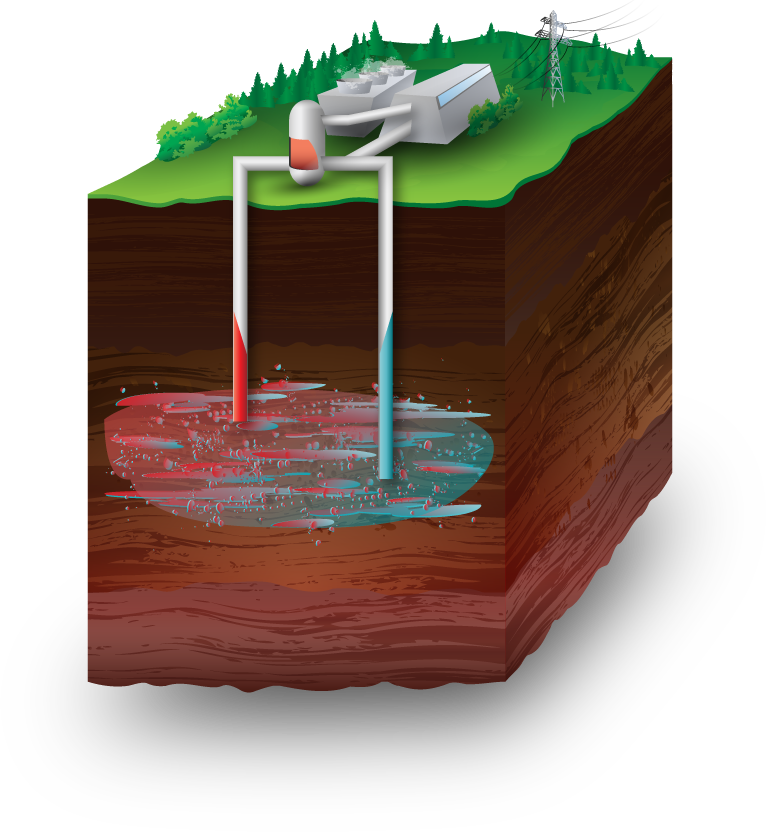
Water and Steam (Flash Steam)
Geothermal fields of this type contain hot, pressurised water or a mixture of water and steam. As the geothermal fluid rises and its pressure falls, part of the hot water can rapidly flash into steam. Flash-steam power plants are widely used for high-temperature, liquid-dominated geothermal resources.
Free Downloads › Images
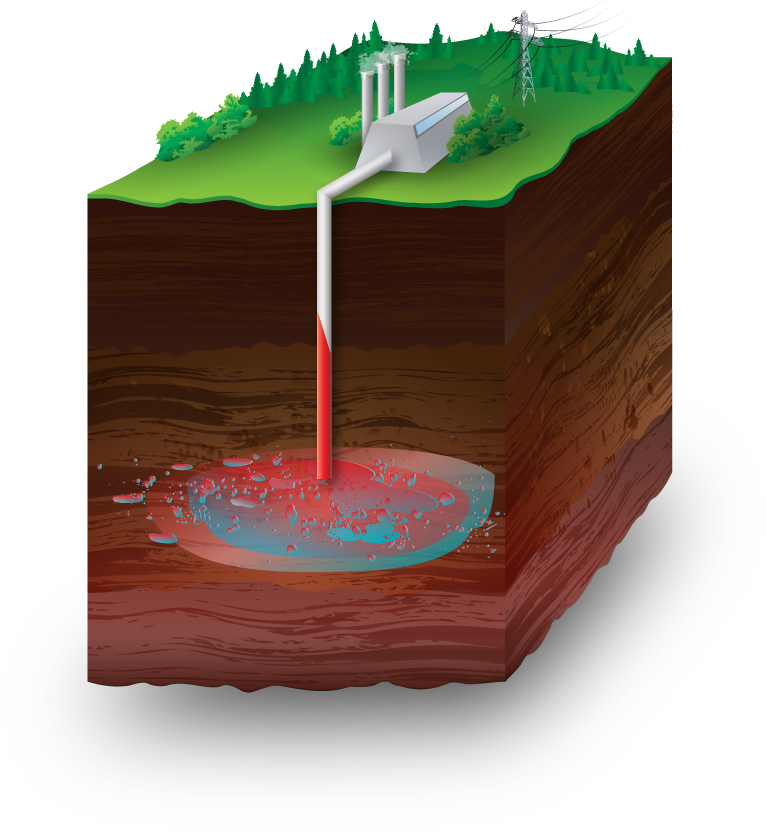
Pressurized Liquid (Geopressured Resources)
In some sedimentary basins, hot saline water can be trapped at unusually high pressures and may also contain dissolved natural gas, particularly methane. Such fluids may exceed 150 °C and can occur several kilometres below the surface. These resources attracted considerable research interest in the 1970s, but large-scale commercial exploitation has remained limited because of technical and economic challenges. These resources contain not only thermal energy but also energy stored in the high fluid pressure and in dissolved methane. The methane can be recovered together with the geothermal fluid, although, as a finite fossil fuel, it is not a renewable energy source.
Free Downloads › Images
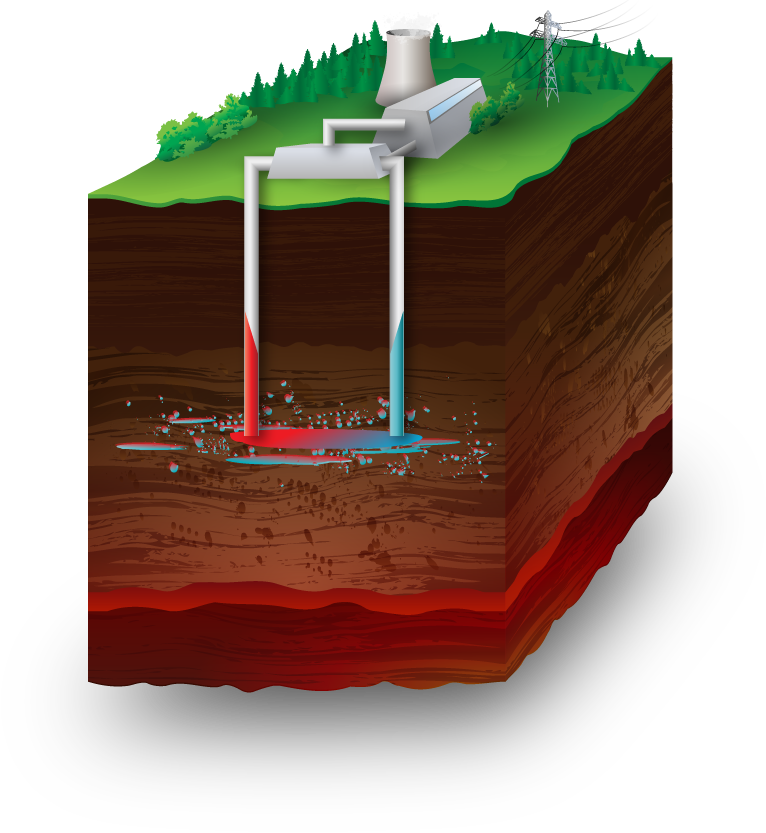
Enhanced Geothermal Systems (EGS / Hot Dry Rock)
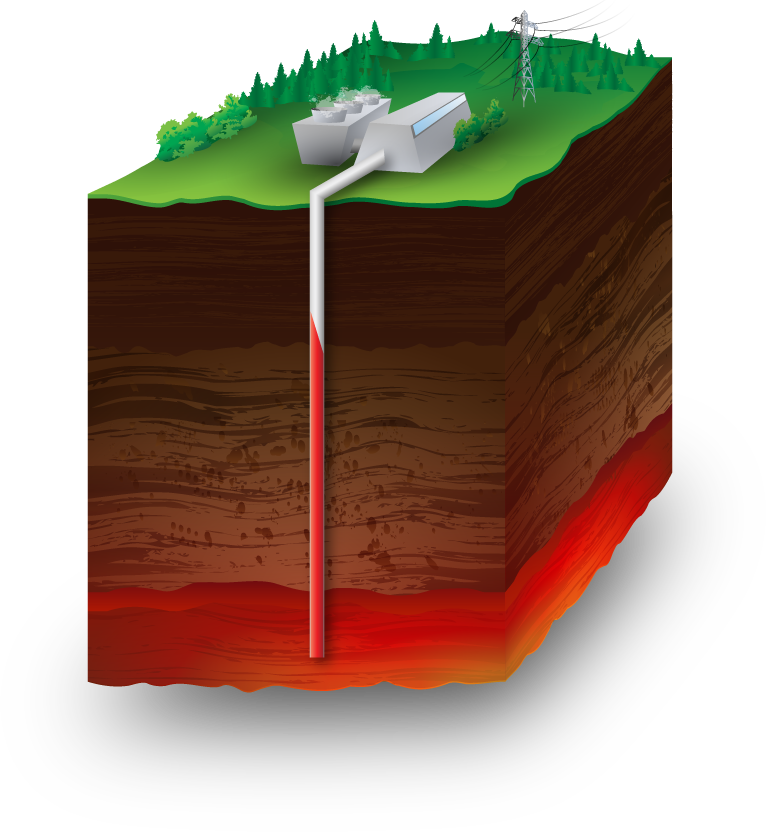
Hot rock can occur at accessible depths with insufficient natural fluid or permeability for conventional geothermal production. The elevated temperature may result from nearby magmatic activity, radiogenic heat within the crust, or locally high heat flow from deeper parts of the Earth. Such resources were historically referred to as Hot Dry Rock (HDR), while the broader modern term is Enhanced Geothermal Systems (EGS).
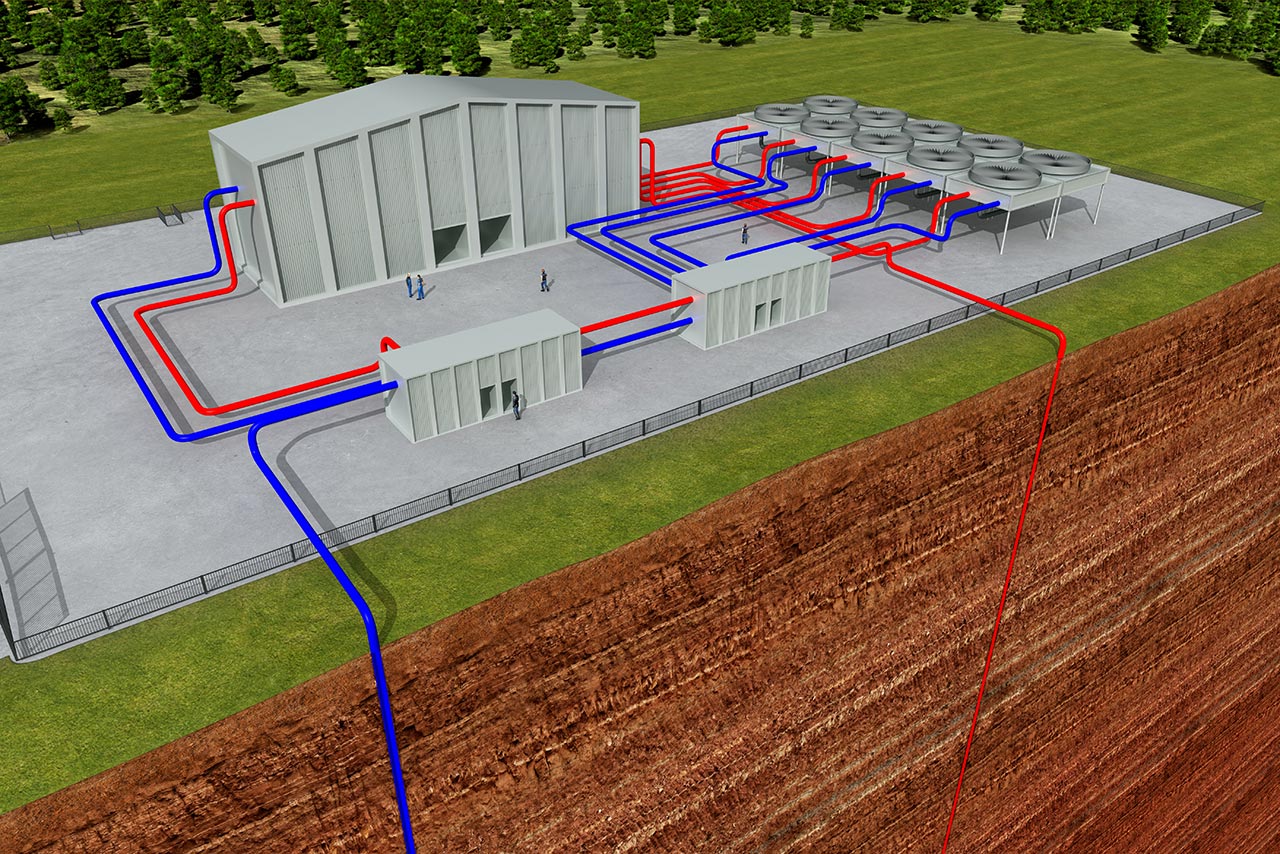
To utilise this heat, wells are drilled into the hot rock and water is injected into the subsurface. If the rock is not sufficiently permeable, water can be injected under controlled pressure to open existing fractures or create new flow paths. The heated water then circulates through the fractured rock and is brought back to the surface through production wells, where its heat can be used for electricity generation or direct heating.
Online 3D Model
Free Downloads › Online 3D
Free Downloads › Images
Magma
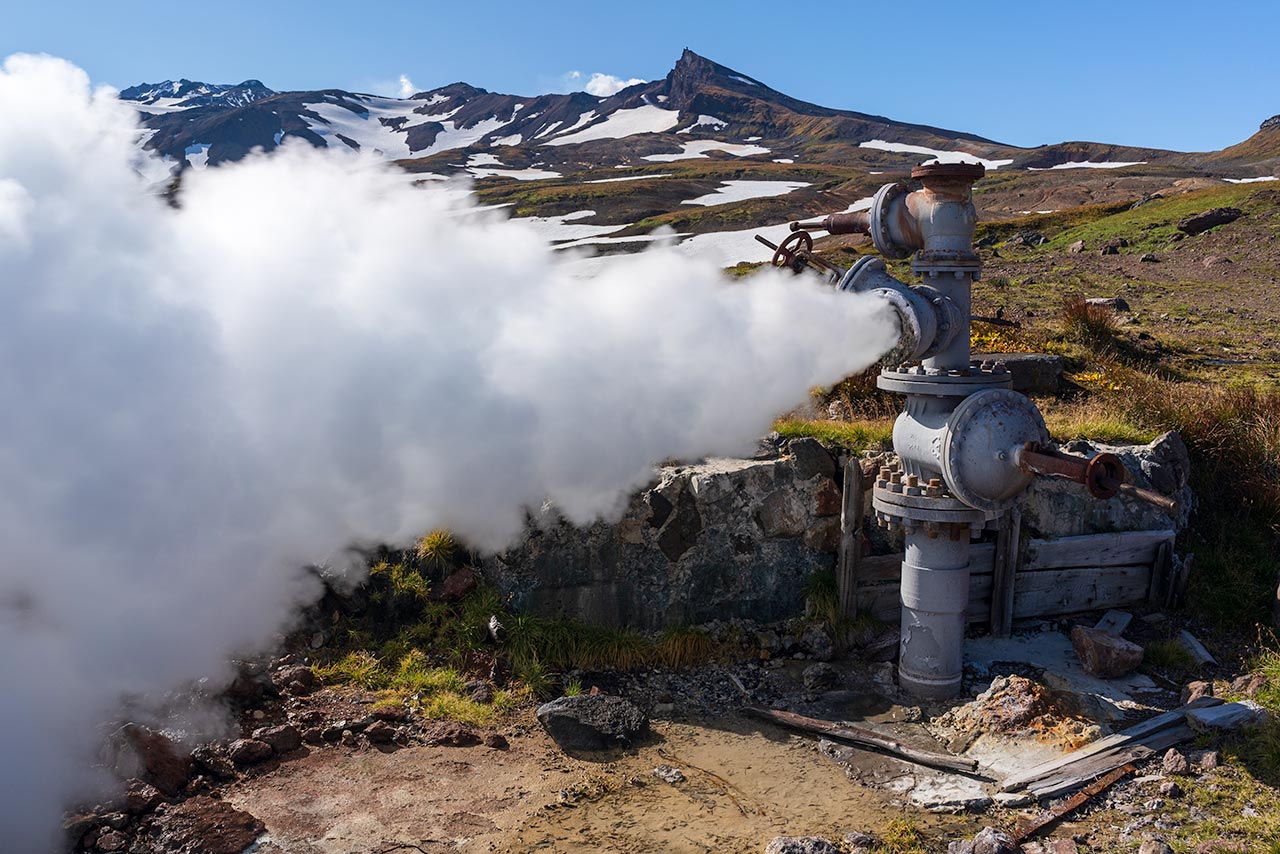
Magma is a mixture of molten rock, gases and solid fragments. Magma occurs beneath volcanic regions and may rise towards the surface or accumulate in magma bodies within the crust. Extracting heat directly from magma is technically extremely challenging because of the required drilling depths, very high temperatures and chemically aggressive conditions. Direct magma-energy extraction remains experimental, but its extremely high temperatures make it a potential long-term geothermal resource.
9 pictures
9 pictures
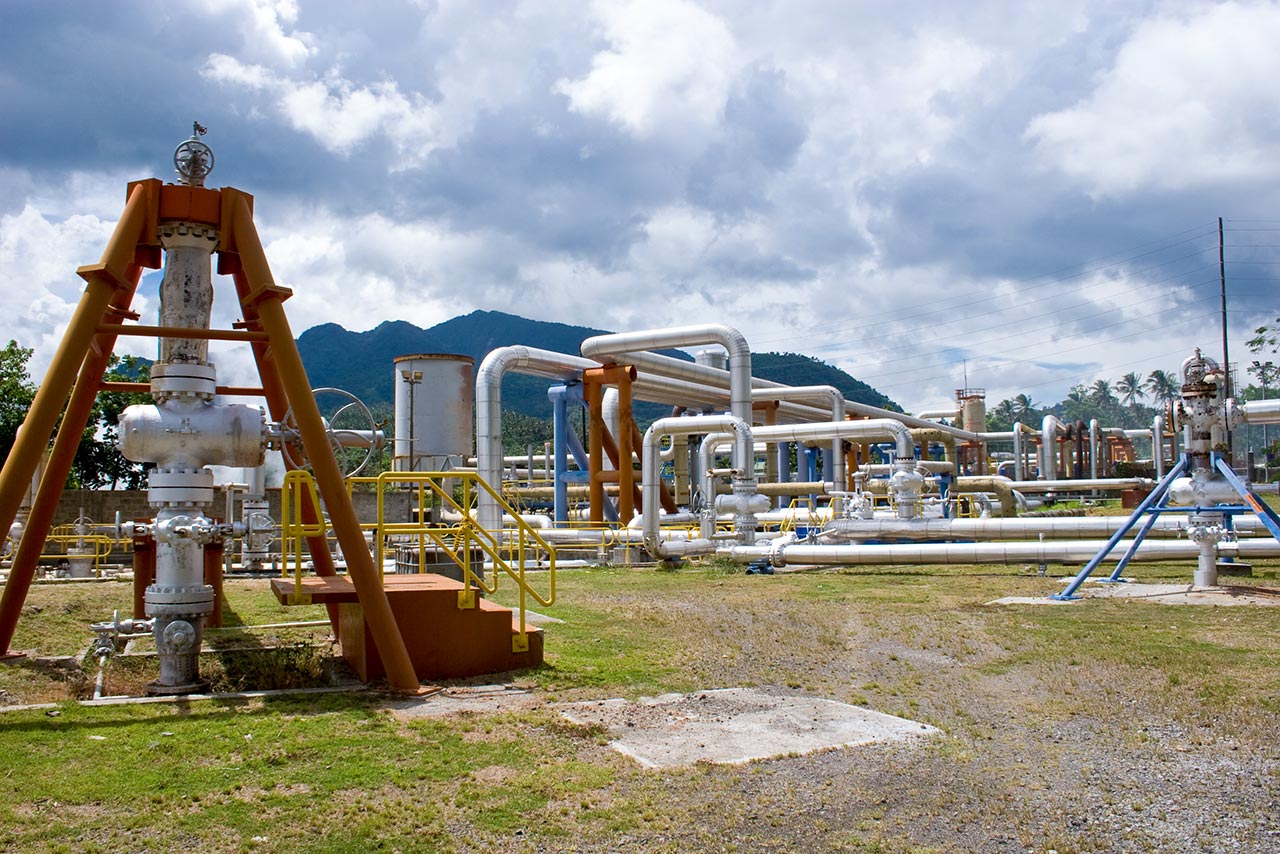
A 100 MW dry-steam geothermal power plant may require around 1,000 tonnes of steam per hour.
Usage in the World
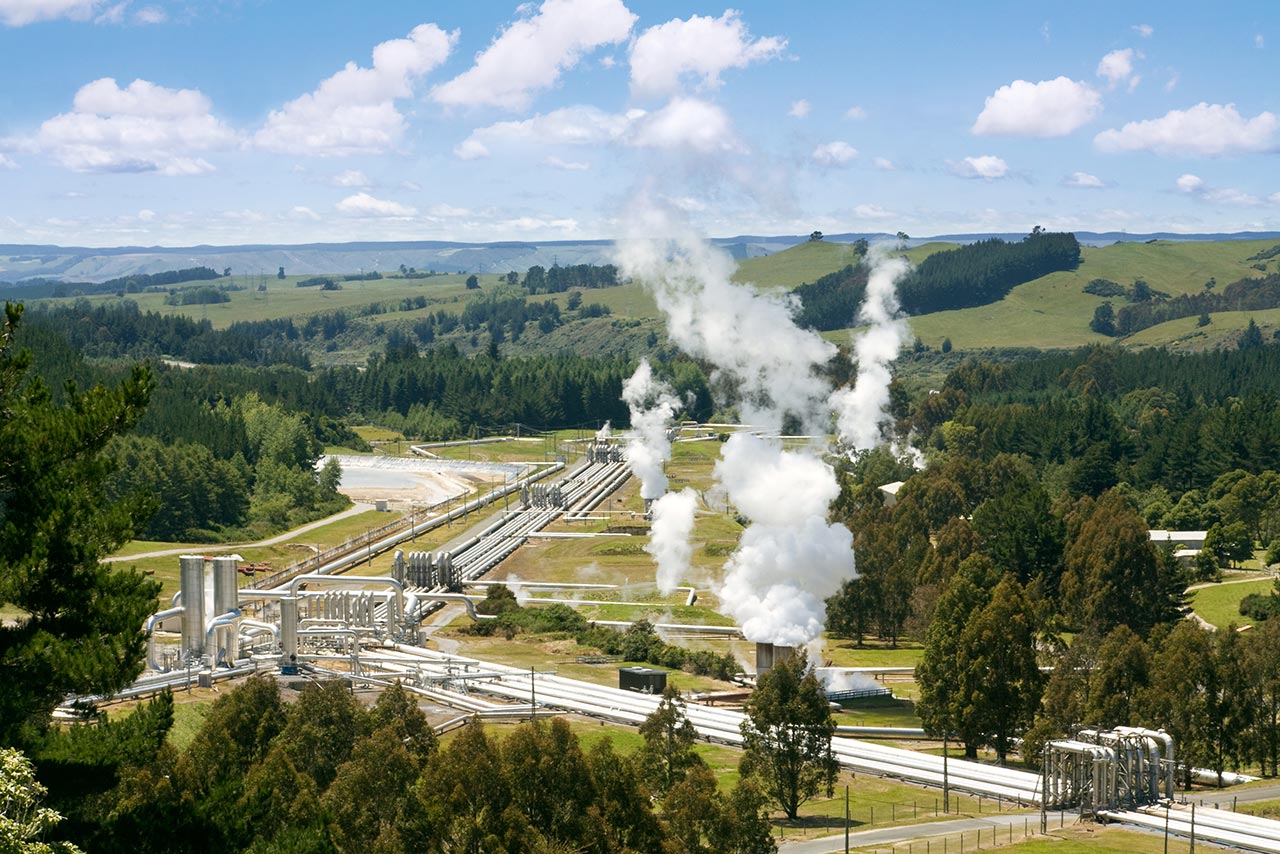
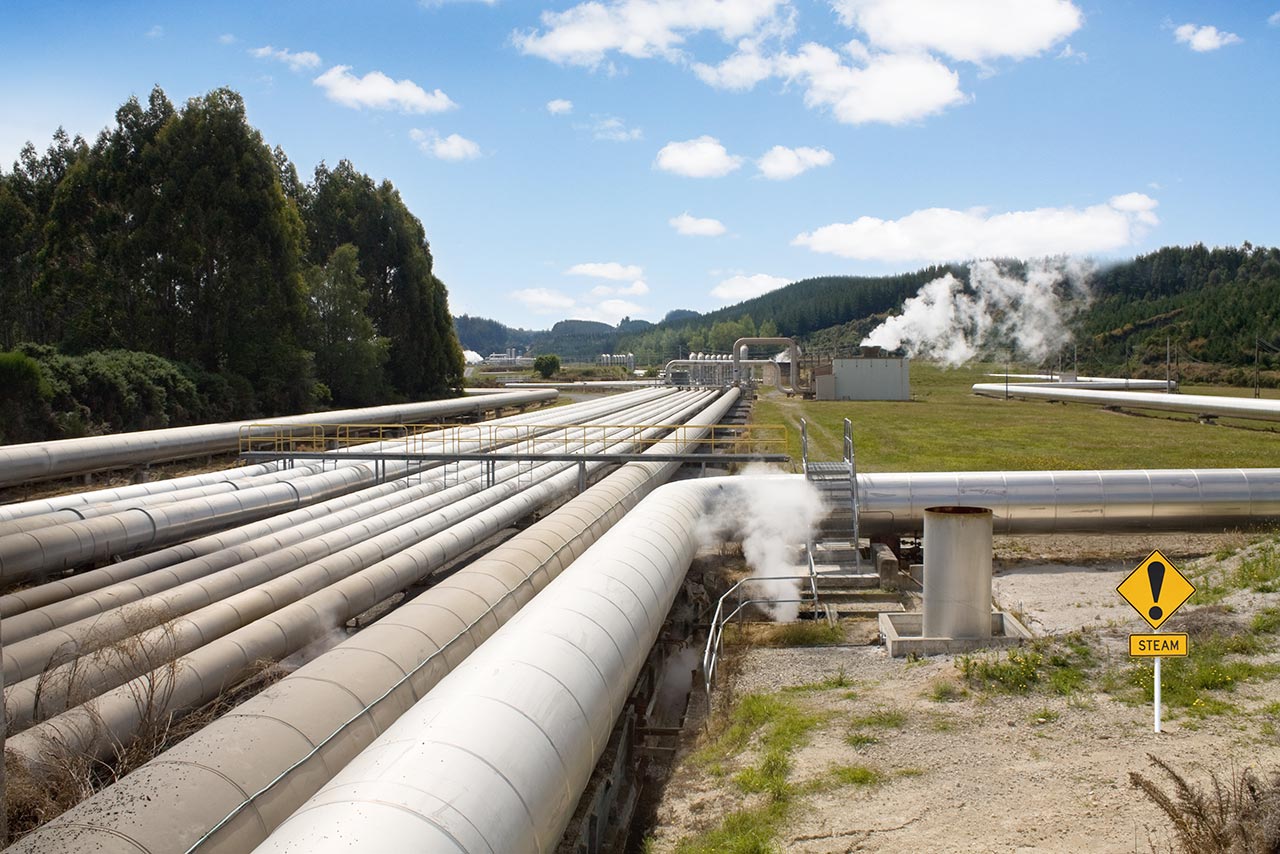
A network of geothermal wells supplying a power plant in New Zealand.
Geothermal energy is used for electricity generation and direct heating in many regions of the world. A geothermal power plant converts heat from underground fluids into electricity, usually by using steam or a secondary working fluid to drive a turbine. There are several significant areas in the world where the conditions for harnessing this energy are very favourable. Iceland is one of the world’s best-known geothermal regions, with widespread hot springs and high-temperature geothermal fields associated with active volcanism. Other such regions can be found in the USA, Mexico, Italy, the Philippines, Indonesia and New Zealand.
At the end of 2024, global installed geothermal power capacity was about 15.4 GW. The United States remains one of the world’s largest producers of geothermal electricity, with several gigawatts of installed capacity. The Geysers geothermal field in northern California (map) is the world’s largest complex of geothermal power plants, with 18 plants producing about 835 MW of electricity. Steam from a naturally fractured, vapour-dominated reservoir is brought to the surface through numerous production wells and transported through an extensive pipeline network to the generating units. Another major geothermal area lies near the Salton Sea in southern California (map), where 11 commercial geothermal power plants exploit high-temperature brines, with a combined capacity of more than 400 MW.
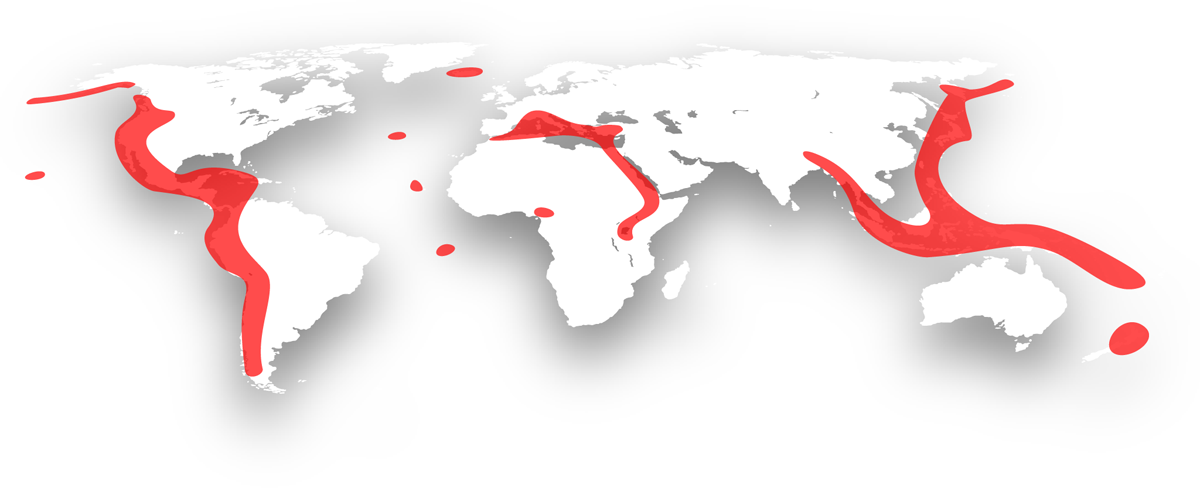
Major regions of geothermal activity are concentrated mainly along tectonic plate boundaries.
Free Downloads › Images
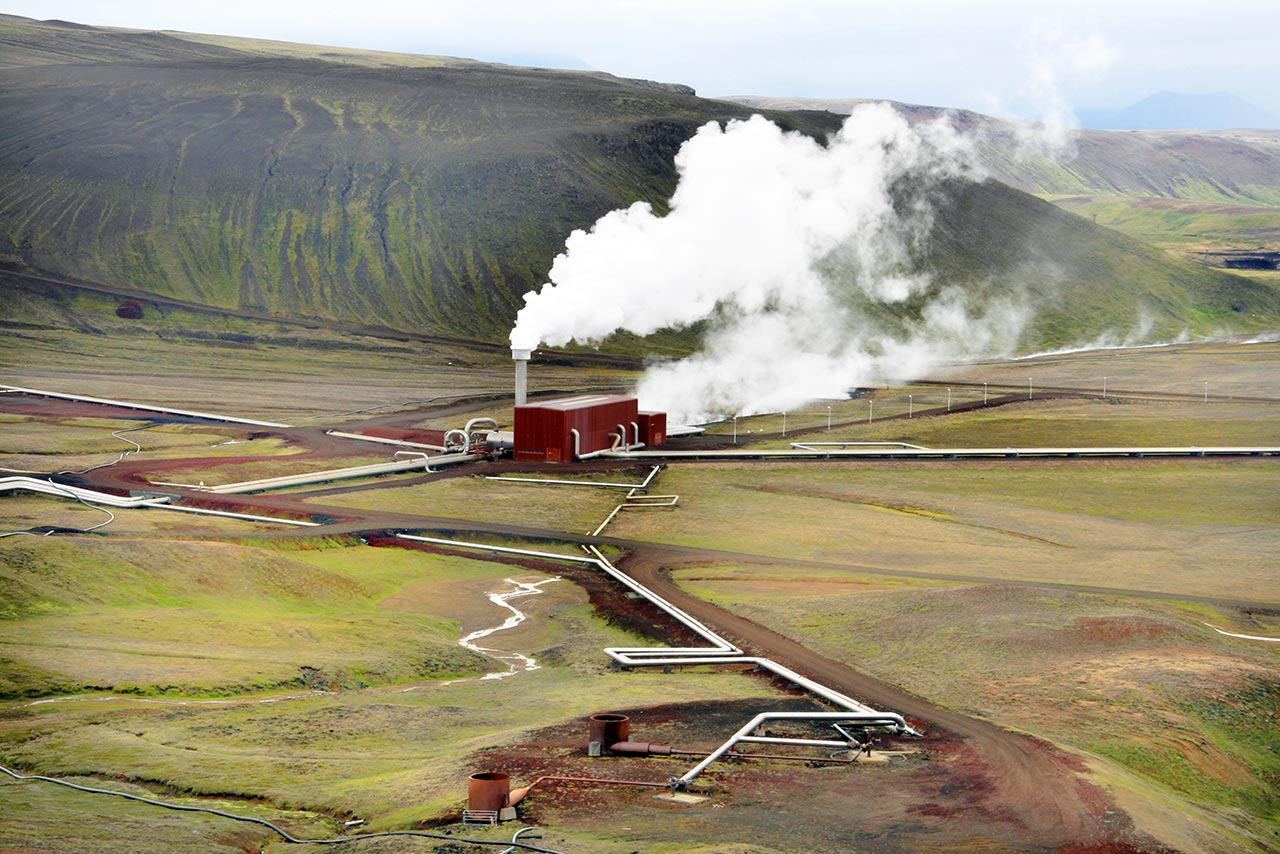
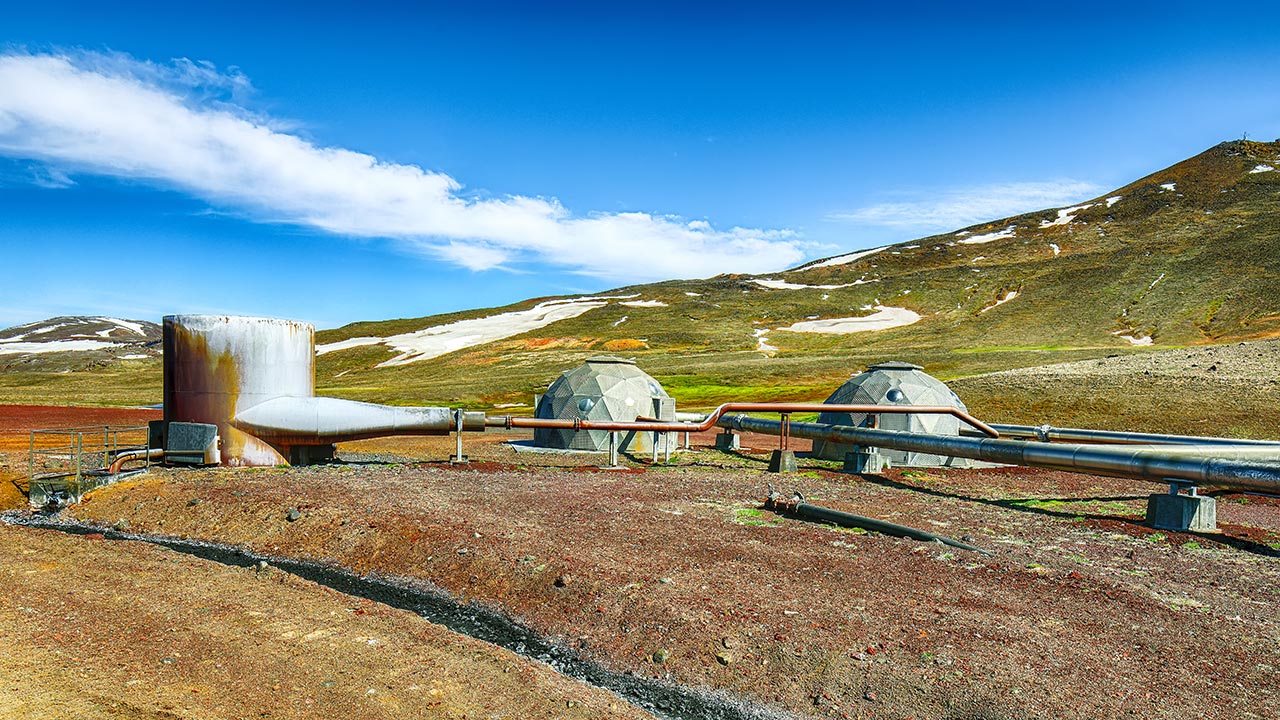
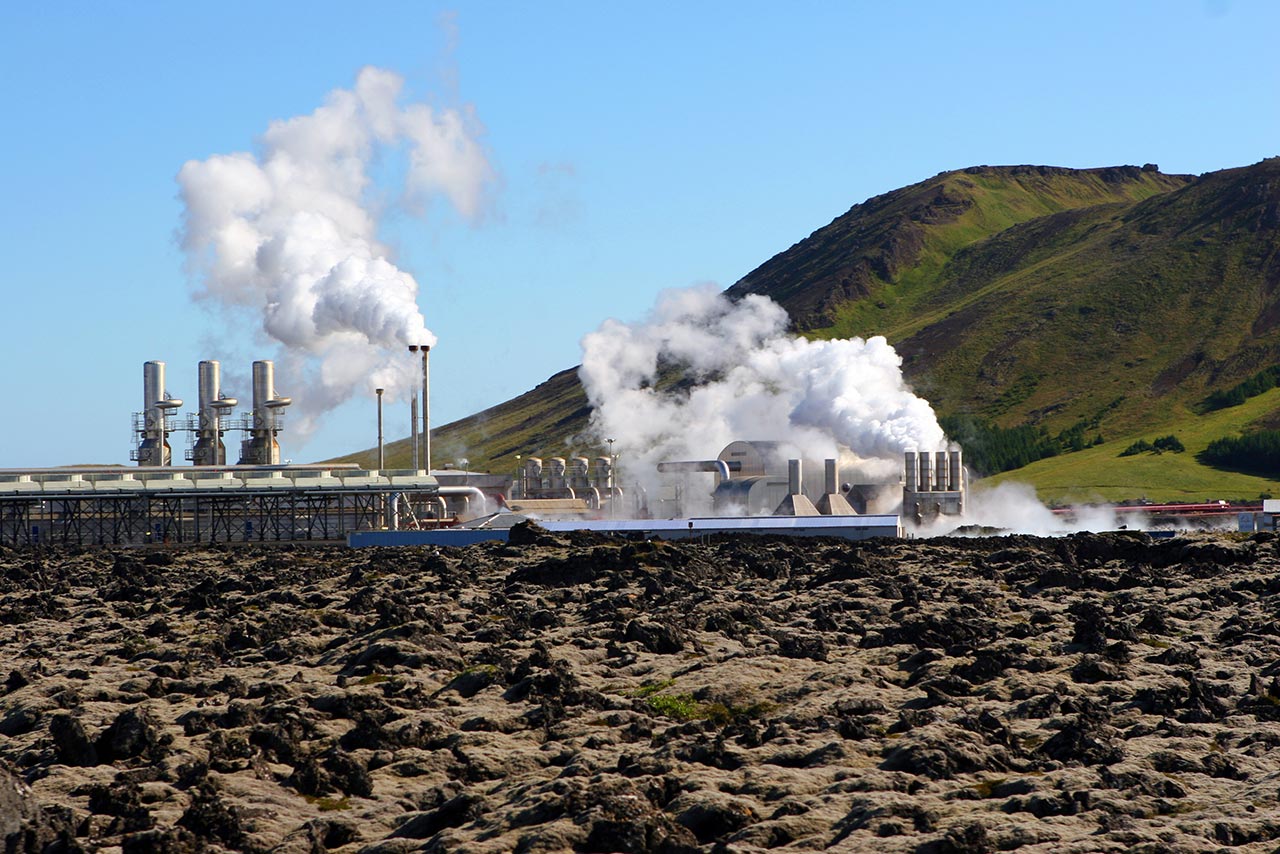
Part of the Krafla geothermal power plant in Iceland, built above a high-temperature geothermal system near Lake Mývatn.
Indonesia is now the world’s second-largest producer of geothermal electricity, with about 2.8 GW of installed capacity. Its extensive volcanic regions provide an estimated geothermal potential of more than 23 GW.
The Philippines remains one of the world’s leading geothermal electricity producers, with around 2 GW of installed capacity. Geothermal power provides an important share of electricity generation in the Philippines, particularly on the islands of Luzon (map) and Leyte (map).
Cooling 1 km3 of hot rock by 100 °C contains enough thermal energy to generate about 30 MW of electricity for 30 years, assuming a typical geothermal conversion efficiency.
14 pictures
14 pictures