




The History of Wind Power Utilization
4 min read
Historic Windmills
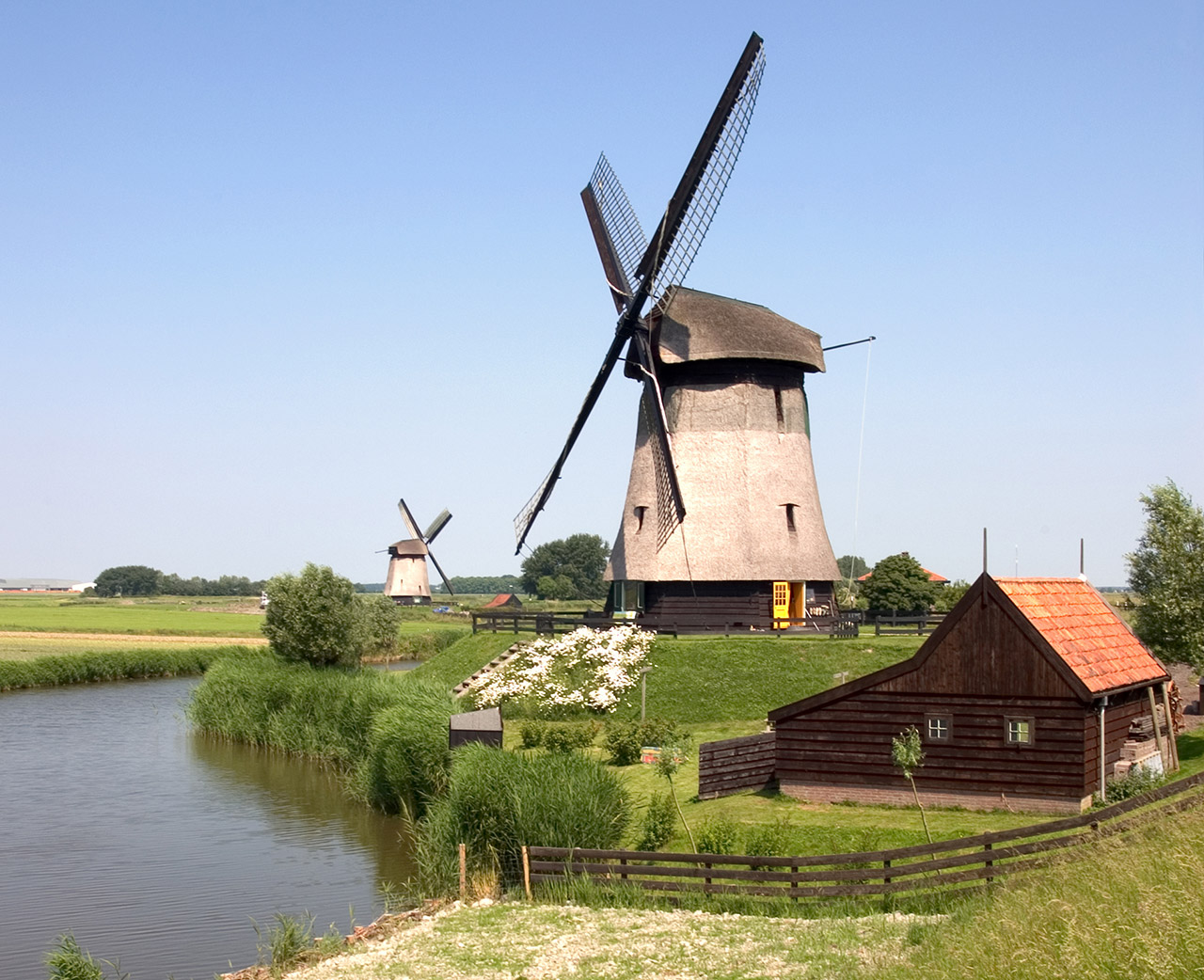
A windmill near the town of Alkmaar, the Netherlands, known for its cheese fairs.
Harnessing the wind for energy is not a new idea. It goes back to the ancient world. Along with water, wind was a valuable, renewable source of energy used for driving various machines. These were primarily mills for grinding grain and pumps for irrigation. Some of the earliest known windmills were used in Persia for grinding grain and pumping water.
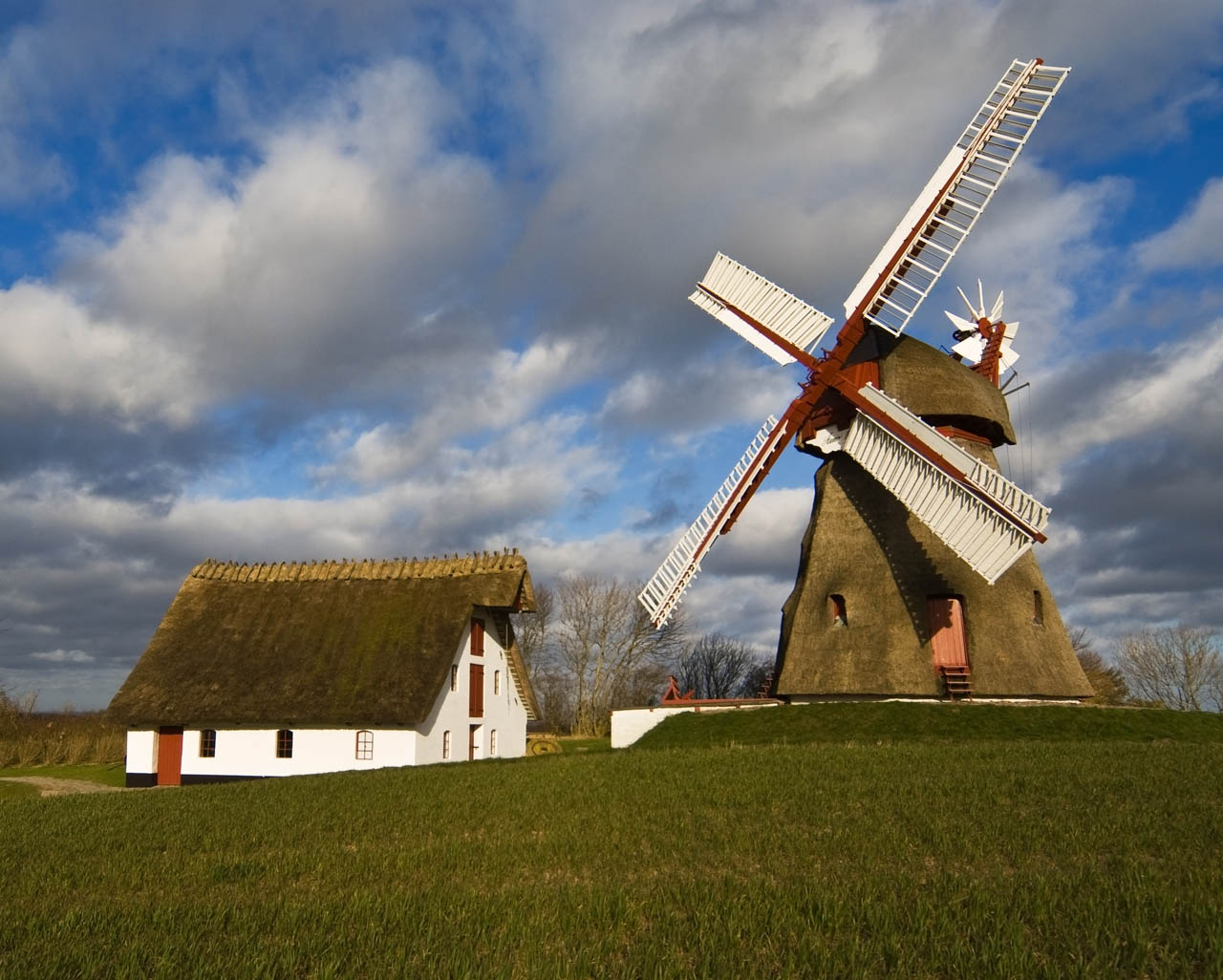
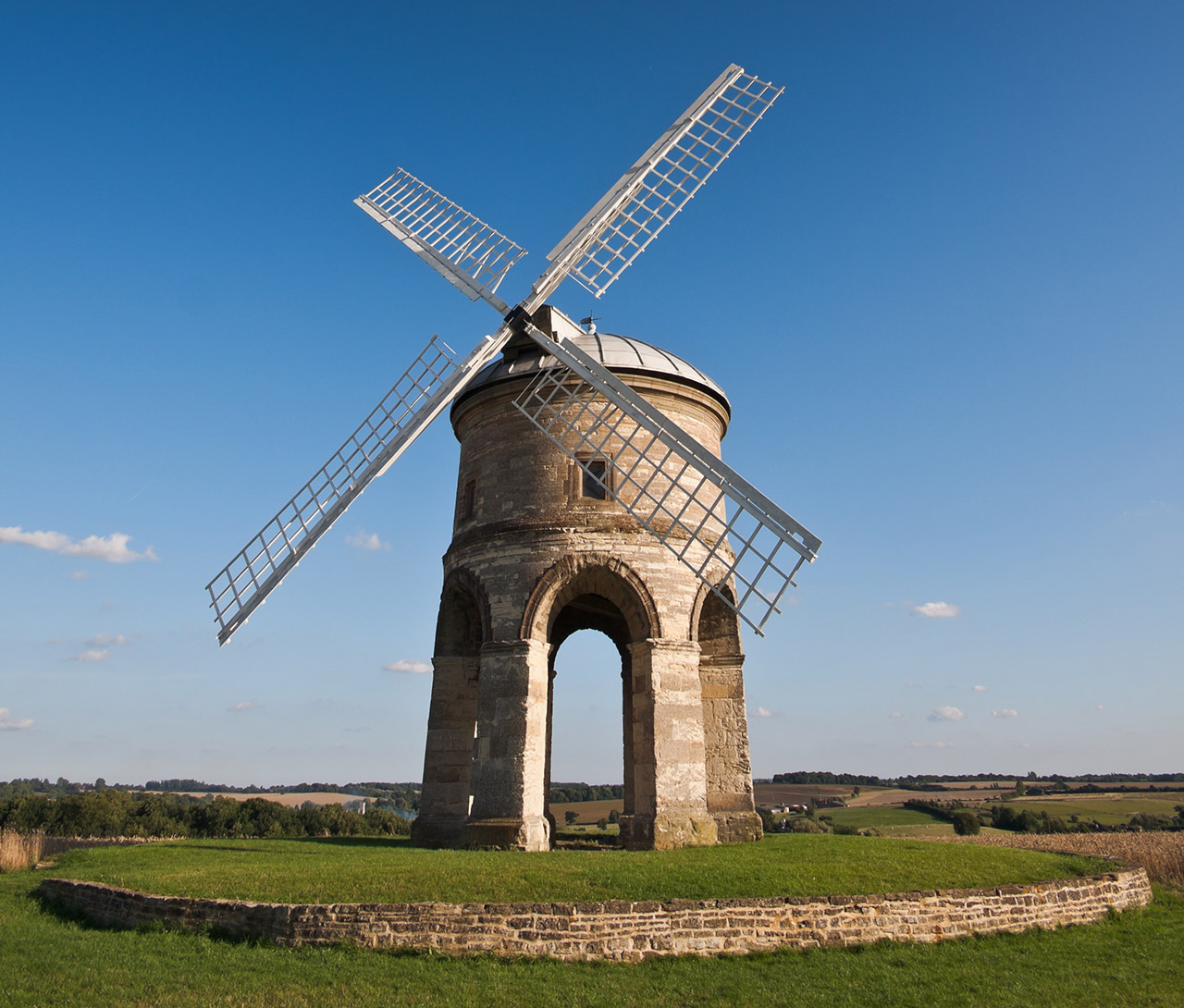
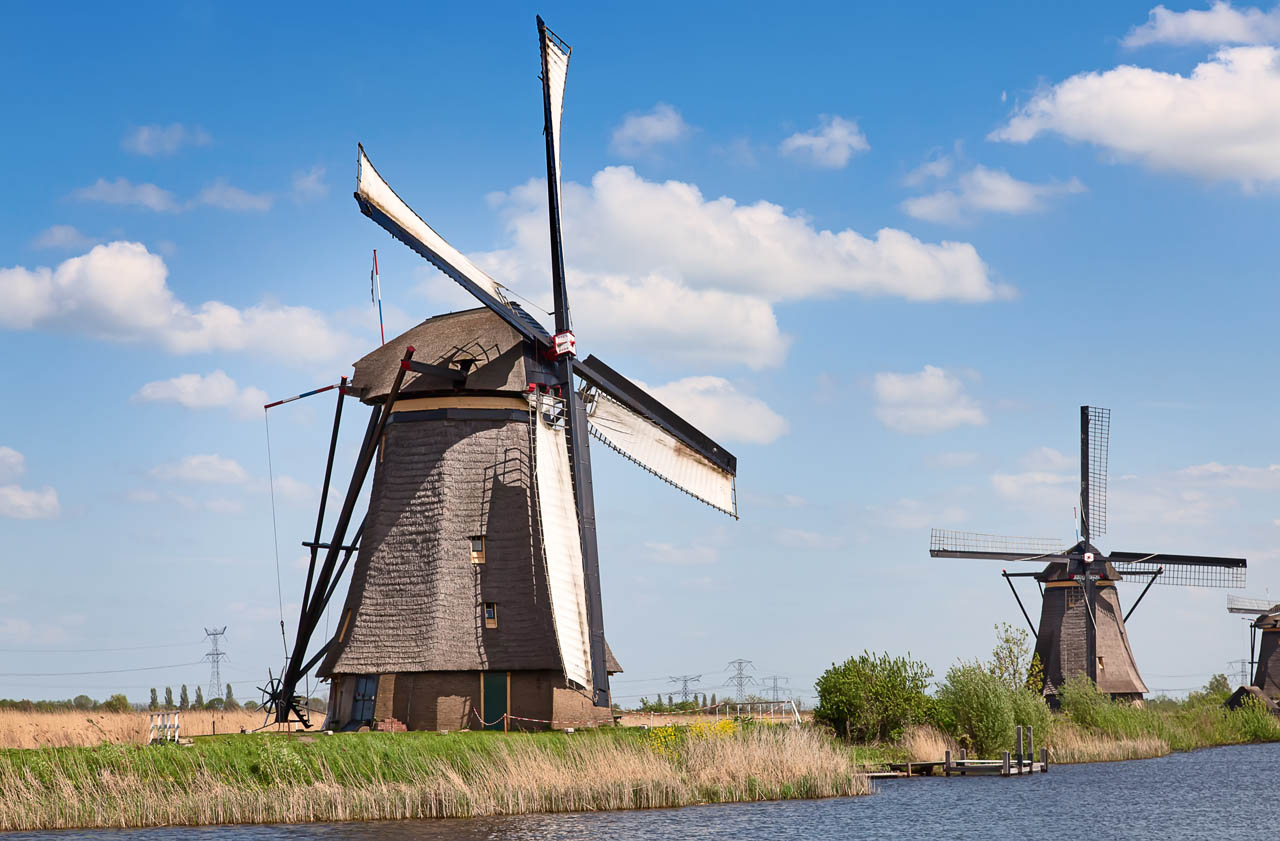
In China, as well as in Persia, vertical-axis windmills were used, while in Europe, somewhat later, horizontal-axis designs that could be turned to face the wind became more popular. The power of a mill depended on the size and number of its blades and on the area covered by sails. Windmills are most commonly associated with grinding grain, but they were in fact used to power a range of machines, such as saws or trip hammers. Many of the well-known windmills of the Netherlands were used to pump water and drain low-lying land.
19 pictures
19 pictures
The Beginnings of Wind Power Generation
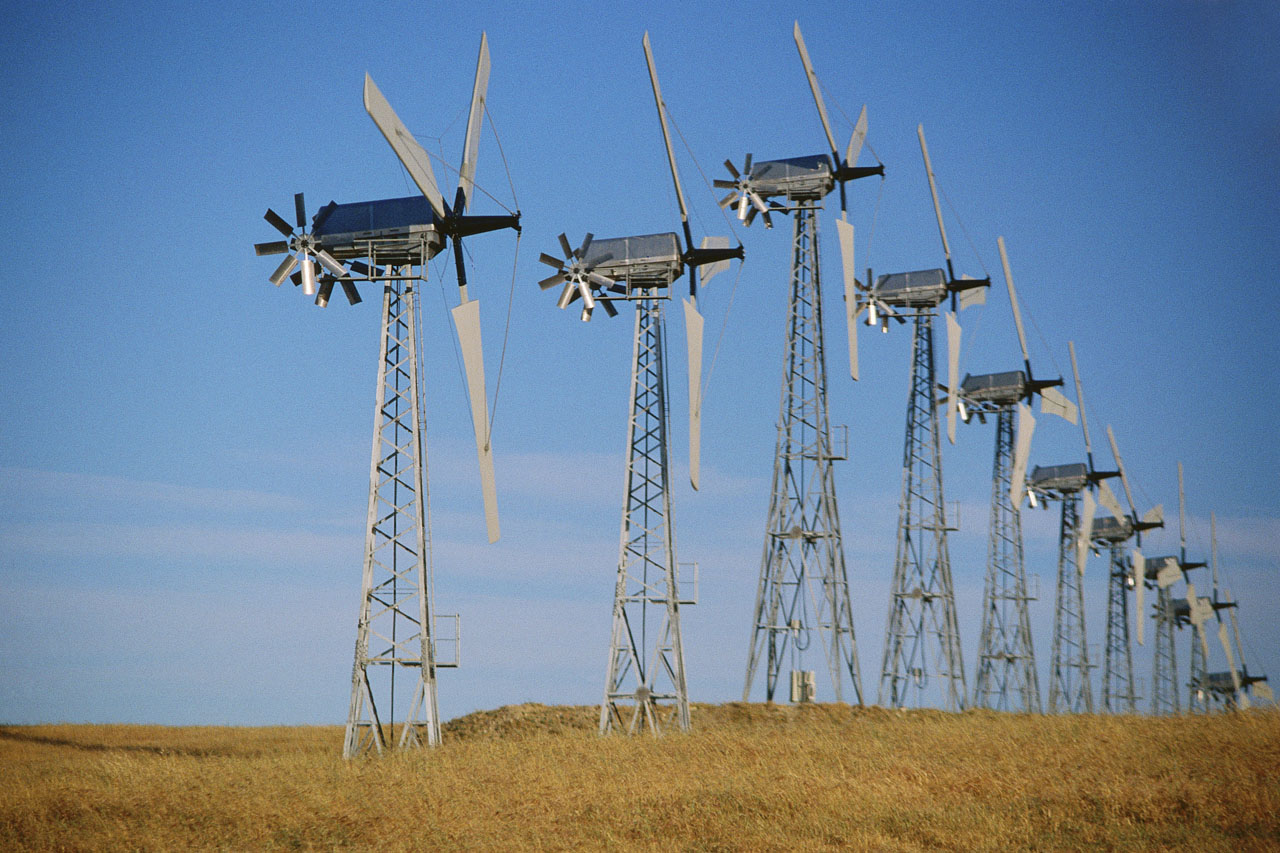
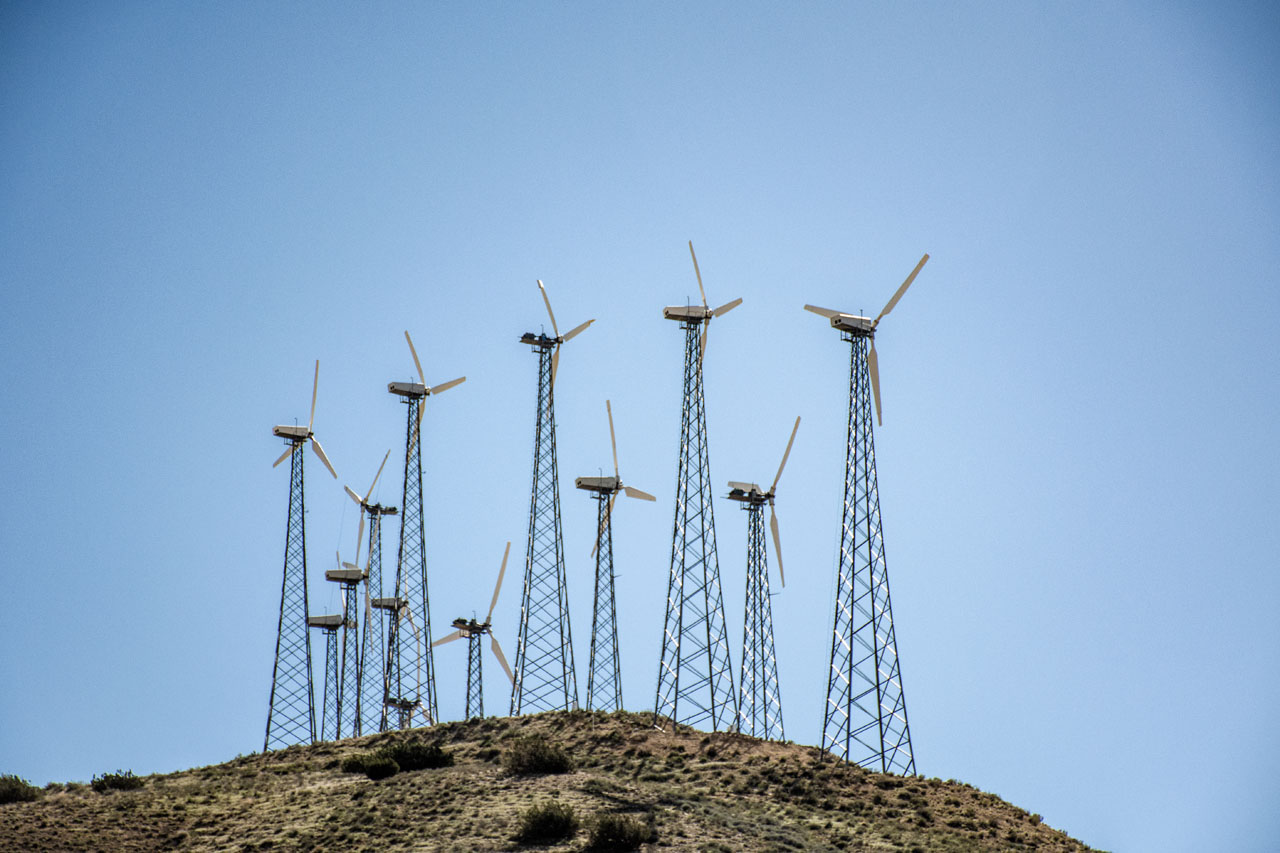
Wind turbines at a wind farm near San Francisco, USA.
The first structure to generate electricity from wind was a wind turbine built in 1887 by the Scottish engineer James Blyth. It was used to charge accumulators for lighting his cottage. Several months later, Charles Francis Brush built an automatically operated wind turbine in Ohio, USA. Its wind wheel drove a 12 kW direct-current generator that charged accumulators in the first electrified house in Cleveland. The design of the turbine made it possible to manually stop it when winds were too strong.
In the early 20th century, the power output of wind turbines gradually increased. Many early wind-electric systems generated direct current and operated independently of the electricity grid, but grid-connected wind turbines began to appear in the following decades.
A direct forerunner of today’s horizontal-axis wind turbines was the turbine built in Yalta in 1931. With an output of 100 kW, the turbine was mounted on a 30-metre tower and supplied electricity to the local 6.3 kV grid.
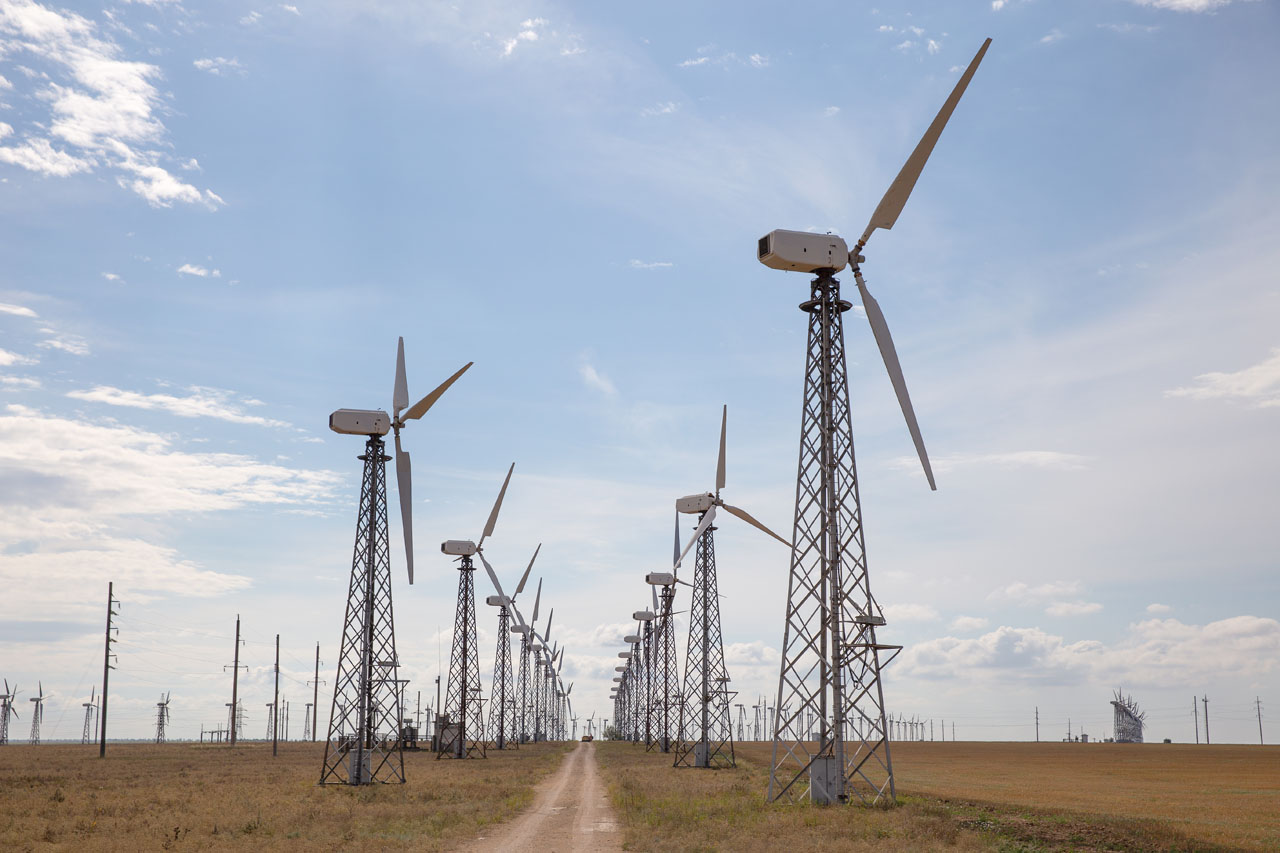
As a result of the energy crisis in the 1970s, wind turbine research and development gained new momentum. Work intensified in the USA, Canada and Western Europe. Innovations in mechanics, aerodynamics, electronics and control systems gradually increased unit capacity to several megawatts and reduced construction costs. Wind power plants and large wind farms thus became increasingly viable for commercial electricity generation.
8 pictures
8 pictures
Betz’ law
Video: Detail of a 3D model of a multi-bladed windmill.
Free Downloads › Animations
In 1920, the German physicist Albert Betz published an article titled “Theoretical Limit for Best Utilization of Wind by Wind Motors”, in which he described what is now known as the Betz limit. It states that, regardless of design, an ideal wind turbine can extract a maximum of sixteen twenty-sevenths of the power available in the wind, corresponding to 59.26%.
Charles Francis Brush
17. 3. 1849, Euclid, Ohio, U.S.
15. 6. 1929, Cleveland, Ohio, U.S.
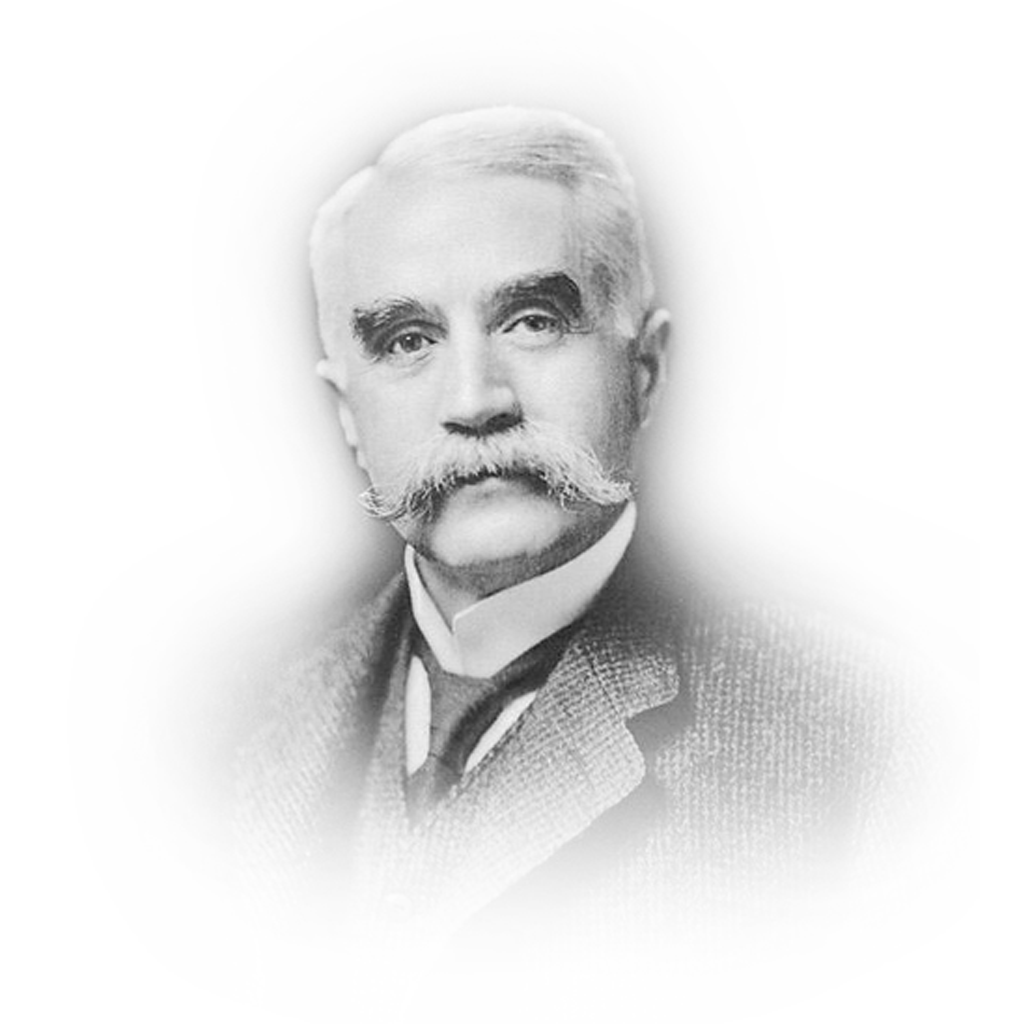
Charles Francis Brush
Charles Francis Brush was an inventor and manufacturer of electric arc lamps and a pioneer of electric lighting. He grew up and experimented on a farm near Cleveland. After his studies at the University of Michigan, he concentrated on designing the arc lamp. To power the lamp, he also designed a simple dynamo which he patented in 1878. He sold his arc lamp public lighting system to several larger cities. The lamps were easy to maintain and had twice the life span of the Yablochkov candle.
In 1882, the Brush Electric Company supplied generators for an early hydroelectric power plant at St. Anthony Falls in Minneapolis. In 1888, Charles Francis Brush built one of the world’s first automatically operated wind turbines, which drove a 12 kW dynamo. The structure was 18 metres high and 17 metres in diameter, and its purpose was to charge 12 accumulators in Brush’s mansion, the first electrified house in Cleveland. The turbine remained in operation for about twenty years.