




Boiling Water Reactor (BWR)
3 min read
The boiling water reactor (BWR) is the second most common type of nuclear power reactor in the world. BWRs account for around 15% of the world’s operating power reactors.
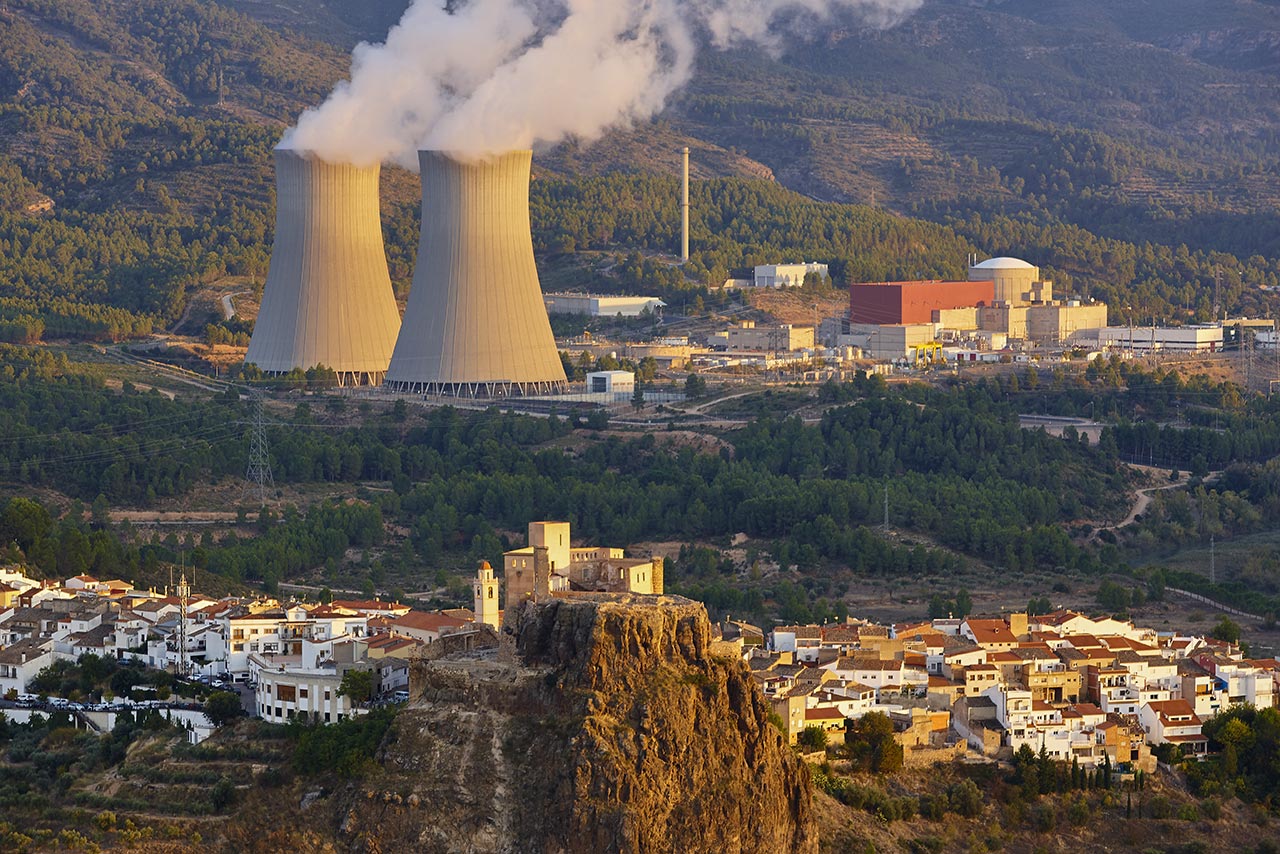
Cofrentes is a picturesque Spanish village dominated by its castle, with the Cofrentes Nuclear Power Plant and its boiling water reactor in the background.
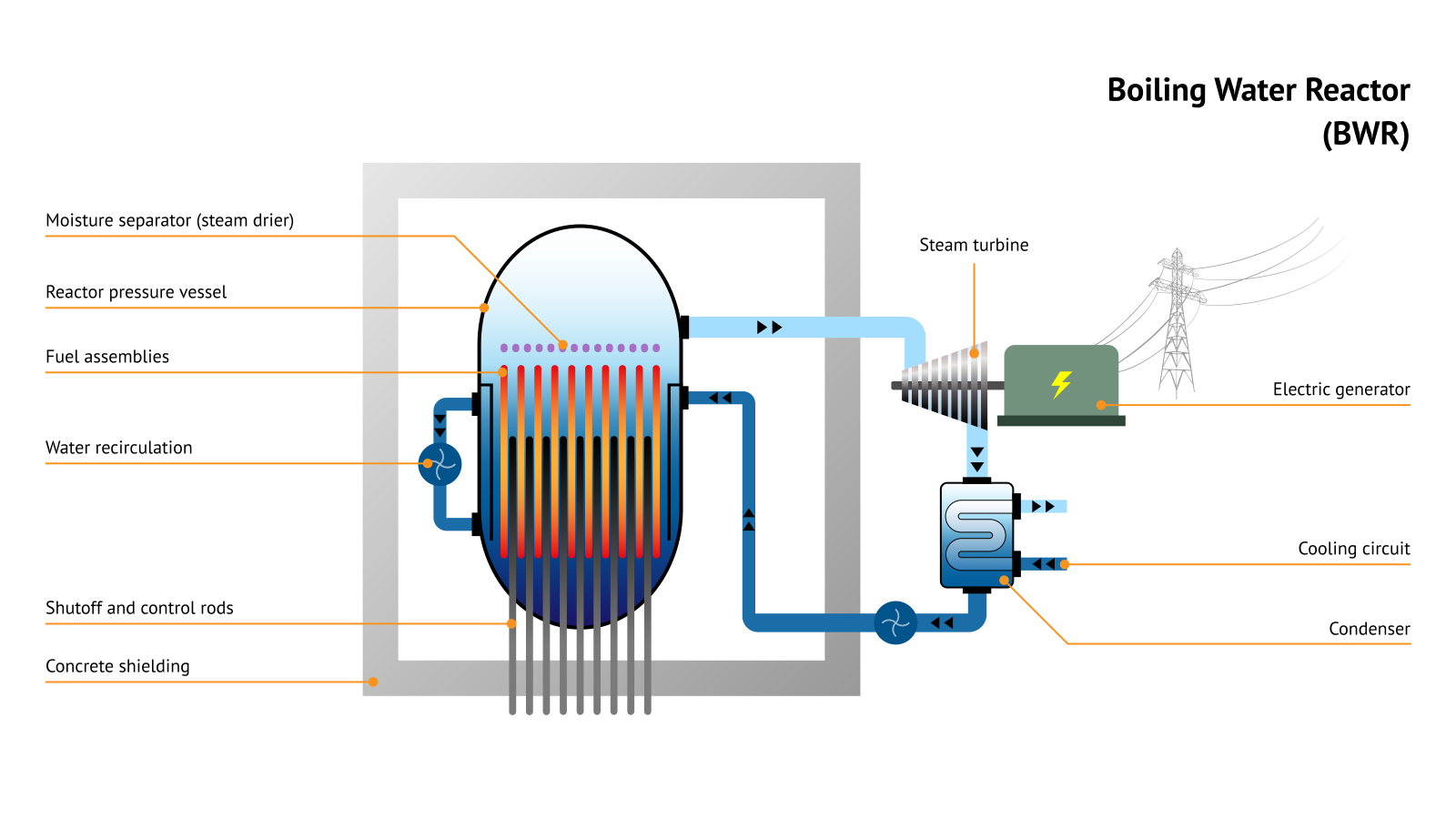
The fuel is similar to that used in a PWR. Ceramic uranium dioxide pellets, typically containing uranium enriched to around 3%—5% in uranium-235, are inserted into fuel rods that are assembled into fuel assemblies about 4 metres long. Each fuel assembly is surrounded by a channel that guides the flow of coolant through the core. The reactor core is housed in a large steel pressure vessel and is typically about 3.5 metres high and 4.5 metres in diameter. The reactor is periodically shut down for refuelling, typically every 12 to 24 months, when a portion of the fuel assemblies is replaced.
Light water is used as both the moderator and the coolant. The water boils directly inside the reactor core, producing a mixture of water and steam. The formation of steam bubbles also contributes to the inherent regulation of reactor power. Because steam is less effective than liquid water as a neutron moderator, an increase in the proportion of steam reduces reactivity and tends to decrease reactor power. The water pressure is about 7 MPa and its temperature is approximately 285 °C. The steam generated inside the reactor is separated from the water, dried and supplied directly to a turbine. A BWR nuclear power plant therefore uses a single-circuit arrangement.
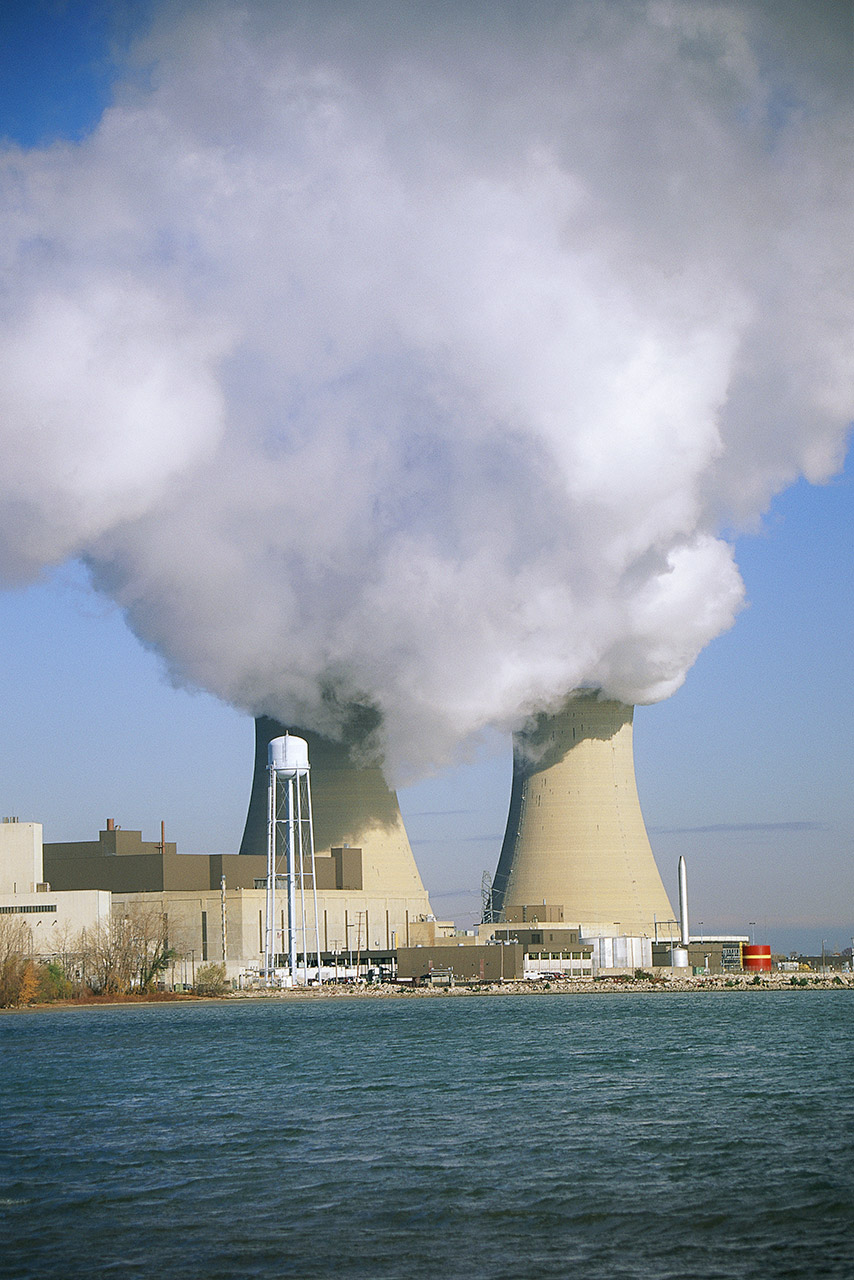
On the shore of Lake Erie between Detroit and Toledo, the Enrico Fermi Nuclear Generating Station is named after the Italian physicist Enrico Fermi. The site operates a single boiling water reactor with an electrical output of about 1,200 MW. An earlier sodium-cooled fast breeder reactor, Fermi 1, was permanently shut down in 1972 and is being decommissioned.
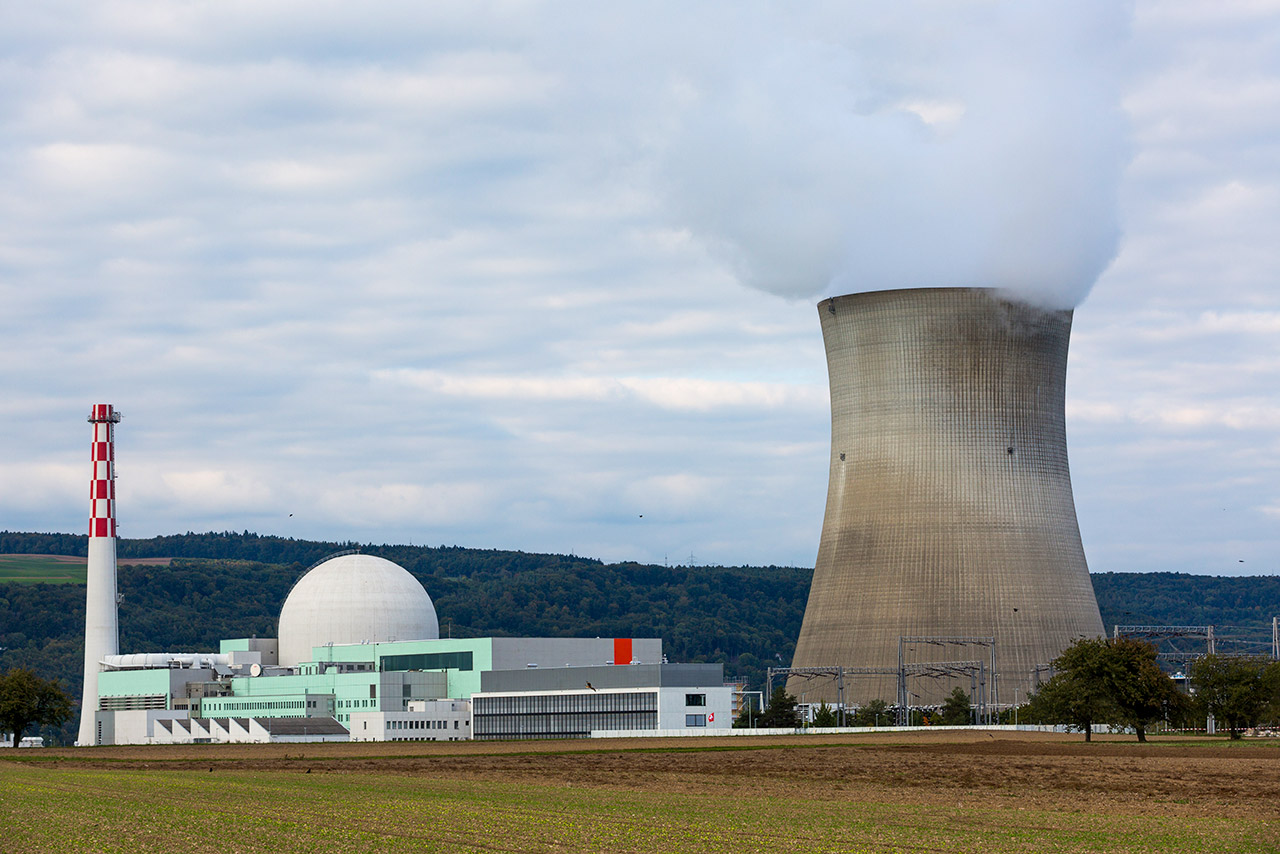
This cooling tower is part of the Leibstadt Nuclear Power Plant in northern Switzerland. The plant operates a single boiling water reactor with a net electrical output of about 1,285 MW and is Switzerland’s most powerful nuclear generating unit.
The control rods of most BWRs are inserted into the reactor core from below, unlike those of PWRs, which are generally inserted from above.