


The Next Step on the Way Toward a Thermonuclear Fusion Power Plant
5 min read
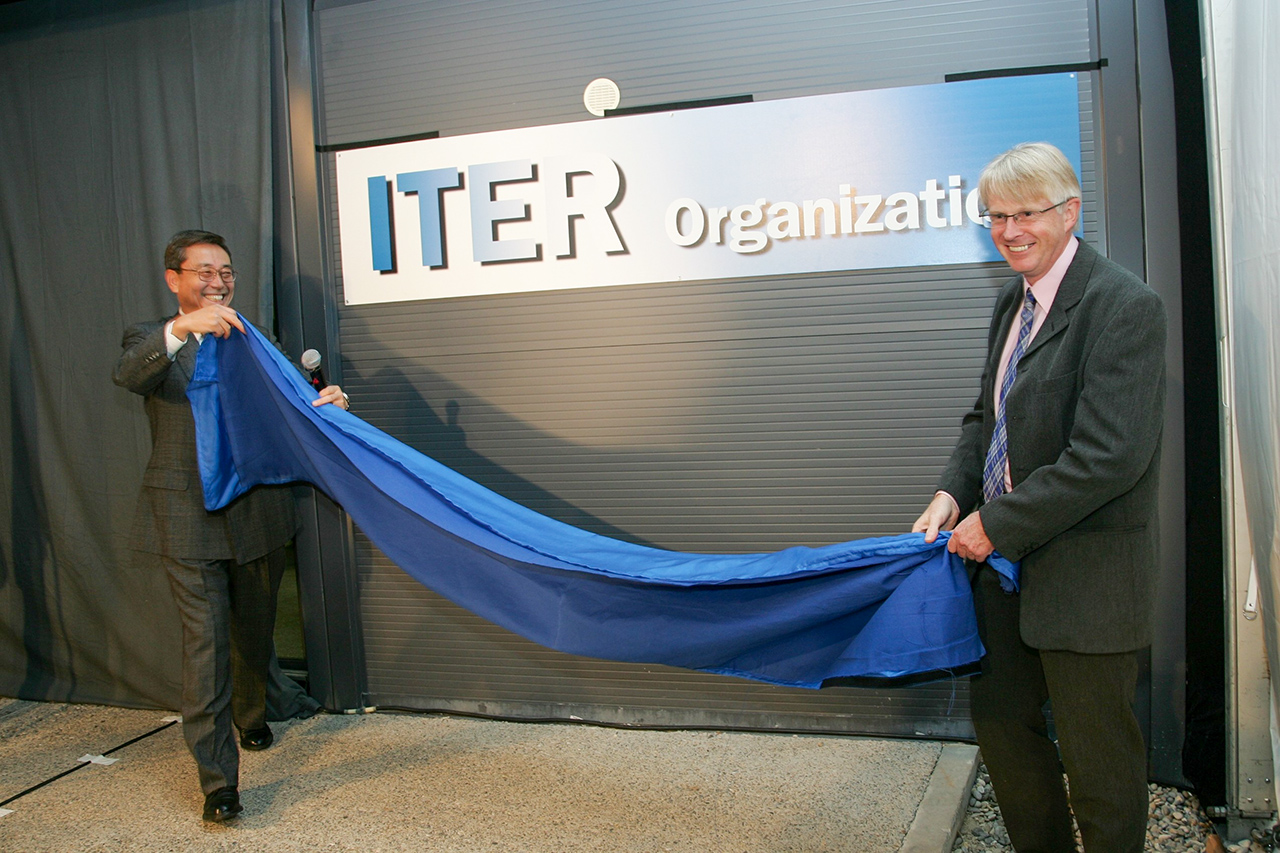
The ITER Organization was established in 2007.
At the beginning of the 20th century, discoveries in nuclear physics revealed the enormous energy stored in atomic nuclei. Nuclear fission was later harnessed both in weapons and for electricity generation, whereas controlled nuclear fusion has proved much more difficult to achieve as a practical energy source. Scientists around the world explored many different approaches to controlled fusion, including Z-pinches, fusors, stellarators, tokamaks and inertial-confinement systems.
Demand for a New Energy Source
As global energy demand grew, so did the search for new large-scale energy sources. An ideal source would rely on abundant fuel, produce little or no greenhouse-gas emissions during operation, generate manageable waste and provide a high energy density. Fusion has long been considered a promising candidate because its basic fuels are widely available and its environmental impacts could be lower than those of many conventional energy sources. Thermonuclear fusion could provide a low-carbon and potentially sustainable source of energy, which is why many technologically advanced countries have supported fusion research for decades.
International Collaboration
The idea of a major international fusion project emerged at the Geneva Summit in November 1985, when Soviet leader Mikhail Gorbachev proposed international cooperation on fusion research to US President Ronald Reagan. Because tokamaks had become the leading magnetic-confinement concept, the new project was based on a tokamak design. In 1986, Euratom, Japan, the Soviet Union and the United States agreed to begin the collaborative programme that eventually became ITER.
The name ITER originally referred to the International Thermonuclear Experimental Reactor and is also the Latin word for “way”, reflecting the project’s role as a step towards practical fusion energy. ITER is designed on an unprecedented scale because larger plasma volumes generally improve energy confinement. With a plasma volume of about 840 m3, it will be the largest tokamak ever built. For comparison, the former JET tokamak had a plasma volume of about 100 m3, while today’s largest operating tokamaks are still far smaller than ITER.
After years of design work and international negotiations, the ITER Agreement was signed in 2006 by seven Members: China, Euratom, India, Japan, the Republic of Korea, the Russian Federation and the United States. The project was sited at Cadarache, near Saint-Paul-lez-Durance in southern France. The ITER Organization was established in 2007, when site preparation and construction activities also began.
ITER
Despite its enormous size and technical complexity, ITER will not be a power plant and will not generate electricity for the grid. Its purpose is to test plasma behaviour and technologies at a scale relevant to future fusion reactors. One of its principal goals is to produce 500 MW of fusion power from 50 MW of external plasma-heating power, corresponding to a plasma gain factor of Q ≥ 10. This compares fusion power with external heating of the plasma and does not represent the overall electrical efficiency of the facility.
ITER is also designed to demonstrate a burning-plasma regime in which heating by fusion-produced alpha particles becomes the dominant source of plasma heating. At the same time, it will test methods for handling the intense heat loads reaching the divertor, first wall and other plasma-facing components.
ITER will also test tritium-breeding concepts using lithium-containing Test Blanket Modules. In future fusion power plants, neutrons from D–T fusion would interact with lithium to produce tritium, providing one component of the fuel cycle; the other component, deuterium, is a naturally occurring isotope of hydrogen that can be extracted from water. ITER will also provide experience with advanced manufacturing, diagnostics, plasma control and the integration of many reactor-relevant technologies.
ITER will test reactor-relevant materials and components under intense thermal and neutron loads, including a tungsten-armoured first wall, the divertor, blanket systems and the vacuum vessel. The knowledge gained will support the design of future demonstration fusion power plants. ITER will also provide practical experience with the safety, radioactive-material management and environmental protection measures required for large fusion facilities.
Under ITER’s current baseline, research operation is expected to begin in 2034, with operation at full magnetic energy planned for 2036 and deuterium–tritium experiments beginning in 2039.