


Fukushima Accident
9 min read
Video animation representing the course of the accident at the Fukushima Daiichi nuclear power plant (also available in the Free Downloads section).
You can view the interactive 3D model of the Fukushima Daiichi nuclear power plant online. In the Free downloads section, you will find the code for inserting the model into your own educational projects.
Online 3D Model
Free Downloads › Online 3D
Many Japanese nuclear power plants are located on the coast, where seawater can be used as the ultimate heat sink. The Fukushima Daiichi Nuclear Power Station is located on the Pacific coast of Honshu, about 90 kilometres south-east of Sendai. It consisted of six boiling water reactors (BWRs), commissioned between 1971 and 1979. Because of its coastal location, the plant was protected against tsunamis, but the design basis did not anticipate an event of the magnitude that occurred on 11 March 2011. The exceptionally powerful earthquake and tsunami devastated a large part of north-eastern Japan, causing around 20,000 deaths and missing persons and overwhelming the flood protection at Fukushima Daiichi.
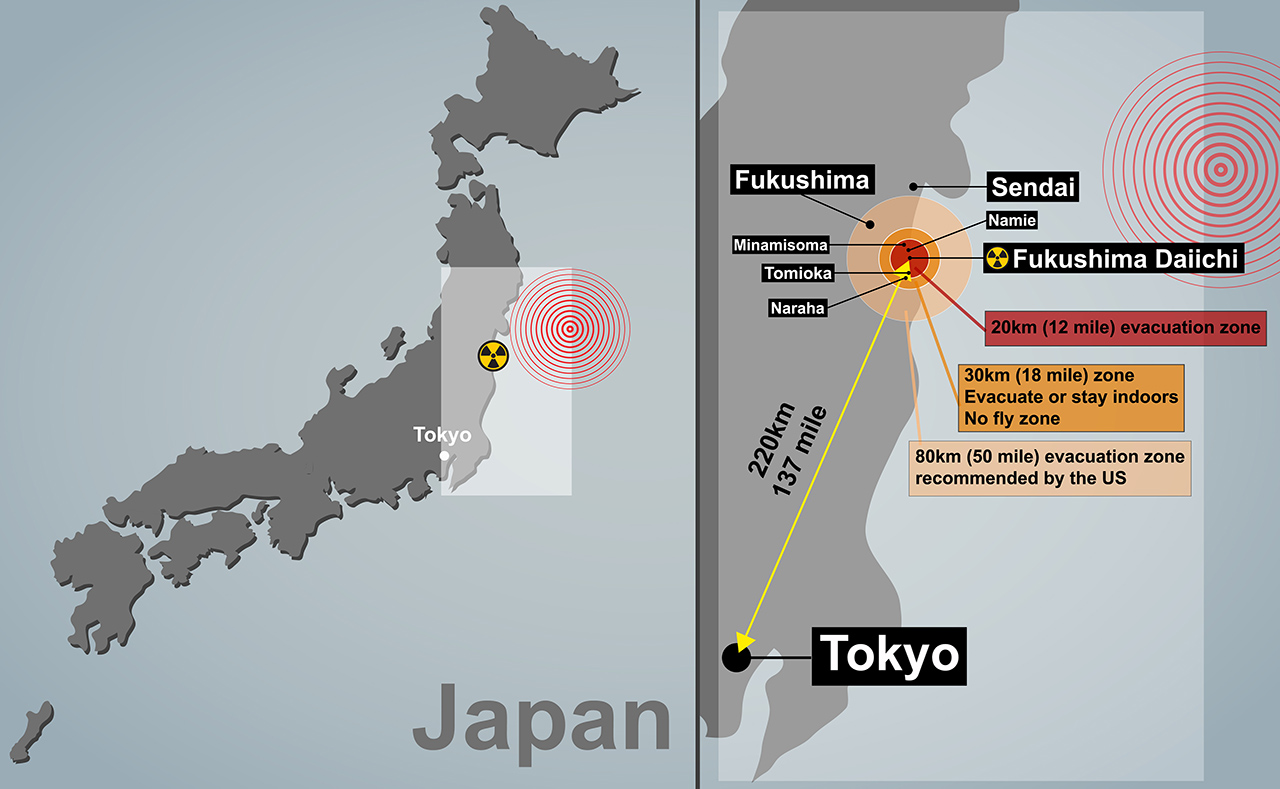
The earthquake epicentre, the location of the Fukushima Daiichi Nuclear Power Station, nearby towns and the three evacuation zones are shown on a map of Japan.
On 11 March 2011, a magnitude 9.0 earthquake occurred off the north-eastern coast of Japan. Known as the Great East Japan Earthquake or Tohoku Earthquake, it was the strongest earthquake ever recorded in Japan. Fukushima Daiichi Units 1, 2 and 3, which were operating at the time, automatically shut down as designed, while Units 4, 5 and 6 were already shut down for inspection and maintenance. The earthquake caused the loss of external grid power, but emergency diesel generators started automatically and initially supplied the electrical power needed for reactor cooling and other essential systems. Although the fission chain reactions had stopped, decay heat from the fuel still had to be continuously removed.
About 50 minutes after the earthquake, a tsunami approximately 13—15 metres high reached Fukushima Daiichi and overwhelmed the plant’s coastal defences. Seawater flooded low-lying buildings and equipment, disabling most emergency diesel generators, electrical switchgear and seawater pumps. Units 1—4 consequently lost almost all AC electrical power, and much of the DC instrumentation and control capability was also eventually lost as batteries were depleted or flooded. This combination of a station blackout and loss of the ultimate heat sink severely impaired the systems needed to remove decay heat from the reactors.
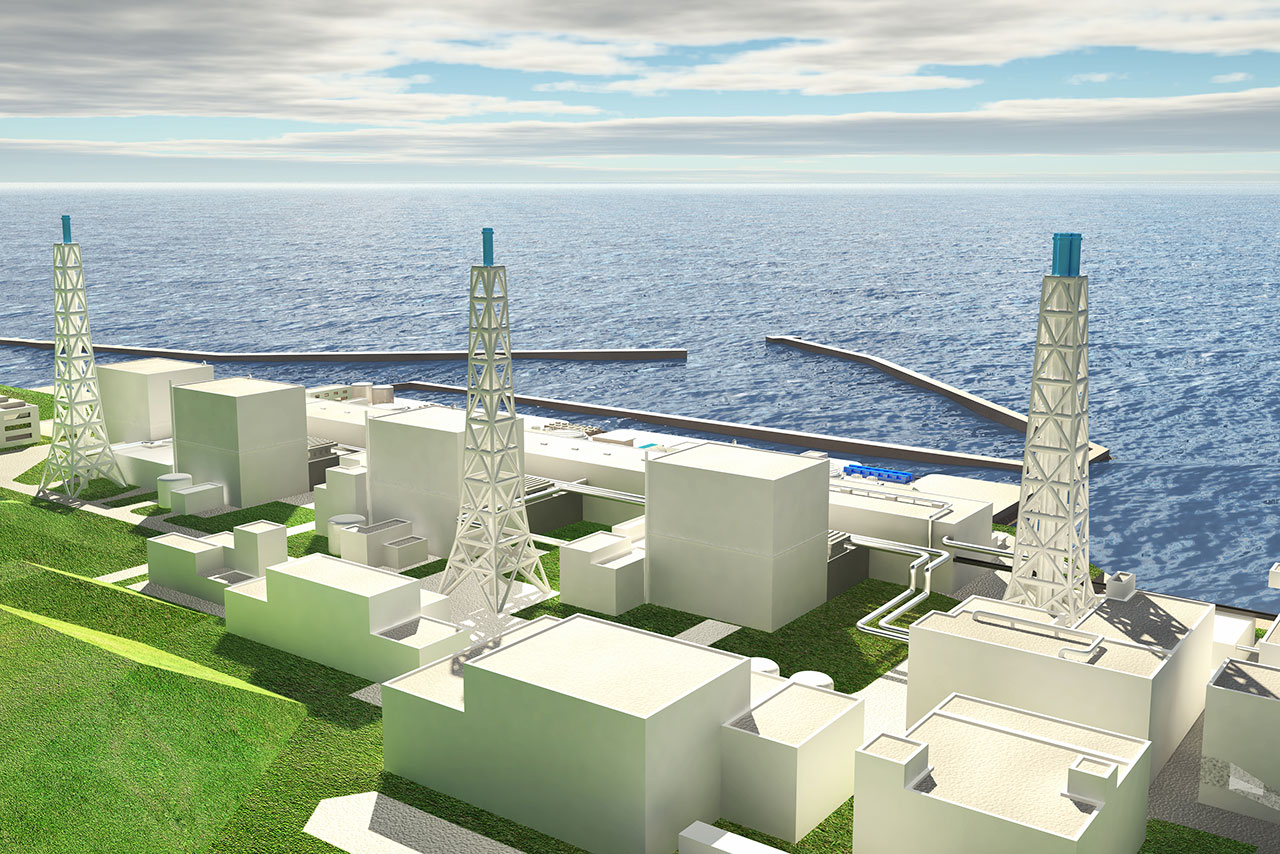
Spatial model of the buildings and equipment of the Fukushima Daiichi Nuclear Power Station. The tsunami exceeded the plant’s design basis and overwhelmed its coastal defences, flooding essential electrical and cooling equipment and ultimately leading to severe accidents in three reactors.
Video: Model of a boiling water reactor with Mark I containment, as used in the damaged units of the Fukushima Daiichi Nuclear Power Station.
Some emergency cooling systems initially continued to operate without AC power, using steam-driven pumps or batteries for control, but they could not maintain cooling indefinitely. Attempts were made to restore electrical supplies using mobile generators, but damaged and flooded equipment made connection difficult. As cooling was progressively lost in Units 1, 2 and 3, water levels in the reactor vessels fell, exposing the fuel. Fuel temperatures rose sharply, the fuel assemblies were severely damaged and substantial parts of all three reactor cores eventually melted.
As the fuel overheated, zirconium-alloy fuel cladding reacted with steam, producing large quantities of hydrogen. Operators attempted to reduce reactor pressure, vent steam and gases from the containments, and inject water into the reactor vessels. When conventional supplies were no longer available, seawater was eventually injected as an emergency measure. Venting and leakage released radioactive material to the environment. Hydrogen that escaped from the containments accumulated in the reactor buildings and caused powerful explosions in Units 1 and 3.

Model cross section of the boiling water reactor used in the Fukushima Daiichi nuclear power plant blocks.
Unit 4, which had been shut down and contained no fuel in its reactor vessel, was also damaged by a hydrogen explosion. Initially, there were concerns that the spent fuel pool had lost water and its fuel was overheating. Later investigations showed that the fuel had remained covered by water and that hydrogen had most likely migrated from Unit 3 into the Unit 4 reactor building through a shared ventilation system. The accident therefore caused severe damage to four reactor buildings, while the reactor cores of Units 1, 2 and 3 suffered meltdowns.
Efforts to stabilise the damaged reactors continued for many months, and a cold shutdown condition was declared in December 2011. Radioactive material was released to both the atmosphere and the Pacific Ocean through venting, leakage and contaminated water. The most radiologically significant releases included iodine-131 and caesium-137. Although Fukushima Daiichi was classified at the same INES level as Chernobyl, UNSCEAR estimates that its releases of radioiodine and radiocaesium were only about one tenth of those from the Chernobyl accident, and most of the atmospheric release from Fukushima was dispersed over the Pacific Ocean.
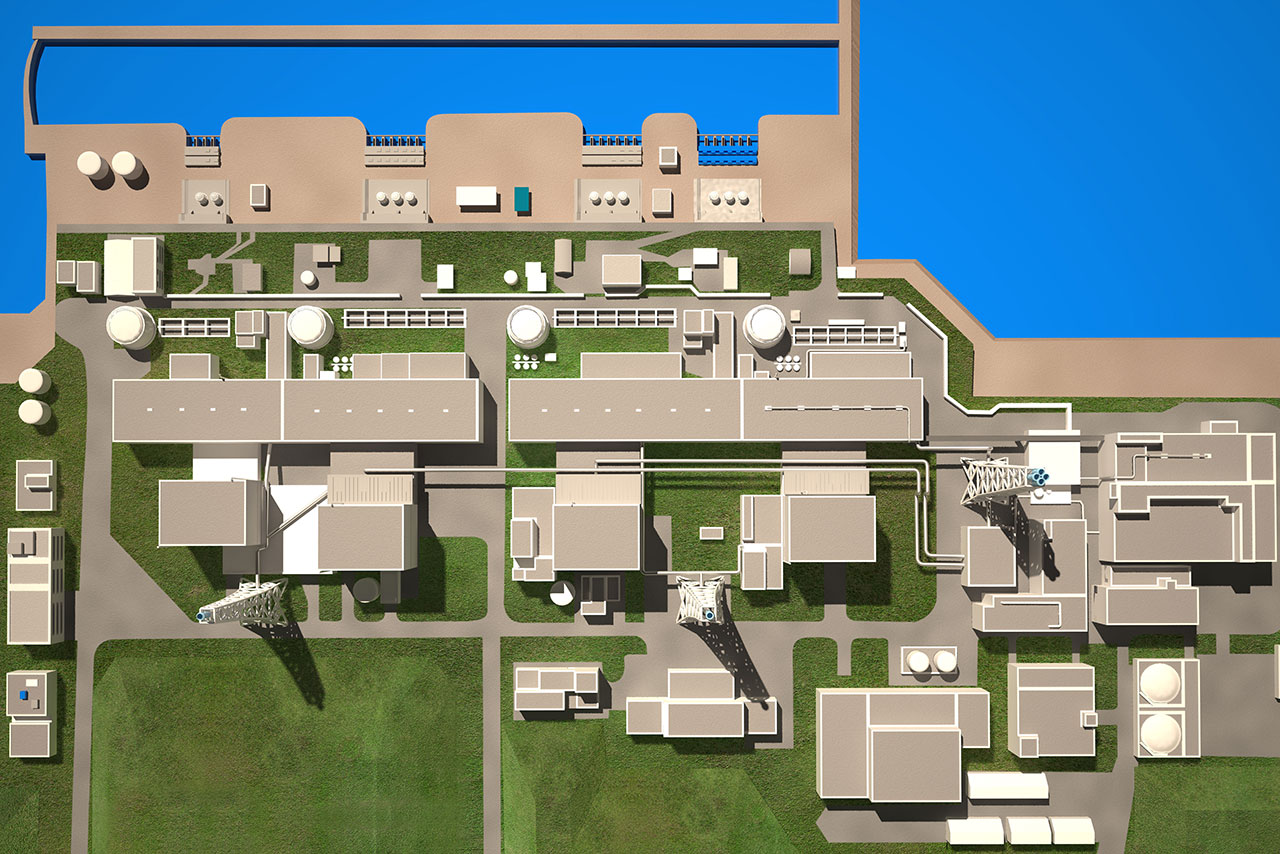
Model of the Fukushima Daiichi Nuclear Power Station, which suffered a severe accident in March 2011. The tsunami flooded low-lying buildings and disabled most emergency diesel generators and electrical equipment, resulting in an almost complete loss of power and severely impairing reactor cooling.
Residents were progressively evacuated as the accident developed. Evacuation initially covered areas close to the plant and was subsequently extended to a 20-kilometre radius, while additional evacuations were later ordered in some more distant contaminated areas. Approximately 160,000 people were displaced as a result of the accident, including those who evacuated voluntarily. No cases of acute radiation sickness occurred among members of the public, and UNSCEAR has found no adverse health effects among Fukushima residents that can be directly attributed to radiation exposure from the accident. Future radiation-related increases in cancer rates are also considered unlikely to be detectable.
More than 20,000 emergency workers participated in mitigation and recovery activities at the plant during the first year. Their average effective radiation dose was about 13 mSv, while 174 workers received more than 100 mSv. No acute radiation syndrome occurred among the workers. Several workers were injured during the earthquake, tsunami and explosions, and two workers at the plant were killed by the tsunami.
The Fukushima Daiichi accident was classified as Level 7, Major Accident, on the INES scale. Its radiological consequences were nevertheless substantially smaller than those of Chernobyl, which is classified at the same level; INES does not imply that all events at a given level have identical consequences. Investigations concluded that the initiating natural disaster was far more severe than the plant’s original design basis, but also identified shortcomings in tsunami hazard assessment, protection against flooding, emergency preparedness and the ability to cope with a prolonged loss of electrical power and cooling.
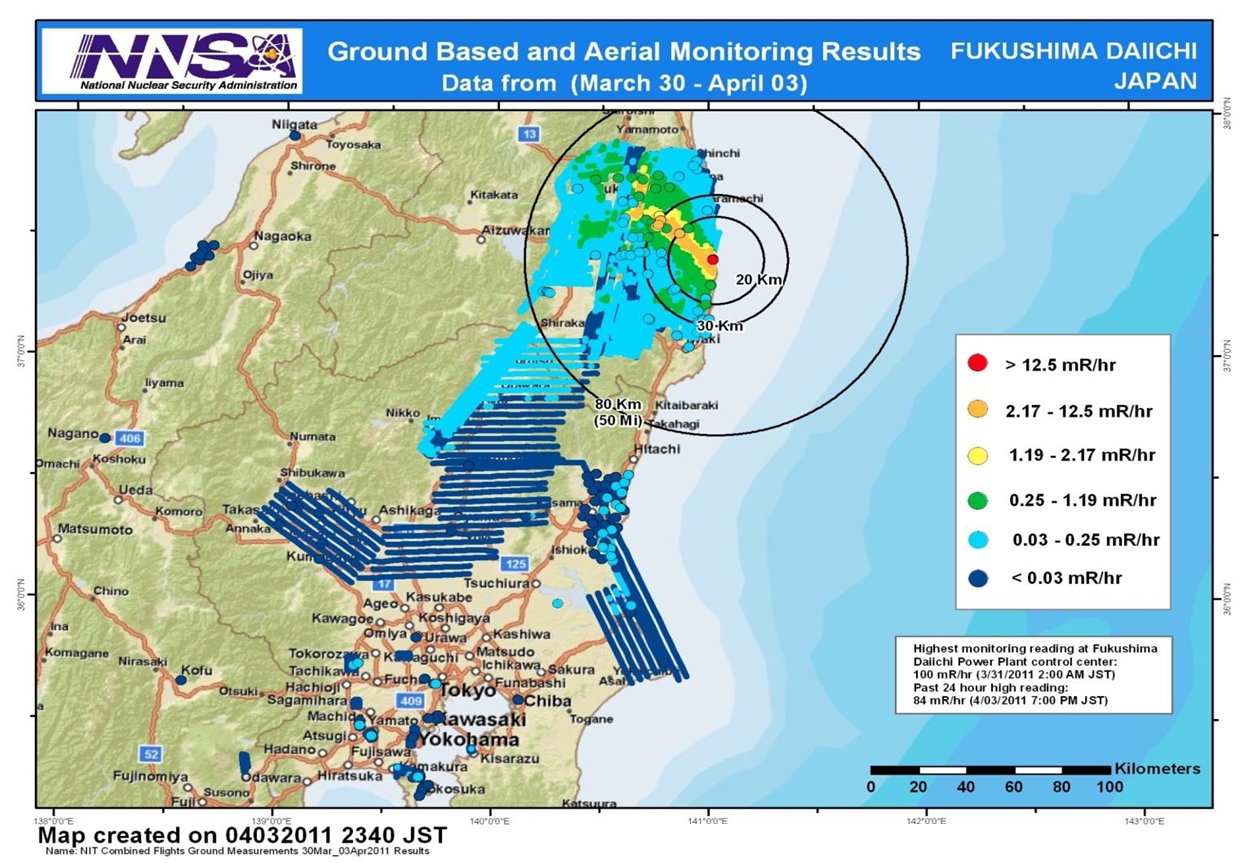
Map of contaminated areas around the plant (22 March – 3 April 2011). Combined results of 211 flight hours of aerial monitoring operations and ground measurements made by DOE, DoD and Japanese monitoring teams.
The accident demonstrated the importance of protecting multiple redundant safety systems against a common external hazard. If electrical systems, emergency generators, batteries and the ultimate heat sink can all be disabled by the same event, redundancy alone may not be sufficient to maintain essential safety functions.
The accident had a major impact on nuclear energy policy and regulation worldwide. Nuclear regulators and operators reassessed the ability of existing plants to withstand extreme external hazards and prolonged losses of electrical power and cooling, leading to additional safety upgrades in many countries. Some countries reconsidered their nuclear energy policies; Germany accelerated its previously planned nuclear phase-out, while Japan temporarily shut down all of its nuclear reactors and subsequently introduced substantially strengthened regulatory requirements before allowing individual units to restart.
Decommissioning of Fukushima Daiichi is a long-term project expected to take several decades and includes the removal of spent fuel, management of contaminated water and, eventually, retrieval of fuel debris from the damaged reactor vessels and containments.
Video: Model of a boiling water reactor operated in the damaged blocks of the Fukushima nuclear power plant.
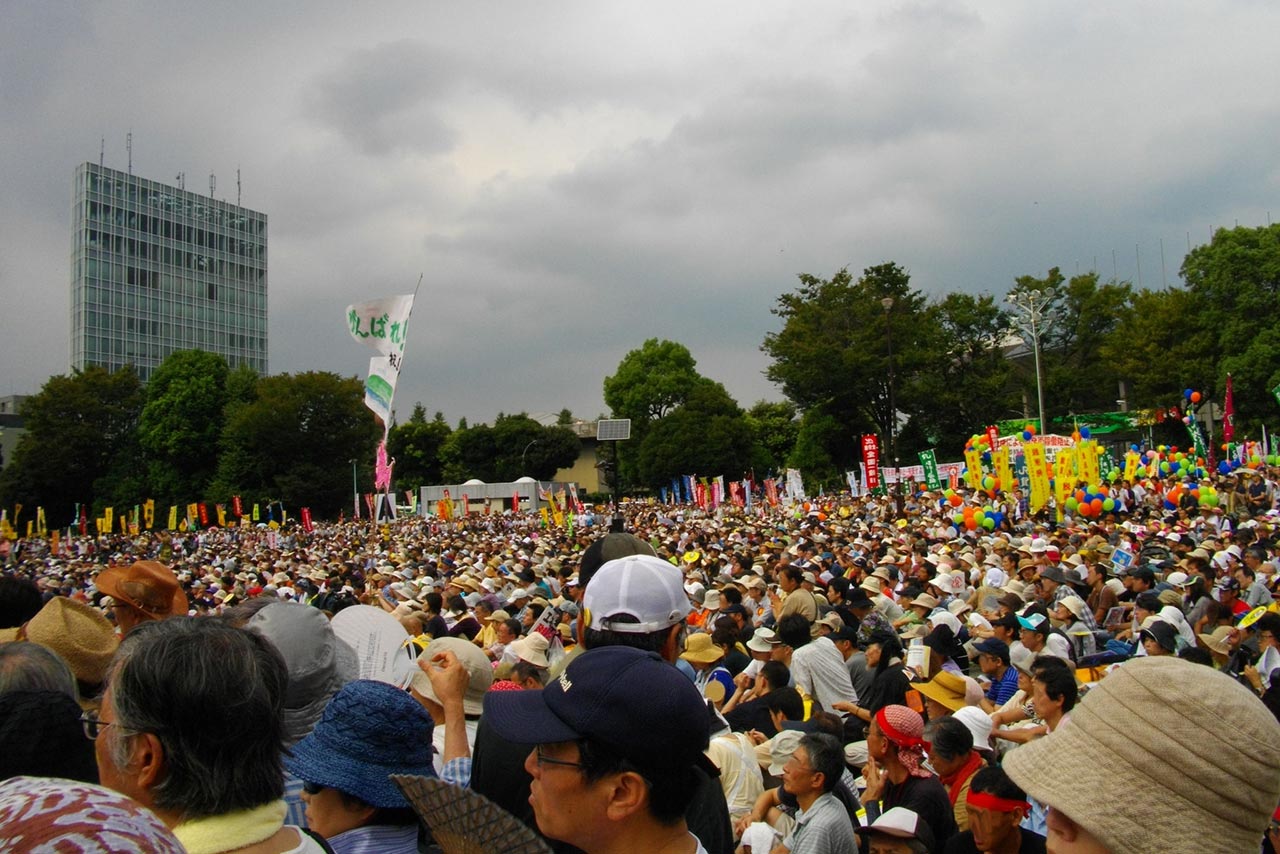
Anti-nuclear power plant rally on 19 September 2011 at the Meiji Shrine complex in Tokyo.

