



International Nuclear and Radiological Event Scale (INES)
5 min read
In the event of an incident at a nuclear power plant or during the handling of radioactive materials, it is essential to provide the public with clear and timely information. For this purpose, the International Nuclear and Radiological Event Scale (INES) was established. This scale, developed jointly by the International Atomic Energy Agency (IAEA) and the Nuclear Energy Agency (NEA) of the OECD, has been in use since 1990. Originally designed to assess nuclear power plant accidents, in 2006 its scope was expanded to cover all events involving radioactive sources, including those in industrial, medical, research, and transport applications.
The INES scale consists of seven levels and is structured—somewhat similarly to the Richter scale—so that each successive level represents a substantially more serious event.
Levels 1 to 3 are termed incidents (with level 1 being also called an anomaly), while levels 4 through 7 are accidents. Events with negligible safety significance are classified below the scale and designated level 0.
Three areas of impact considered by INES
People and the environment
This dimension evaluates whether radioactive materials have been released to the environment and/or if people have been exposed to elevated levels of radiation, including any health, environmental or safety consequences.
Radiological barriers
This category assesses the breach of containment barriers or evidence of radioactive material appearing where it should not be, even in the absence of direct impact on people or the environment.
Defense-in-depth
This aspect measures failures of safety systems or protections that were intended to prevent or mitigate an event. It considers how many layers of protection were bypassed or failed.
Classification procedures & communication
Events are classified by the national regulatory authority of the country where the incident occurs. In cases where the full facts are not yet known, a preliminary classification is issued; it may later be revised when additional information becomes available.
The INES system is used to ensure precise communication with the public, aiming to prevent misunderstanding, exaggeration, or misinterpretation of events of a radiological incident that could result in public alarm.
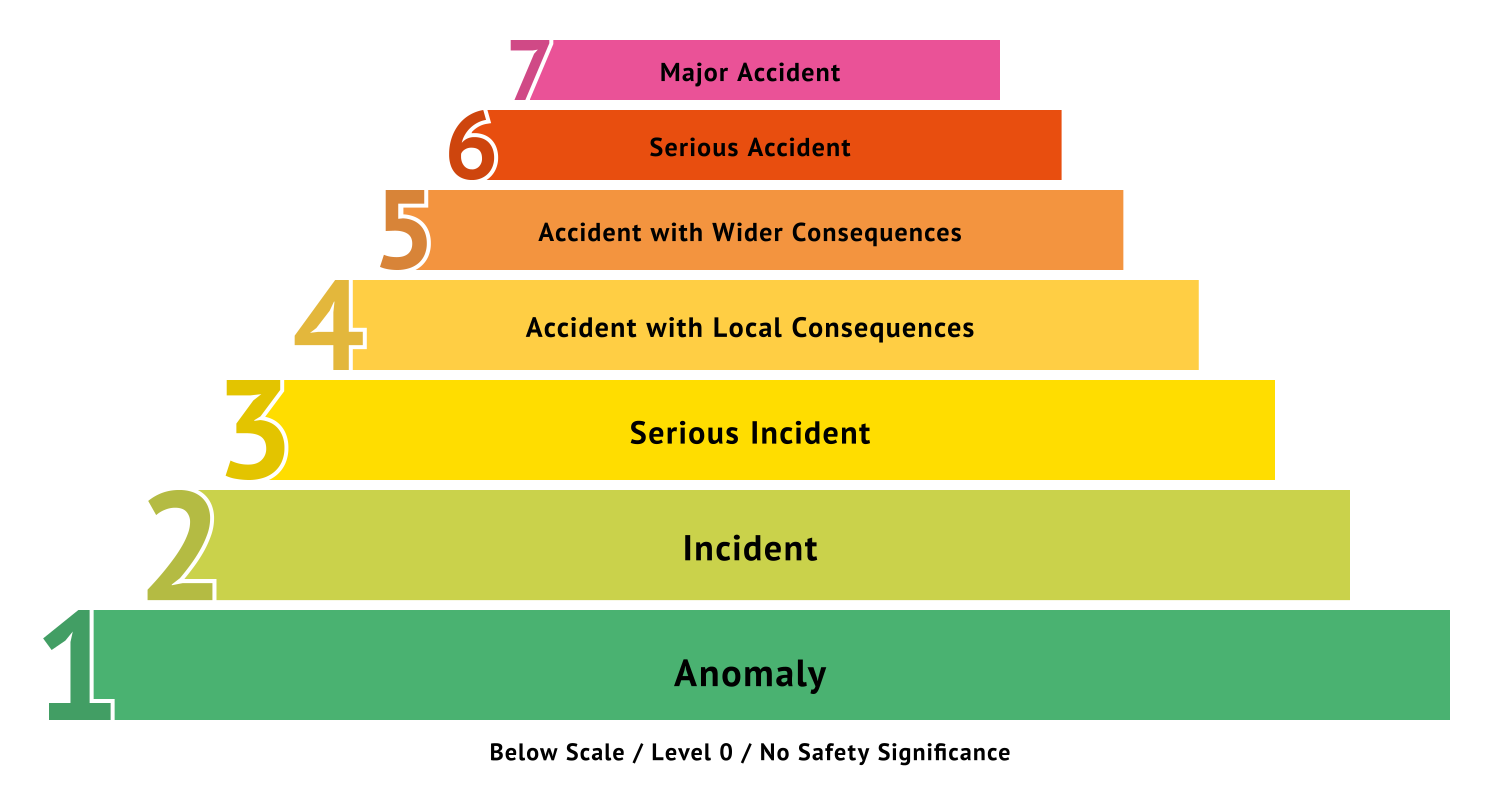
INES scale pyramid (The International Nuclear and Radiological Event Scale).
General description of INES levels
| INES level | People and environment | Radiological barriers and control | Defence-in-depth |
|---|---|---|---|
|
Major Accident LEVEL 7 |
Major release of radioactive material with widespread health and environmental effects requiring implementation of planned and extended countermeasures. |
|
|
|
Serious Accident LEVEL 6 |
Significant release of radioactive material likely to require implementation of planned countermeasures. |
|
|
|
Accident with Wider Consequences LEVEL 5 |
Limited release of radioactive material likely to require implementation of some planned countermeasures. Several deaths from radiation. |
Severe damage to reactor core. Release of large quantities of radioactive material within an installation with a high probability of significant public exposure. This could arise from a major criticality accident or fire. |
|
|
Accident with Local Consequences LEVEL 4 |
Minor release of radioactive material unlikely to result in implementation of planned countermeasures other than local food controls. At least one death from radiation. |
Fuel melt or damage to fuel resulting in more than 0.1% release of core inventory. Release of significant quantities of radioactive material within an installation with a high probability of significant public exposure. |
|
|
Serious Incident LEVEL 3 |
Exposure in excess of ten times the statutory annual limit for workers. Non-lethal deterministic health effect (e.g., burns) from radiation. |
Exposure rates of more than 1 Sv/h in an operating area. Severe contamination in an area not expected by design, with a low probability of significant public exposure. |
Near accident at a nuclear power plant with no safety provisions remaining. Lost or stolen highly radioactive sealed source. Misdelivered highly radioactive sealed source without adequate procedures in place to handle it. |
|
Incident LEVEL 2 |
Exposure of a member of the public in excess of 10 mSv. Exposure of a worker in excess of the statutory annual limits. |
Radiation levels in an operating area of more than 50 mSv/h. Significant contamination within the facility into an area not expected by design. |
Significant failures in safety provisions but with no actual consequences. Found highly radioactive sealed orphan source, device or transport package with safety provisions intact. Inadequate packaging of a highly radioactive sealed source. |
|
Anomaly LEVEL 1 |
|
|
Overexposure of a member of the public in excess of statutory annual limits. Minor problems with safety components with significant defence-in-depth remaining. Low activity lost or stolen radioactive source, device or transport package. |
|
Below scale (deviation) LEVEL 0 |
Event of no or negligible safety significance. |