




The Disposal of Radioactive Waste
5 min read
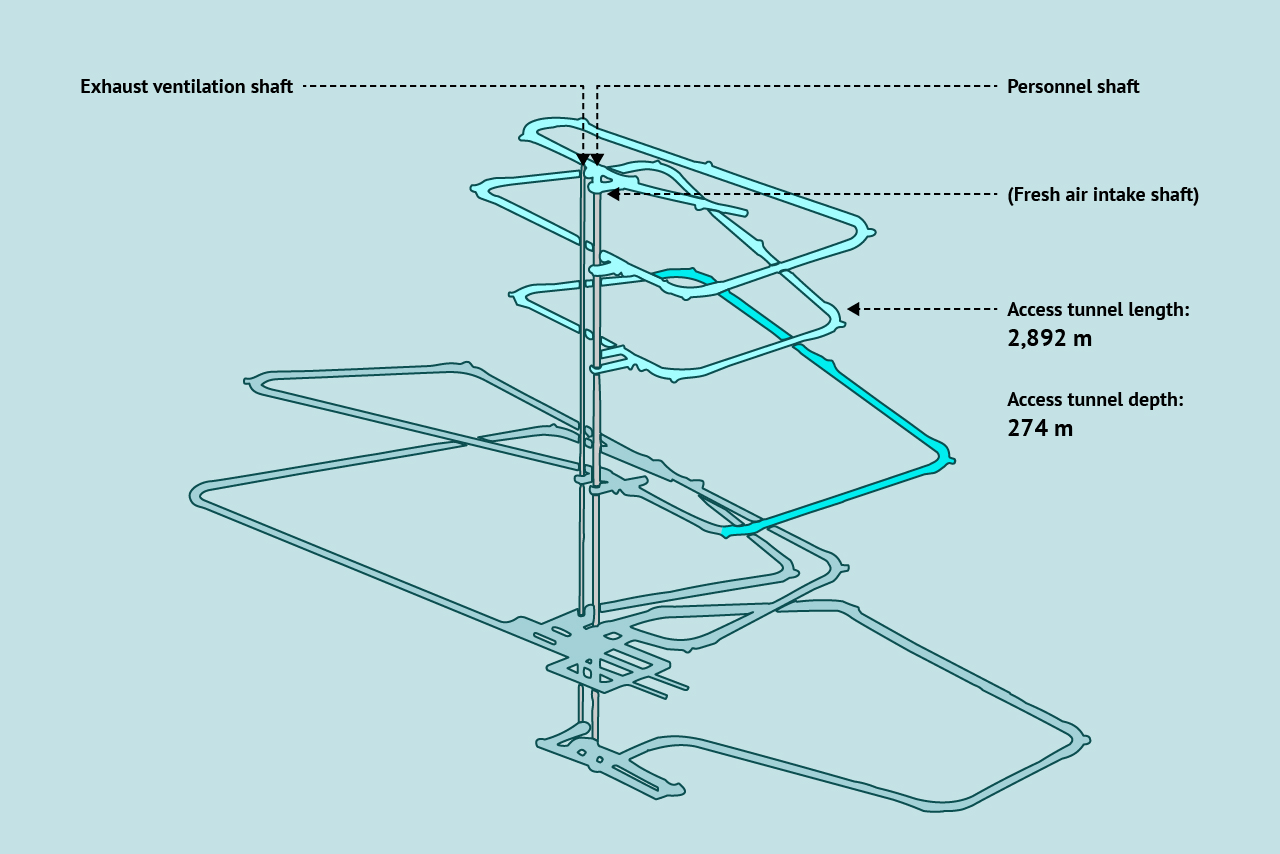
Schematic of the ONKALO deep geological repository at the Olkiluoto site in Finland during an early stage of its construction. The completed repository extends significantly deeper and covers a much larger underground area.
After processing and conditioning, radioactive waste intended for disposal must be placed in a facility that provides safe isolation from people and the environment for as long as the waste presents a significant hazard. Different types of disposal facilities are used depending on the activity, radionuclide content and lifetime of the waste. Short-lived low-level waste can generally be disposed of in near-surface facilities, where engineered and natural barriers provide isolation for several centuries. Long-lived and high-level waste requires a greater degree of isolation, typically provided by disposal facilities constructed deep underground in stable geological formations.
Surface and Near-Surface Repositories
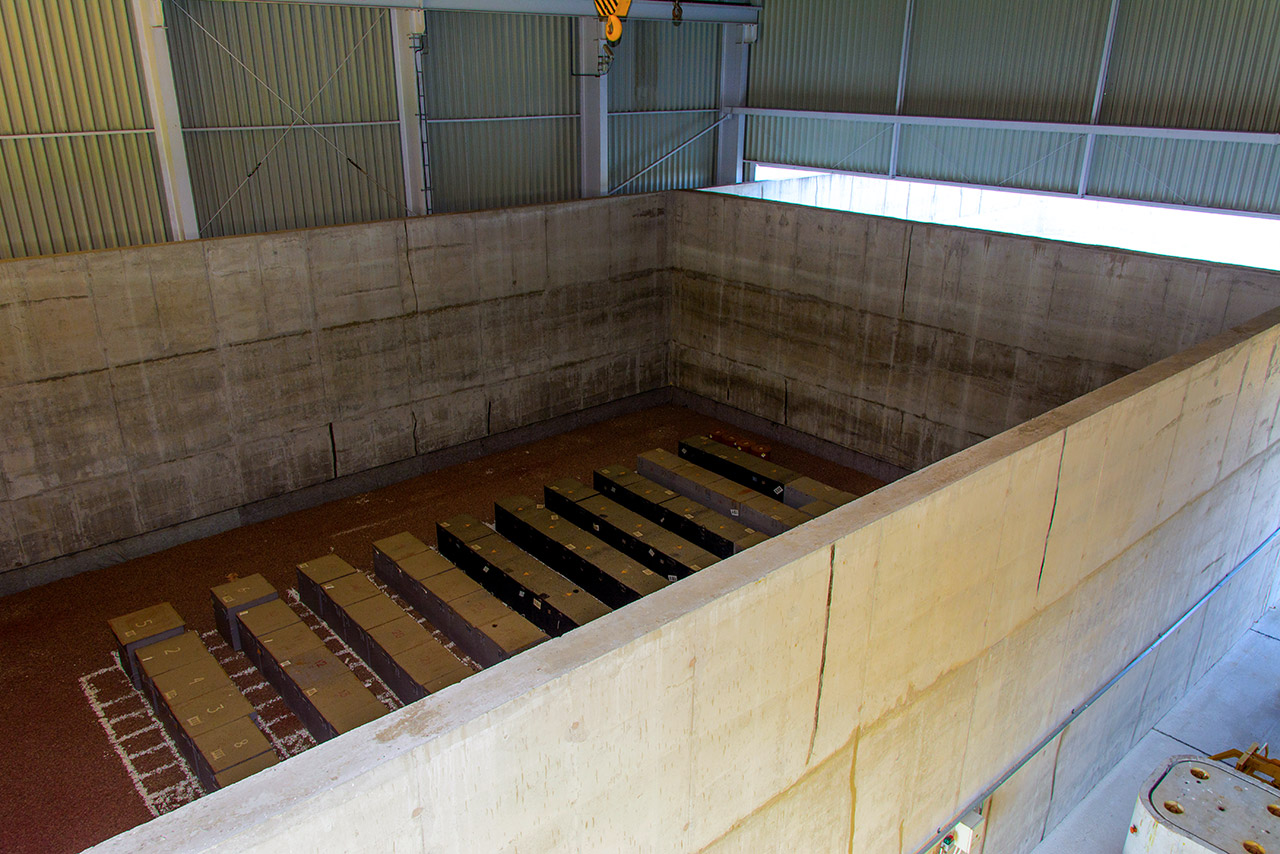
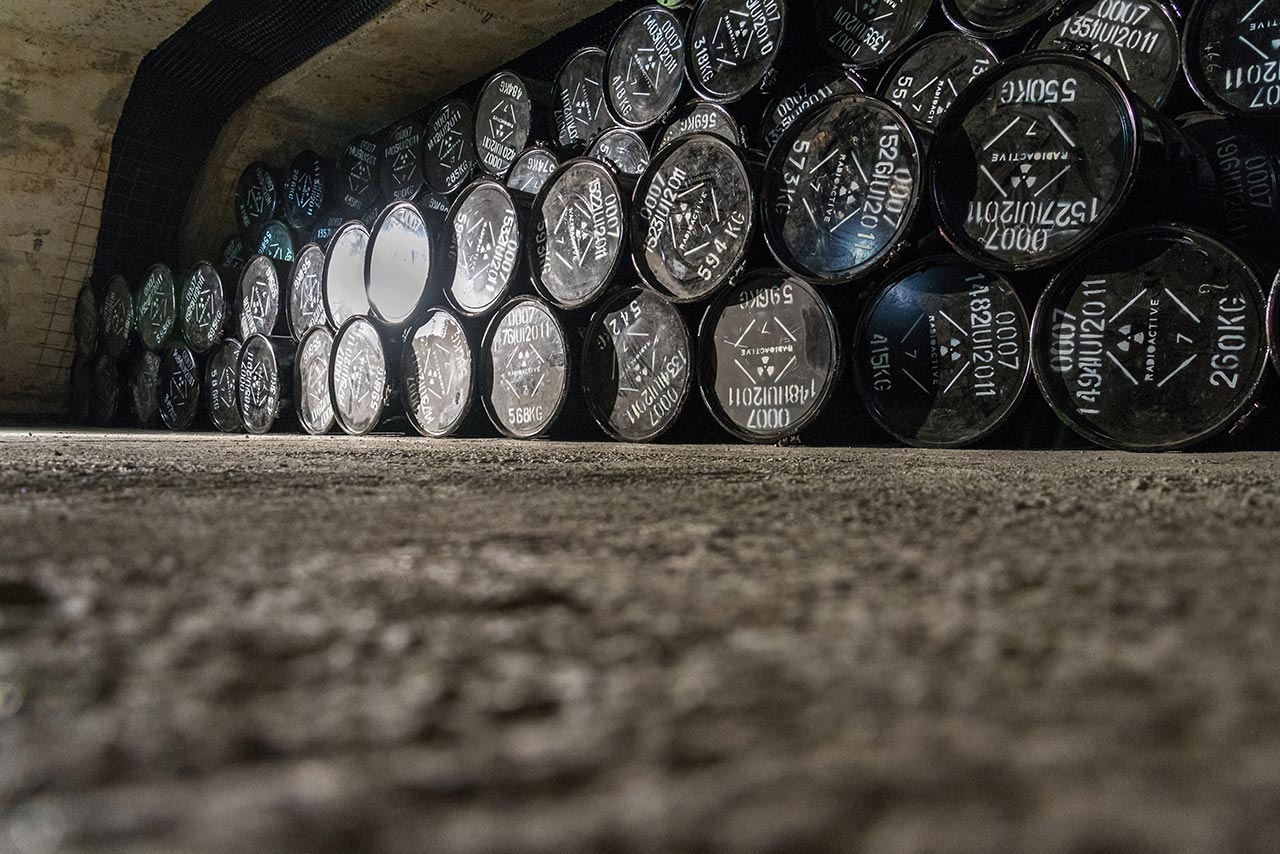
Engineered disposal facilities provide long-term isolation of radioactive waste using reinforced concrete structures and multiple safety barriers.
Surface and near-surface repositories are widely used for the disposal of very low-level and low-level radioactive waste, particularly waste containing mainly short-lived radionuclides. They may consist of engineered structures at or just below the surface, trenches, vaults, silos or rock caverns at depths of up to several tens of metres. Waste packages are placed within engineered barriers and, after the repository is filled, the disposal structures are closed and usually covered with additional protective layers.
Near-surface repositories are subject to monitoring and institutional control after closure, typically for periods of up to several hundred years. Their long-term safety, however, cannot depend indefinitely on human supervision and must ultimately be provided by the characteristics of the waste, engineered barriers and the disposal site itself.
Video: Schematic diagram of the National Radioactive Waste Repository in Mochovce, designed for the disposal of very low-level and low-level radioactive waste.
Free Downloads › Animations
Deep Geological Repositories
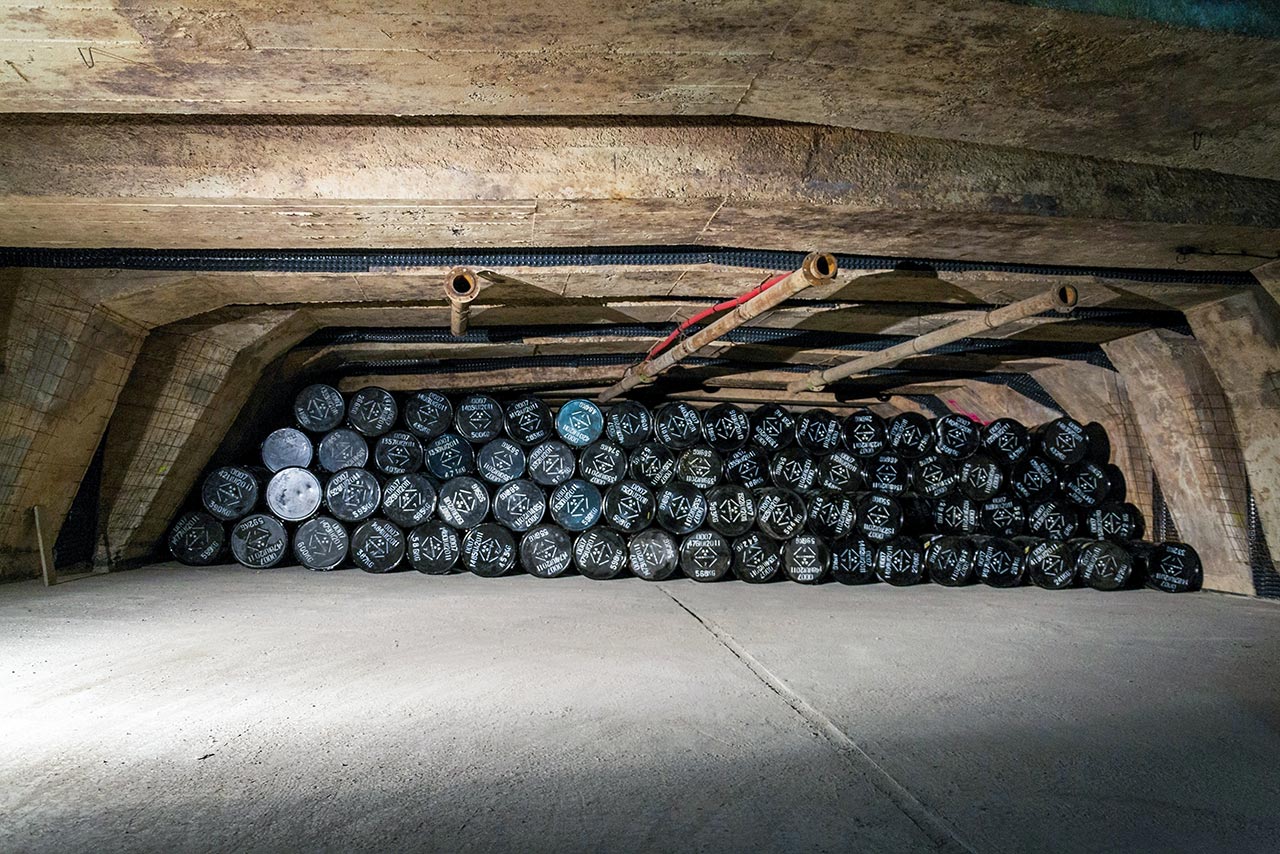
The Richard radioactive waste repository is located in a former limestone mine near Litoměřice in the Czech Republic. It is used mainly for the disposal of institutional radioactive waste from medicine, industry and research.
Deep geological repositories are designed for high-level waste, spent nuclear fuel designated as waste and other long-lived radioactive waste requiring isolation over very long periods. They are constructed hundreds of metres underground in carefully selected stable geological formations, such as crystalline rock, clay or salt. Waste is enclosed in durable disposal containers and surrounded by additional engineered barriers. Together with the surrounding rock, these form a multiple-barrier system designed to contain the radionuclides and greatly retard their migration into the environment.
Unlike a storage facility, a geological repository is designed to remain safe after it has been filled and permanently closed, without requiring continuous human supervision. Repository performance is assessed over timescales extending to hundreds of thousands of years or longer. Several countries are developing geological repositories. Finland’s ONKALO facility at Olkiluoto is the world’s first industrial-scale geological disposal facility for spent nuclear fuel and is currently undergoing final licensing and commissioning before disposal operations begin.
Finland is preparing the world’s first industrial-scale geological repository for spent nuclear fuel. Its disposal tunnels are located more than 400 metres below ground in the bedrock at Olkiluoto.
Other Disposal Concepts
In addition to conventional geological repositories, numerous alternative disposal concepts have been proposed or investigated. Most have not been adopted because of technical, safety, economic or legal considerations.
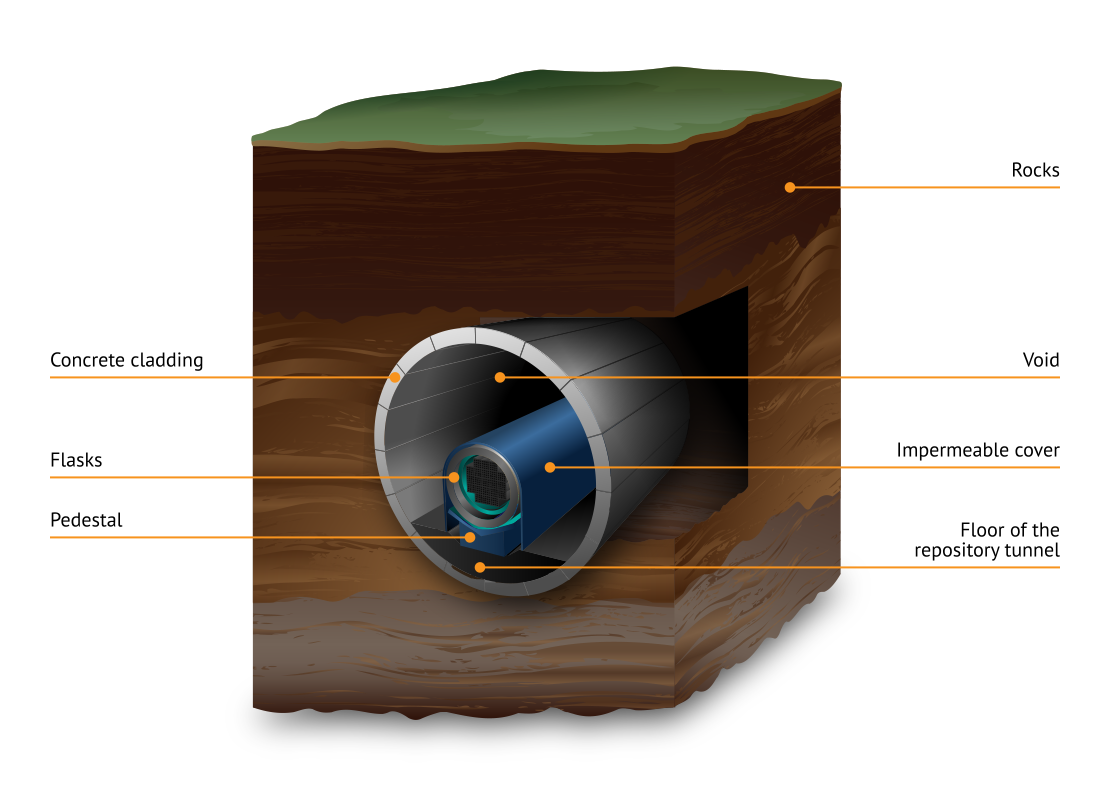
Proposed emplacement of spent nuclear fuel packages in an underground disposal tunnel at the Yucca Mountain geological repository in Nevada, USA.
Free Downloads › Images
- Deep boreholes: waste would be emplaced in specially designed containers several kilometres underground. Deep borehole disposal continues to be investigated for some types of radioactive waste.
- Subduction zones: waste would be placed in geologically active regions where tectonic plates descend into the Earth’s mantle. The concept has not been implemented.
- Disposal at sea: radioactive waste was historically disposed of at sea by several countries, but ocean dumping of radioactive waste is now prohibited under international agreements.
- Sub-seabed disposal: waste would be emplaced beneath sediments on the deep ocean floor. The concept was investigated but has not been implemented.
- Outer space: waste could theoretically be launched away from Earth, but the enormous cost and consequences of a launch failure make this approach impractical.
- Ice-sheet disposal: heat-generating waste would gradually melt into thick polar ice. The concept was abandoned because of environmental, legal and long-term safety concerns.
- Rock-melting concepts: highly heat-generating waste placed underground would melt the surrounding rock, which would subsequently solidify around it. Such concepts have not been implemented.
- Deep-well injection: liquid radioactive waste has historically been injected into suitable deep geological formations in some countries, including Russia and the United States, but this is not a disposal approach generally considered suitable for high-level waste today.
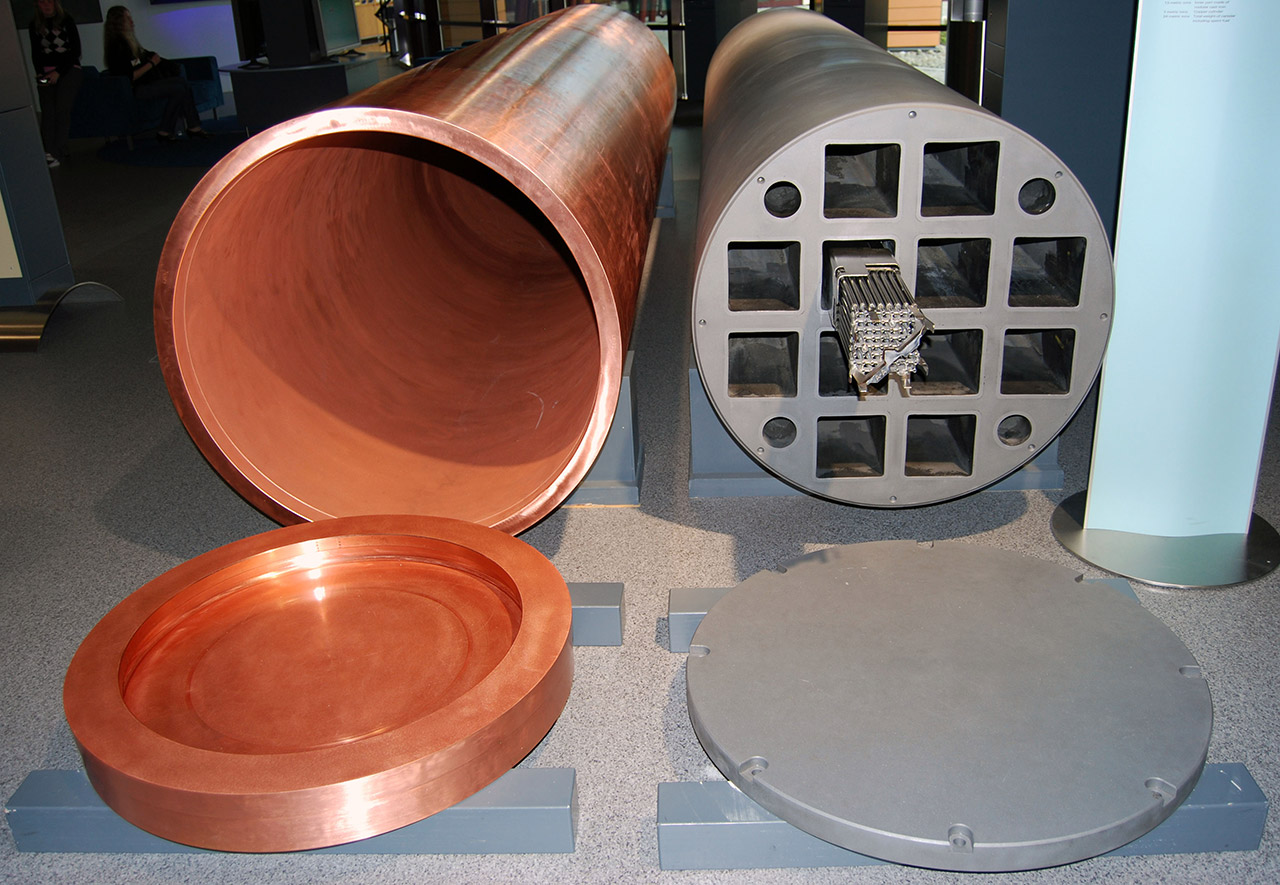
3 pictures
3 pictures