









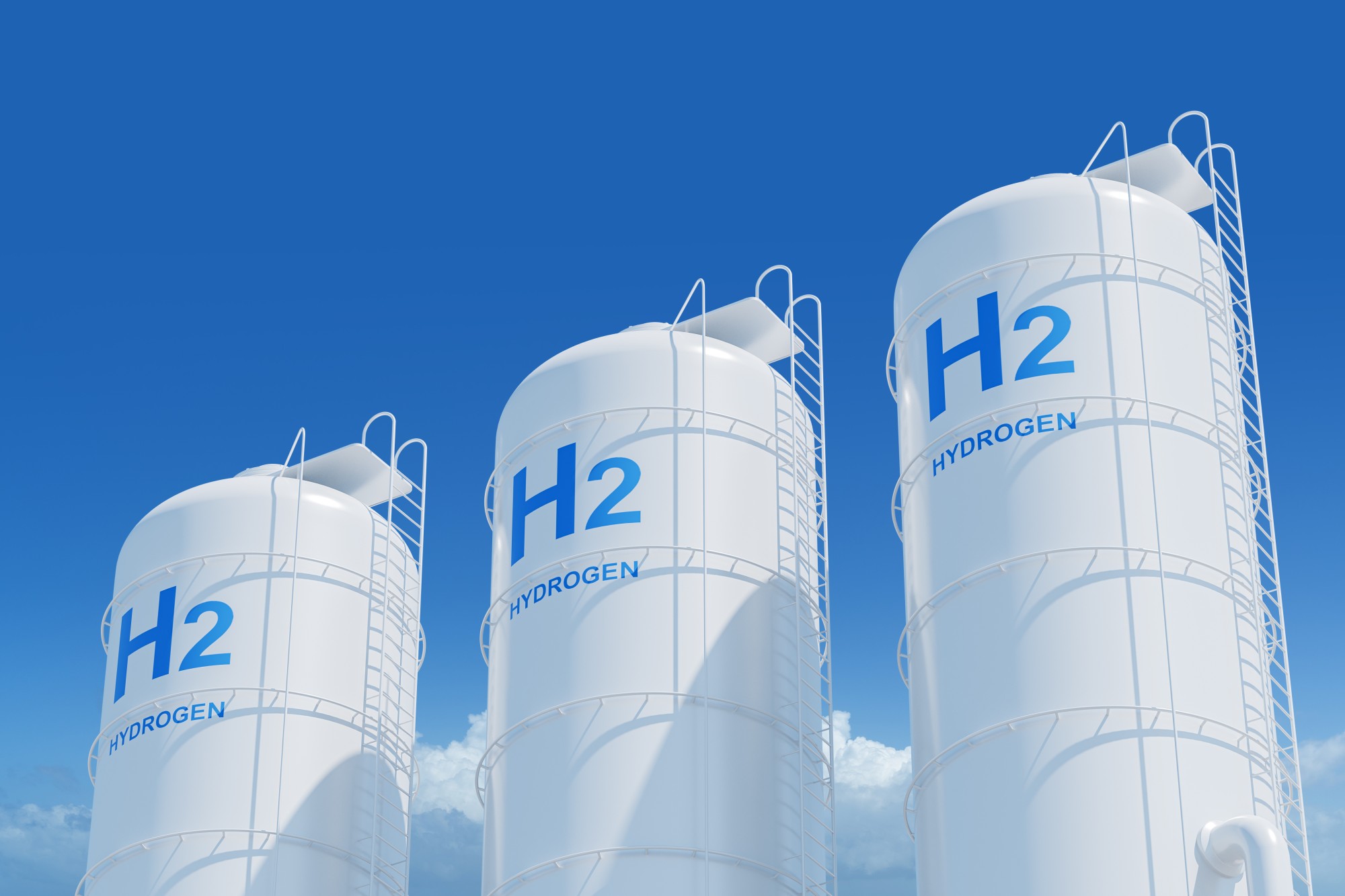
Generally, it’s hard to say. The development of technology is influenced by more aspects than just a physical perspective. In any case, hydrogen appears to be a suitable fuel for two reasons — it has the highest calorific value (meaning it releases the most energy when burned) and its combustion produces only water vapor (I can’t say that no greenhouse gasses are produced because in principle, water vapor is also a greenhouse gas).
Furthermore, we are able to produce hydrogen relatively easily through electrolysis so in cases of excess generated electricity, instead of charging expensive and large batteries, we could produce hydrogen which we could then burn again if needed or use electrolysis to convert it back into electricity.
So, at first glance, hydrogen seems like an ideal way for storing energy and its subsequent utilization. But as is usually the case, the first impression isn’t perfect. Upon deeper analysis, we encounter several disadvantages that complicate the use of hydrogen. The first problem is storage. Because hydrogen is a gas, and also extremely explosive, it has both increased safety requirements and space requirements. For the same amount of energy, we need 3,000 times more space with hydrogen than with diesel. We can also transport, refuel, and utilize oil more easily (and cheaply). In the case of small power outputs (cars, homes), hydrogen is therefore not viable, but for larger power outputs, it could be a possible alternative to fossil fuels.
Another disadvantage is the efficiency of hydrogen production. It ranges between 50—70%, while the efficiency of electricity production from hydrogen is around 50%. So, if we stored the surplus electricity in hydrogen and then used it to cover the missing electricity production, we would utilize approximately 25% of the excess energy.
It can be expected that the stated efficiency values could be increased with further research, and the use of hydrogen could become more efficient.
Regardless, I’d bet on hydrogen as the fuel of the future but not in the case discussed above. If we can manage to operate fusion reactors long-term, hydrogen would truly be the fuel of the future.
Want to ask something?
Send us an e-mail with the subject “Physics mysteries” to the address:
We can't wait to tackle your interesting questions!

