




Three Mile Island (1979)
7 min read
You can view the interactive 3D model of the Three Mile Island nuclear power plant online.
Online 3D Model › PWR Reactor (Three Mile Island)
Free Downloads › Online 3D › PWR Reactor (Three Mile Island)
The Three Mile Island nuclear power plant is located near Harrisburg, Pennsylvania, USA. The site comprises two pressurised water reactor (PWR) units. The first unit, TMI-1, was commissioned in 1974 and supplies 800 MW of electricity to the grid. It is regarded as one of the most reliable reactors in the United States, with a minimal number of unplanned shutdowns. The second unit, TMI-2, with a net electrical output of 906 MW, entered commercial operation on 30 December 1978. Three months later, a serious accident occurred, leading to the unit’s permanent shutdown.
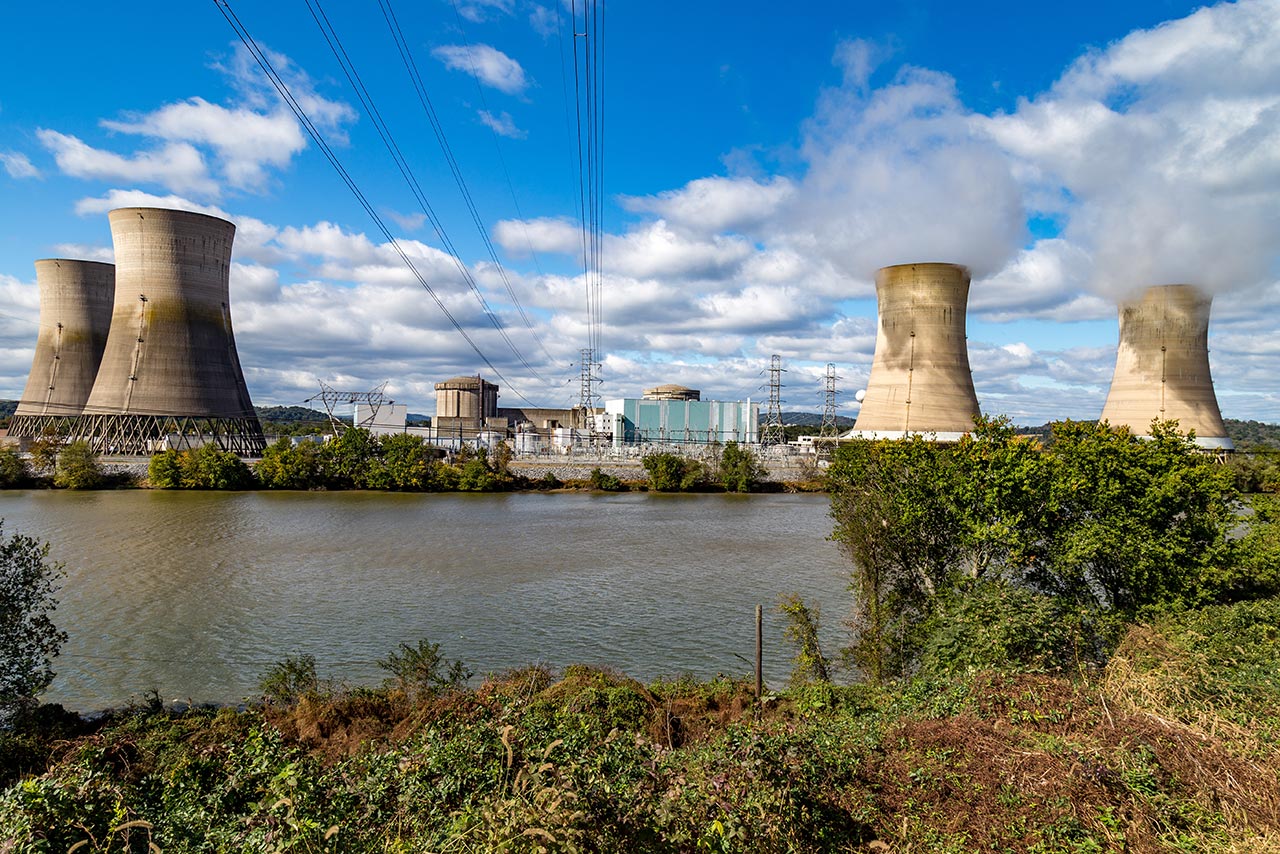
The Three Mile Island nuclear power plant was named after the island situated three miles downstream on the Susquehanna River near Middletown, Pennsylvania, USA.

The video animation describes the principle of operation of the pressurized water reactor used at the Three Mile Island power plant.
The accident began at 4:00 a.m. on 28 March 1979. A minor malfunction in the secondary circuit — a failure of the feedwater pumps – caused a reduction in heat removal from the steam generators and a subsequent temperature rise in the primary coolant circuit. The automatic reactor protection systems responded by inserting the control rods, thereby shutting down the fission chain reaction. However, the decay heat produced by the fission products continued to generate substantial thermal energy, and effective removal of this residual heat was essential.
To control pressure in the primary circuit, a pilot-operated relief valve (PORV) at the top of the pressuriser opened automatically as designed. It was supposed to close once the pressure had dropped to the specified level, but it became stuck in the open position. As a result, coolant in the form of water and steam escaped from the pressuriser into the discharge line, causing a continuous loss of primary coolant inventory.
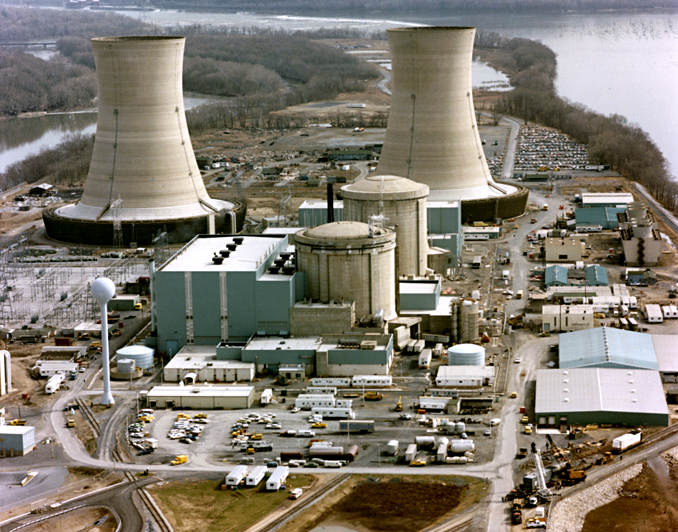
Containments and operational buildings of Units 1 and 2 at the Three Mile Island Nuclear Power Plant. The cooling towers in the background belong to the decommissioned Unit 2.
The decreasing pressure triggered the reactor coolant pumps to increase flow into the primary circuit, but the water-steam mixture continued to escape through the stuck PORV. Because the operators had no direct measurement of the water level in the reactor vessel and relied solely on the pressuriser level indication, they misinterpreted the situation. The rising pressuriser level — caused by condensation of steam and continued coolant inflow — was wrongly interpreted as evidence of over-filling. Moreover, the operators were unaware that the PORV was still open. They concluded that the primary system contained too much water and manually reduced coolant injection, further exacerbating the loss-of-coolant conditions.
As the coolant inventory decreased, parts of the reactor core were uncovered, causing overheating and significant fuel damage. Approximately one-third of the fuel assemblies suffered partial melting. The escaping coolant, now contaminated with fission products, was automatically collected in a tank in the auxiliary building located outside the containment boundary. From there, small quantities of radioactive gas were released into the atmosphere through a ventilation stack.
Video animation illustrating the course of the accident at Unit 2 of the TMI nuclear power plant (also available in the Free Downloads section).
Within several days, the reactor was stabilised and the plant brought into a safe, cold shutdown condition. No further significant release of radioactive material occurred beyond the initial event.
The accident was rated Level 5 on the International Nuclear and Radiological Event Scale (INES). It was the result of several minor technical failures occurring simultaneously, but primarily due to human error by the plant operators. Lacking adequate training and comprehensive diagnostic information on the reactor state, they misinterpreted the situation and their actions exacerbated the event. The safety systems themselves performed as designed; the only major breach of safety was the transfer of of contaminated coolant beyond the containment boundary.
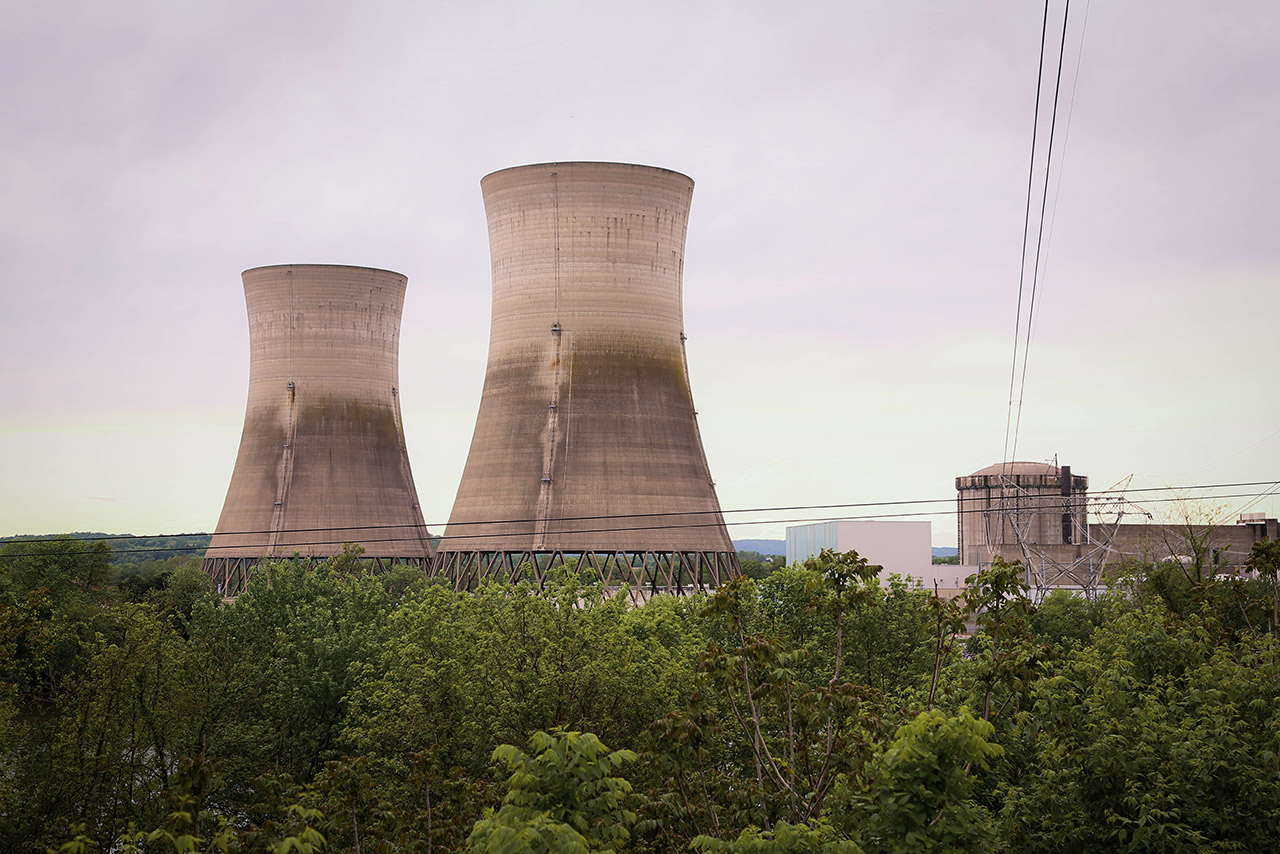
Night view of the first block’s cooling towers at the Three Mile Island nuclear power plant, USA. The accident at TMI-2 resulted in the establishment of WANO, The World Association of Nuclear Operators. This association helps to improve safety by organizing international inspection missions and by sharing examples of good practices used for nuclear power plant operation.
The radioactive release posed no significant threat to the local environment or the population of nearby Harrisburg. Radiological contamination was minimal: members of the public in the vicinity of the plant received an estimated maximum dose of 1 mSv, , and in most cases considerably less (around 0.08 mSv). The health of approximately 32,000 local residents was monitored for 13 years, and no radiation-related health effects were detected.
For some time, the plant operator attempted to downplay the severity and potential consequences of the accident. Poor communication and widespread misunderstandings led to public panic, amplified by sensationalist media coverage. Although no mandatory evacuation was ordered, many residents left the area voluntarily. The release of the film The China Syndrome, which depicted a fictional nuclear accident and premiered just 12 days before the event, likely contributed to the heightened public anxiety.
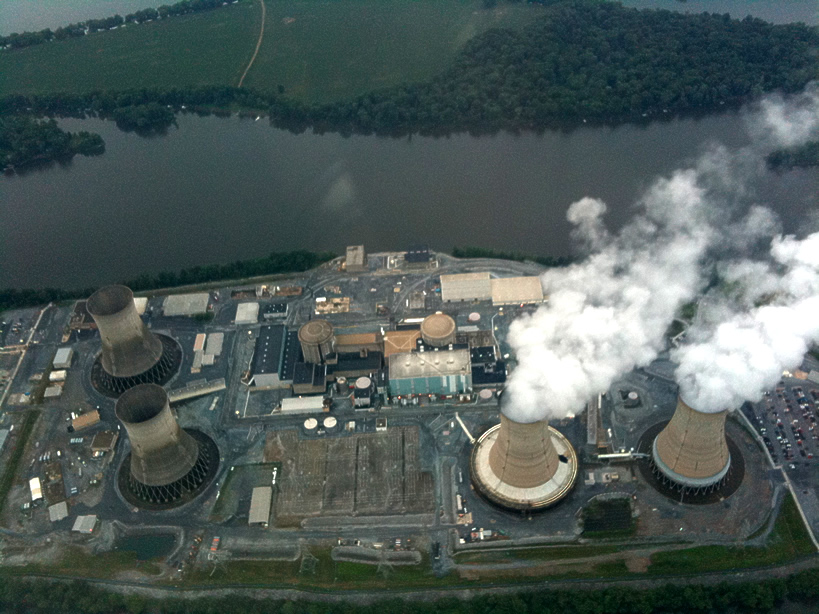
June 2010 photograph of the Three Mile Island Nuclear Power Plant, showing the deactivated Unit 2 on the left and Unit 1 on the right, which has been offline since September 2019.
It took 12 years and approximately USD 973 million to complete the clean-up, a cost exceeding that of constructing a new reactor. TMI-2 was never restarted. The investigation into the causes of the accident resulted in stricter safety regulations and significantly enhanced training requirements for nuclear power plant personnel.
It took several months before it was confirmed that part of the reactor core at Three Mile Island had melted.