


Selection of Strategy and Planning
14 min read
Decommissioning Strategy
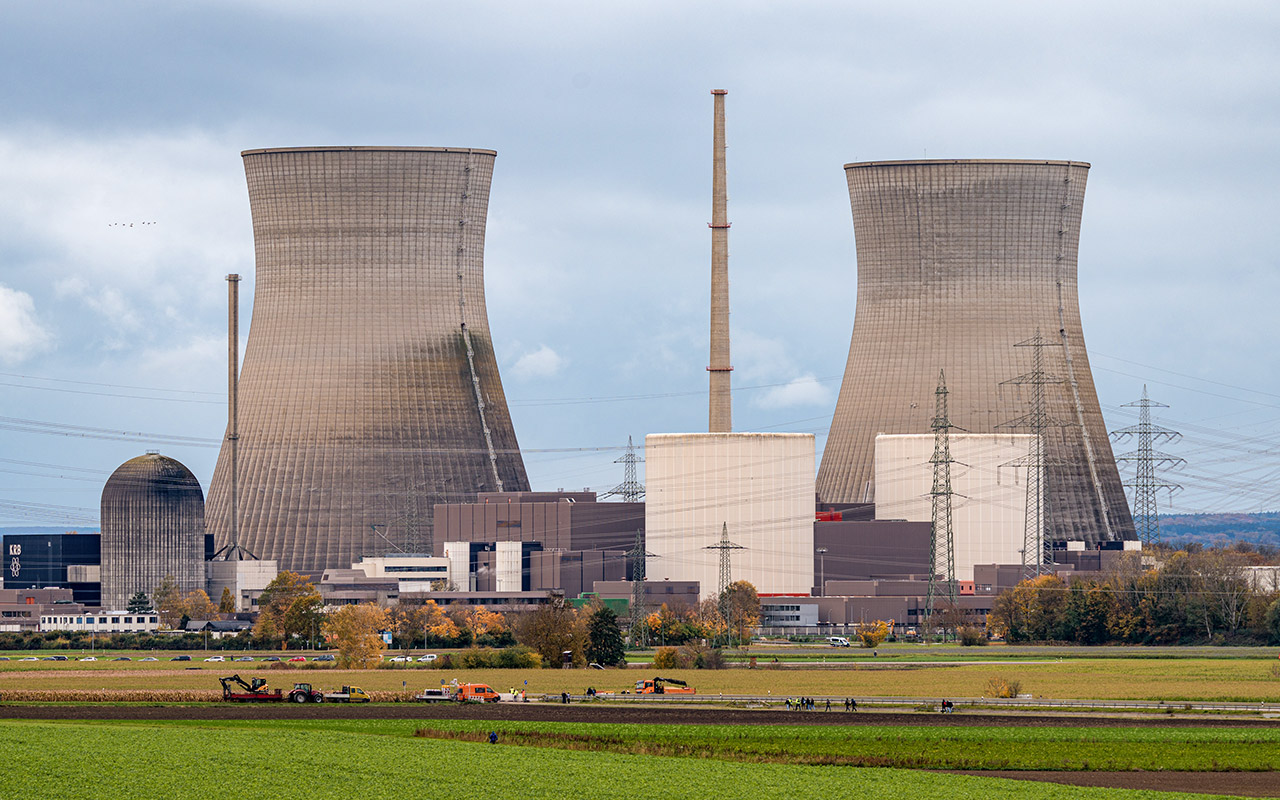
Gundremmingen Nuclear Power Plant is among the well-known examples of immediate dismantling following an early shutdown caused by a serious operational accident.
After the permanent shutdown of a nuclear facility, the operator must decide how the decommissioning process will be implemented. This decision is referred to as the decommissioning strategy and represents one of the most important decisions of the entire process. The selected strategy affects the duration of decommissioning, overall costs, the amount of radioactive waste generated, future site use options, and the radiation exposure of workers.
Worldwide, two principal decommissioning strategies are most commonly used — immediate dismantling and deferred dismantling. In exceptional cases, so-called entombment or in-situ decommissioning may also be applied.
In the case of immediate dismantling, decontamination and dismantling activities begin shortly after the permanent shutdown of the facility. The advantages of this approach include retention of experienced personnel, availability of operational documentation, and the possibility of relatively rapid release of the site for future use. Disadvantages include higher radiation exposure to workers and larger quantities of radioactive waste, since the activity of some radionuclides has not yet had sufficient time to decay naturally.
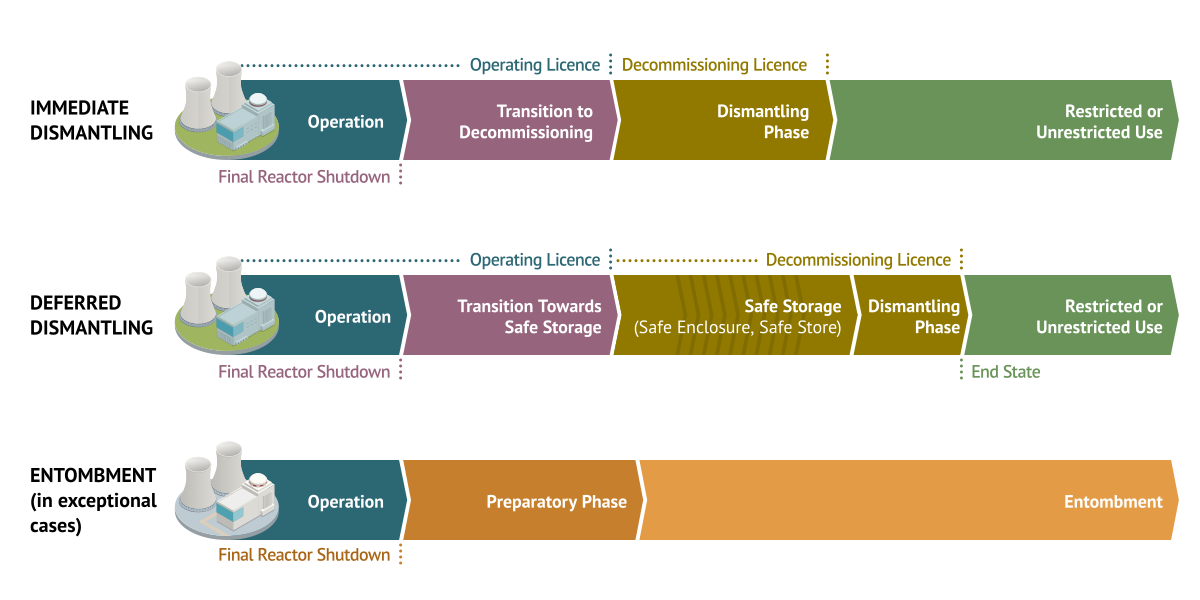
Overview of the principal decommissioning strategies for nuclear facilities and their typical timeline from reactor shutdown to the achievement of the final site condition.
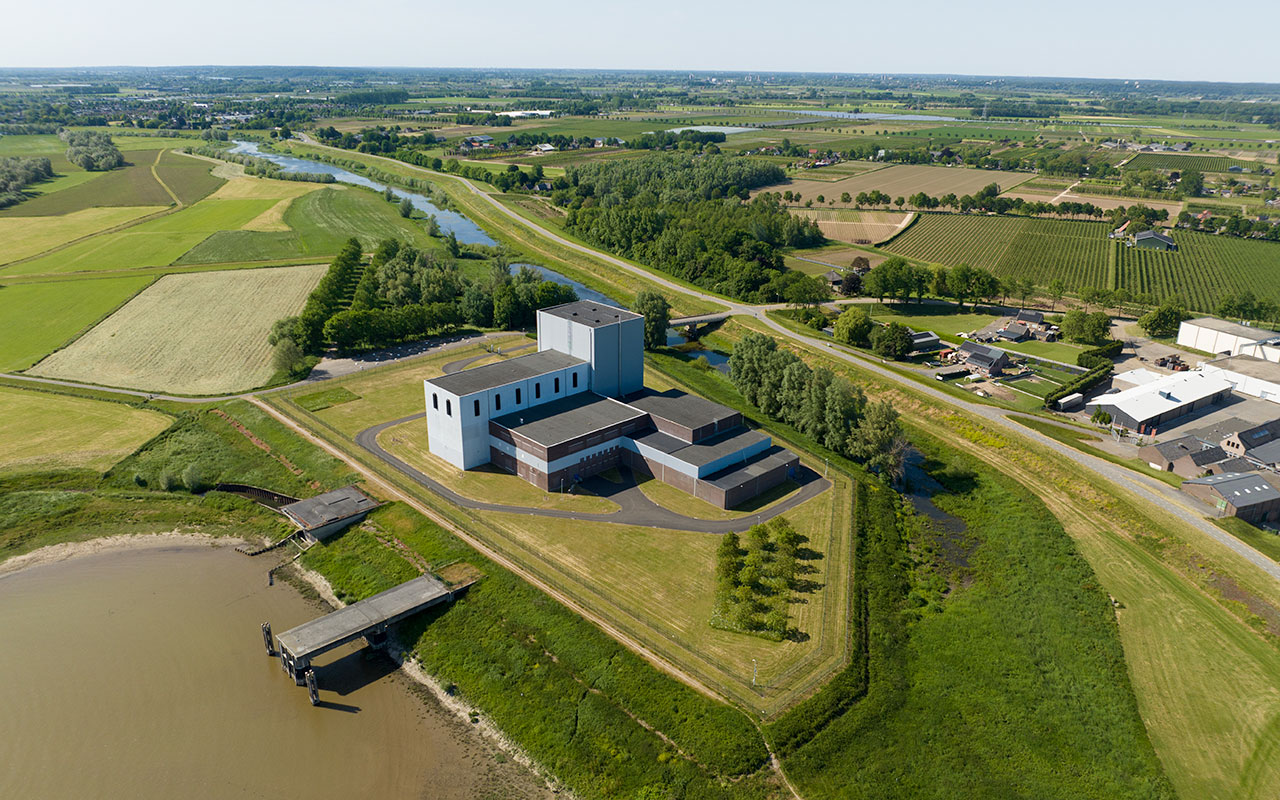
Dodewaard Nuclear Power Plant represents an example of a deferred decommissioning strategy. After the end of operation, the facility was placed into a safe condition in which it will remain for several decades before final dismantling begins.
Deferred dismantling, sometimes referred to as safe enclosure or safe store, involves placing the facility into a safe long-term condition after shutdown, while the actual dismantling activities are postponed for several decades. During this period, part of the radionuclides naturally decay, which may simplify future work and reduce radiation doses to workers. The disadvantages include the need for long-term monitoring of the facility, preservation of specialist knowledge, and postponement of subsequent site activities.
A third option is entombment, in which radioactive parts of the facility are permanently or long-term enclosed on-site, for example within concrete structures. This approach is generally not considered a standard decommissioning strategy and is used only in exceptional situations, such as following severe nuclear accidents or where dismantling would present unacceptable risks.
The selection of an appropriate strategy depends on a wide range of factors. Important considerations include the radiological condition of the facility, the availability of technologies, waste management options, and financial resources. Social and political aspects, regulatory requirements, and the views of the public and local communities also play an important role.
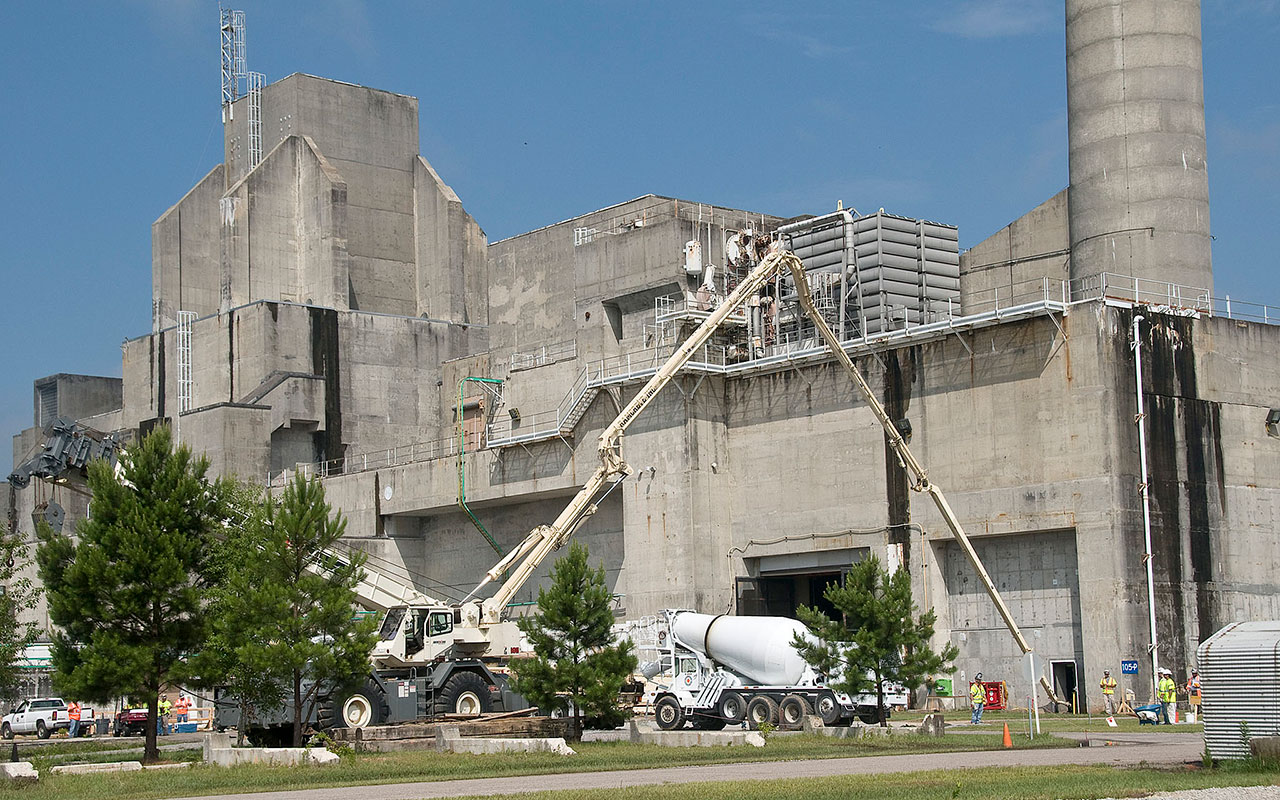
The P Reactor at the Savannah River Site represents an example of an entombment strategy. The above-ground parts of the facility were progressively removed, while some underground structures will remain permanently enclosed on-site.
Deferred dismantling, sometimes referred to as safe enclosure or safe store, involves placing the facility into a safe long-term condition after shutdown, while the actual dismantling activities are postponed for several decades. During this period, part of the radionuclides naturally decay, which may simplify future work and reduce radiation doses to workers. The disadvantages include the need for long-term monitoring of the facility, preservation of specialist knowledge, and postponement of subsequent site activities.
A third option is entombment, in which radioactive parts of the facility are permanently or long-term enclosed on-site, for example within concrete structures. This approach is generally not considered a standard decommissioning strategy and is used only in exceptional situations, such as following severe nuclear accidents or where dismantling would present unacceptable risks.
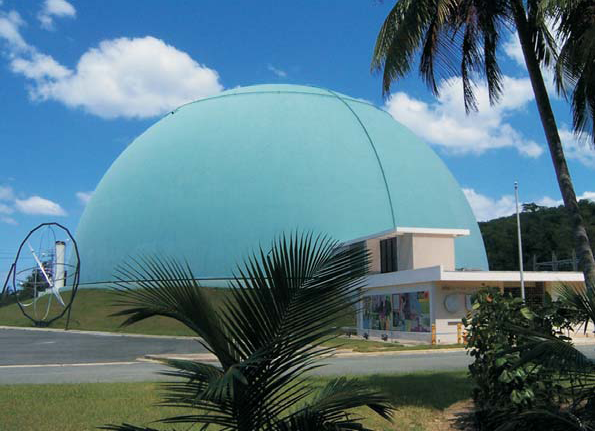
During the decommissioning of the BONUS Reactor Facility, some contaminated and activated components were placed beneath the reactor vessel and subsequently long-term enclosed by concrete filling.
The selection of an appropriate strategy depends on a wide range of factors. Important considerations include the radiological condition of the facility, the availability of technologies, waste management options, and financial resources. Social and political aspects, regulatory requirements, and the views of the public and local communities also play an important role.
In some countries, a specific strategy may be directly defined by legislation or national policy. Elsewhere, the decision is left to the facility operator, who must technically justify the selected approach and obtain approval from the regulatory authorities. At present, immediate dismantling is preferred for most newly decommissioned nuclear power plants, primarily due to the availability of modern decontamination and dismantling technologies.
Immediate dismantling
- Big Rock Point Nuclear Power Plant, USA
- Fort St. Vrain Generating Station, Colorado, USA
- Greifswald Nuclear Power Plant, Germany
- Gundremmingen A Nuclear Power Plant, Germany
- Maine Yankee Nuclear Power Plant, USA
- NPP V1 Jaslovske Bohunice, Slovak republic
- Shippingport Atomic Power Station, Pennsylvania, USA
Examples of nuclear power plants where an immediate dismantling strategy was selected shortly after permanent shutdown.
Deferred dismantling
- Barsebäck Nuclear Power Plant, Sweden
- Berkeley Nuclear Power Station, Gloucestershire, England
- Dodewaard Nuclear Power Plant, the Netherlands
- Gentilly Nuclear Generating Station, Quebec, Canada
- Latina Nuclear Power Plant, Italy
- San Onofre Nuclear Power Plant, California, USA
- Vandellòs Nuclear Power Plant, Spain
- Vermont Yankee Nuclear Power Plant, Vermont, USA
Examples of nuclear facilities where a deferred dismantling strategy was selected after shutdown, allowing radioactive decay before the start of major dismantling activities.
Entombment/In-situ Decommissioning
- Boiling Nuclear Superheater (BONUS) Reactor Facility, Rincón, Puerto Rico
- Hallam Nuclear Generating Station, Nebraska, USA
- Industrial Uranium-Graphite Reactors, Tomsk region, Russian Federation
- P-reactor, Savannah River Site, USA
- Piqua Nuclear Generating Station, Ohio, USA
In exceptional cases, a strategy involving long-term entombment of contaminated parts of a facility directly on-site may be used during decommissioning.
Factors Influencing the Selection of a Strategy
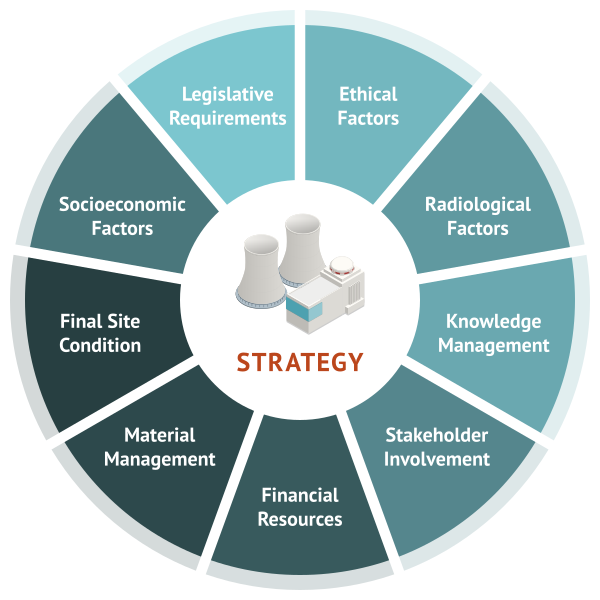
The selection of a decommissioning strategy depends on a broad range of technical, economic, legislative, and societal factors that together influence both the progress and the final outcome of the entire project.
Selecting a decommissioning strategy is not a simple technical decision. Every nuclear facility has a different design, different radiological conditions, and contains different quantities of radioactive materials. For this reason, a wide range of technical, economic, legislative, and societal factors must be assessed simultaneously during the decision-making process.
One of the most important factors is the radiological condition of the facility. For some radionuclides, radioactivity decreases significantly over time, which may favour deferred dismantling. An important role is also played by the management of materials and waste arising during decommissioning, for example whether facilities for the treatment and disposal of radioactive waste are available.
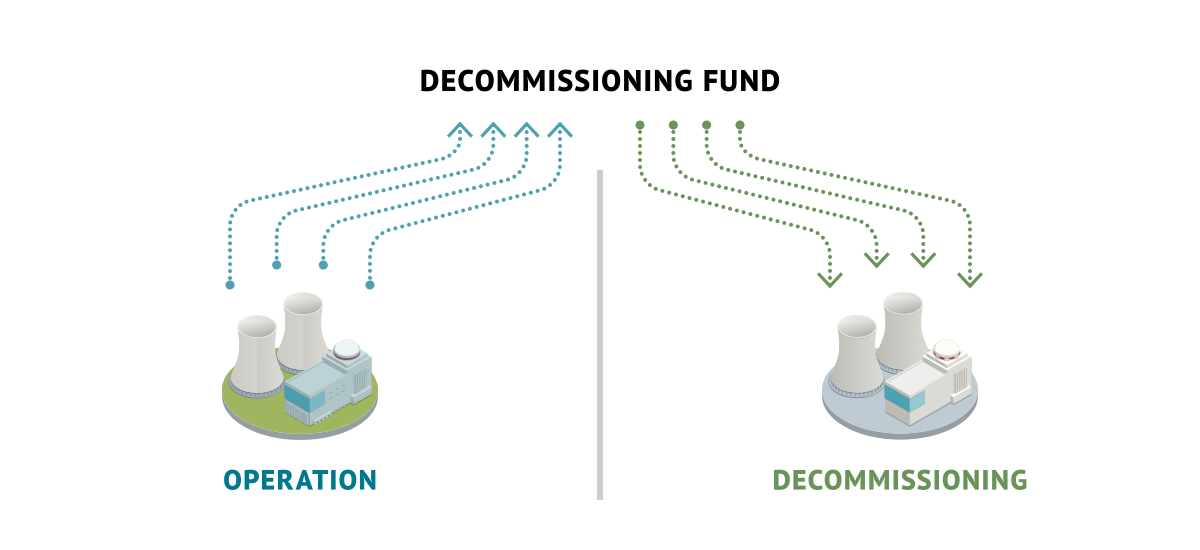
Future decommissioning costs are usually financed through special funds into which the operator contributes during the operational lifetime of the facility.
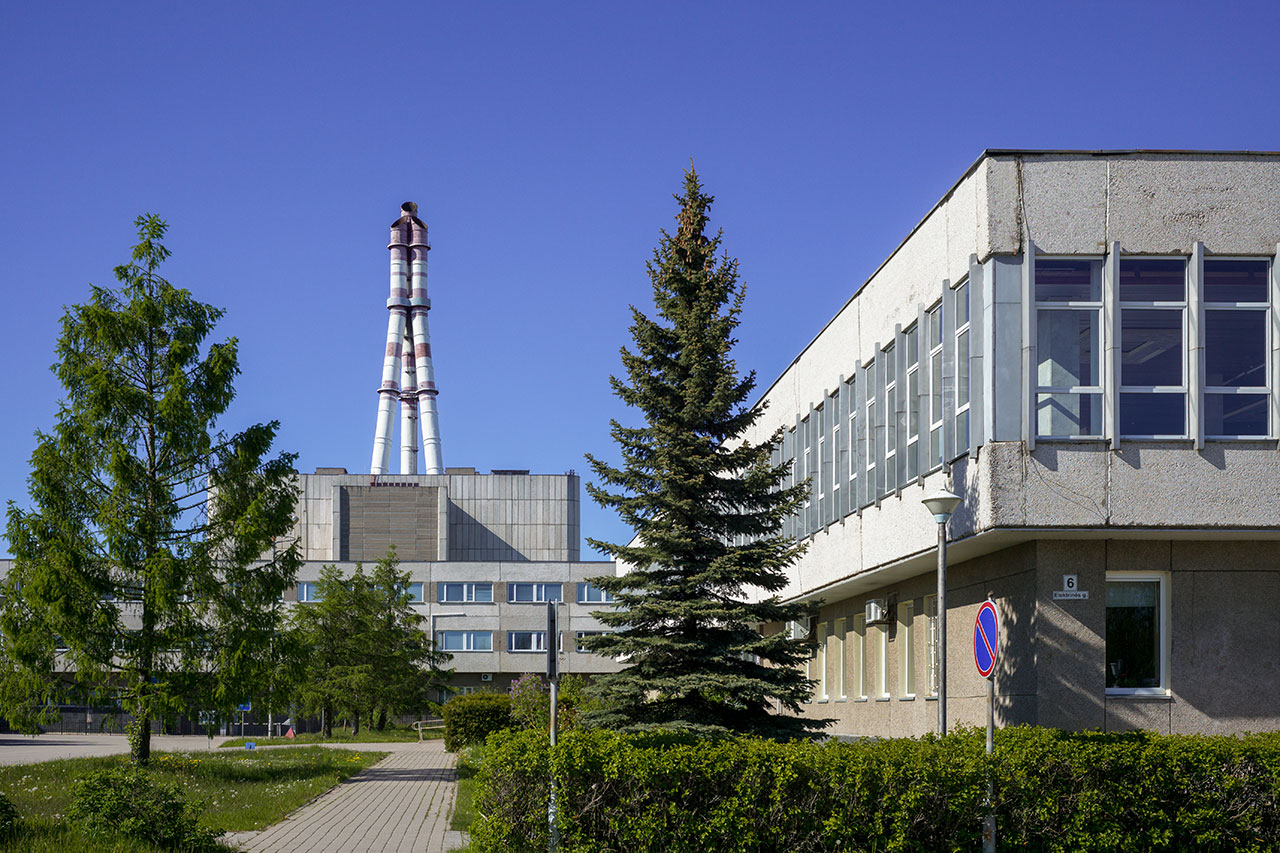
The shutdown of Ignalina Nuclear Power Plant had a major impact on the economy of the town of Visaginas, which was originally built primarily for nuclear power plant employees. Decommissioning of the facility therefore also includes addressing the long-term social and economic impacts on the entire region.
Financial resources, regulatory requirements, and the planned final site condition are also important considerations. Nuclear decommissioning is a long-term and financially demanding process; therefore, dedicated funds intended for financing future decommissioning activities are established already during facility operation.
The social and economic impacts of decommissioning are also becoming increasingly important. The shutdown of a large nuclear power plant can significantly affect regional employment and the local economy. As a result, communication with the public and the search for the most suitable long-term solution are often important parts of the strategy selection process.
The estimated cost of decommissioning a large nuclear power plant can exceed the original construction cost of some older reactors.
(World Nuclear Association — Decommissioning Nuclear Facilities)
Decommissioning Planning

The decommissioning of nuclear facilities is a technically complex process requiring careful preparation, detailed planning, and continuous updating of individual project stages throughout the entire lifetime of the facility.
The decommissioning of a nuclear facility is an exceptionally complex and long-term process that requires thorough preparation. In the field of decommissioning, the well-known principle is often used: “Failing to plan is planning to fail” — if planning fails, the entire project is likely to fail as well.
Decommissioning planning therefore does not begin only after facility shutdown, but already during the design and construction phases. Modern nuclear facilities must take future dismantling, decontamination, and waste management into account already at the design stage. Planning then continues throughout the operational lifetime of the facility and is progressively refined according to the actual technical and radiological condition of the installation.
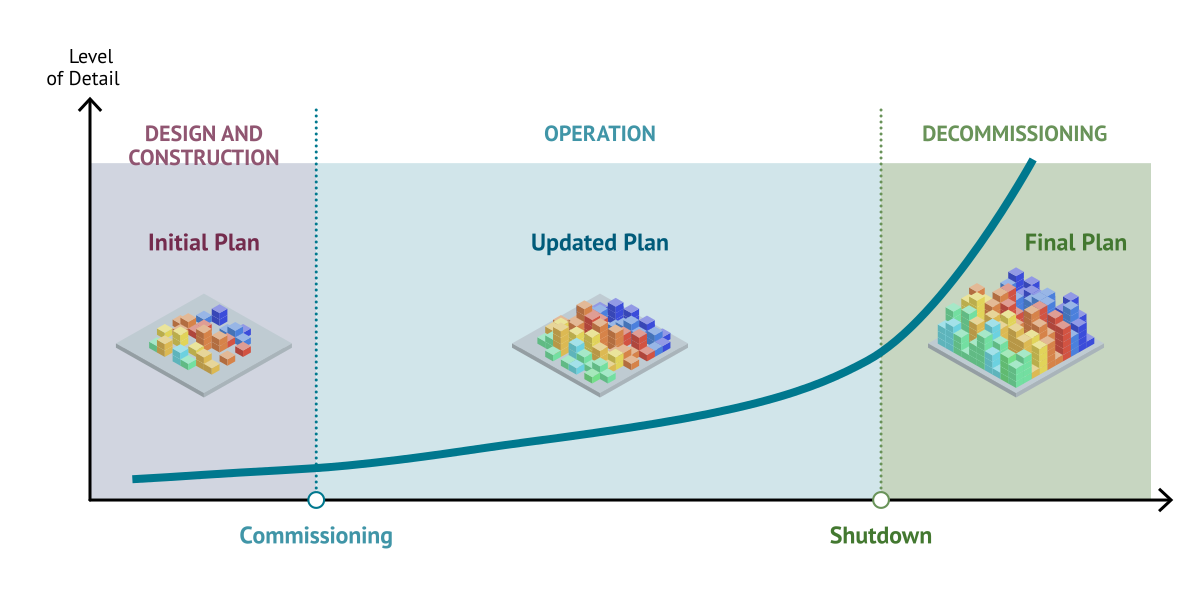
Decommissioning planning begins already during the design and construction phase of a nuclear facility. As the end of operation approaches, the plan is progressively refined and supplemented with detailed technical and radiological information.
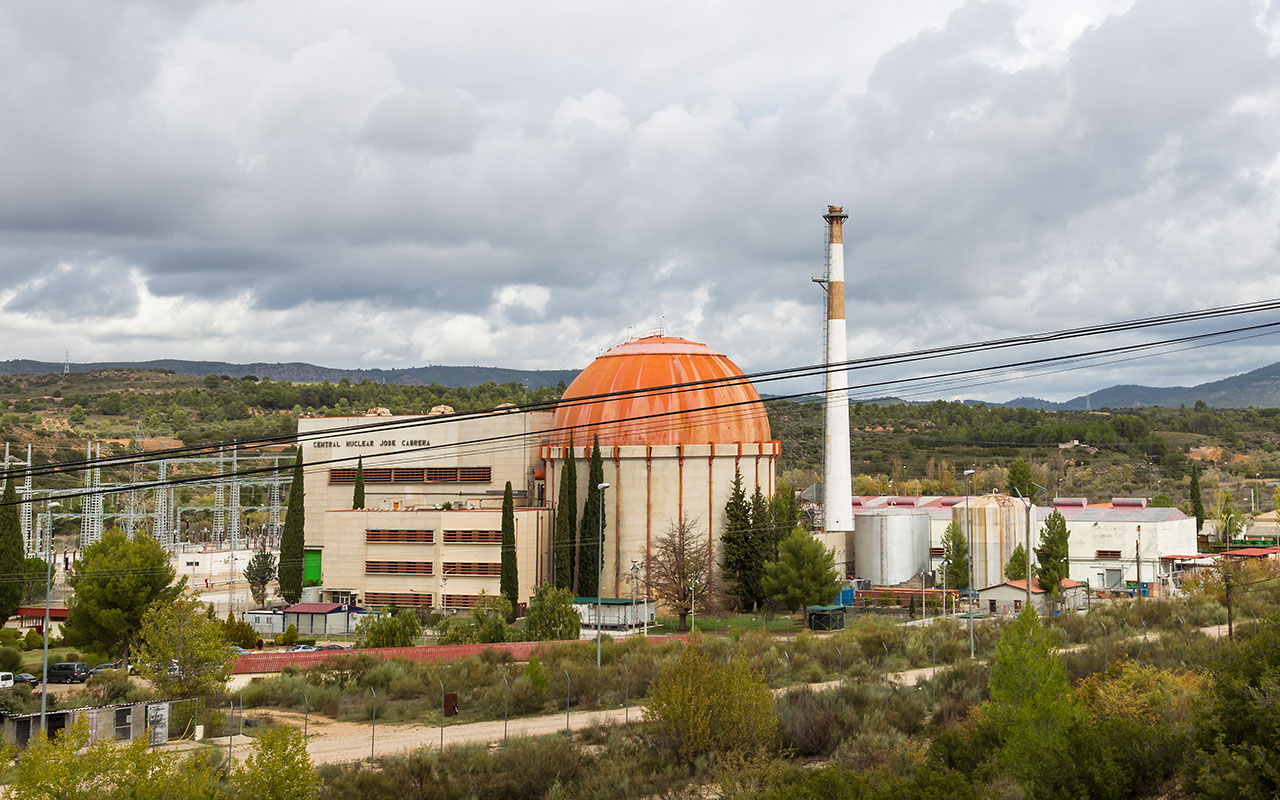
After 38 years of operation, José Cabrera Nuclear Power Plant became one of the most significant decommissioning projects in Europe. Detailed planning of individual stages, including reactor pressure vessel segmentation, played an important role in the project.
The key document of the entire process is the decommissioning plan. This document describes the selected strategy, technical procedures, safety measures, waste management approach, cost estimates, and the intended final site condition. At the same time, it must demonstrate that decommissioning can be carried out safely, efficiently, and in compliance with regulatory requirements.
The decommissioning plan evolves progressively throughout the lifecycle of the facility. Initially, a preliminary plan is prepared containing the basic assumptions and general estimates for future decommissioning. During operation, the plan is regularly updated according to operational experience, technical modifications, and developments in available technologies. Following permanent shutdown, a final decommissioning plan is prepared and serves as the principal basis for obtaining authorization for the decommissioning process itself.
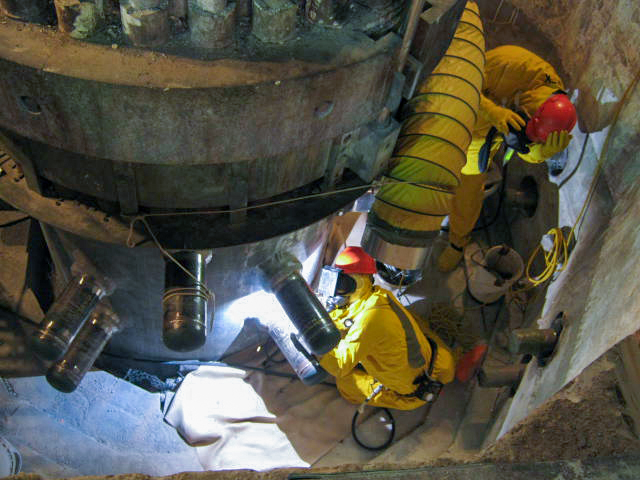
Before dismantling activities at the Heavy Water Components Test Reactor could begin, it was necessary to precisely document the technical condition of the facility and incorporate this information into the final decommissioning plan.
Planning also includes detailed records of equipment, structures, operational modifications, radiological data, and historical documentation. Accurate documentation is essential for planning safe dismantling activities and for reliable estimates of the quantities of waste generated. Loss of documentation or specialist knowledge may significantly complicate the entire process and substantially increase costs.
Modern decommissioning planning increasingly relies on digital technologies such as 3D modelling, laser scanning, and digital equipment databases. These tools make it possible to better prepare individual work procedures, optimise logistics, and improve worker safety.
In some decommissioning projects, the original plant documentation was incomplete, forcing engineers to reconstruct parts of the facility using 3D laser scanning.
(IAEA — Digital Technologies in Decommissioning)
Facilitating Future Decommissioning
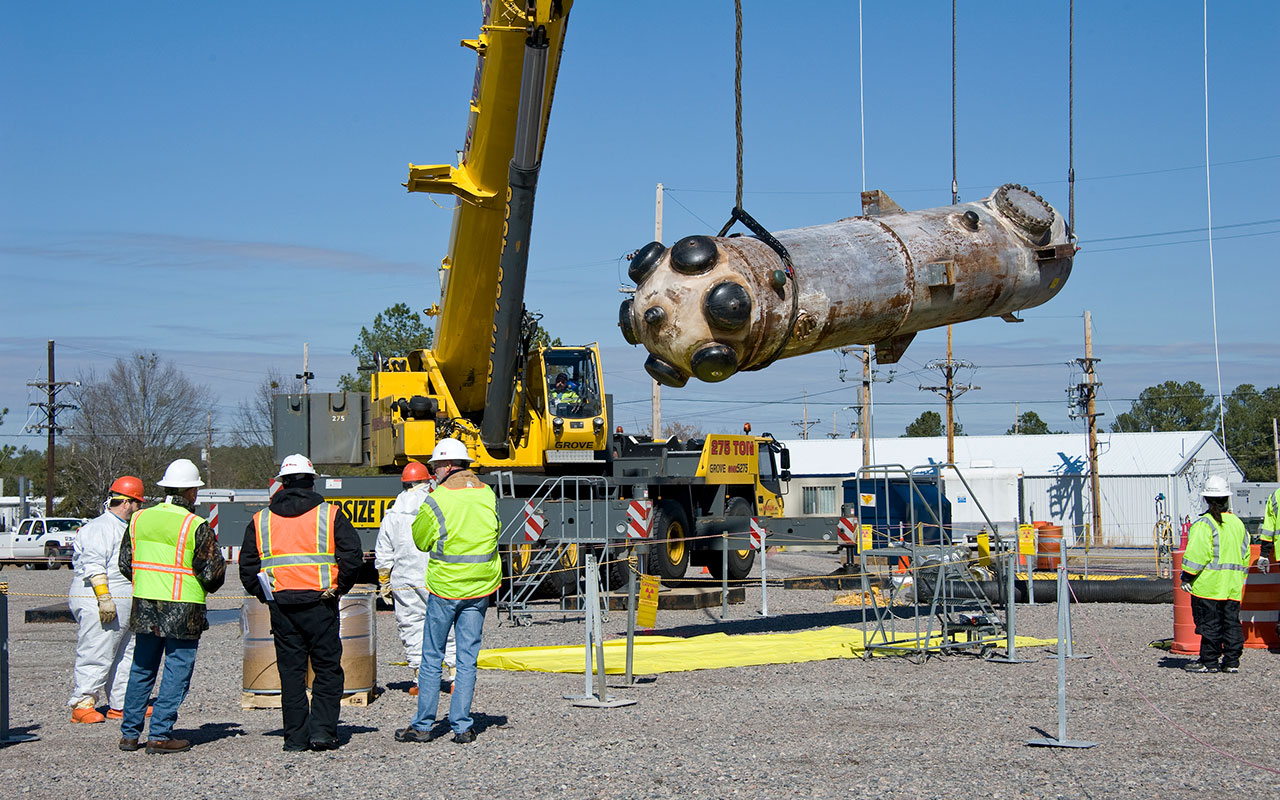
Facilitating future decommissioning may also include the gradual removal of large components already during preparatory activities. The image shows the handling of part of the reactor equipment of the Heavy Water Components Test Reactor during dismantling activities.
Experience gained from previous decommissioning projects has shown that future decommissioning activities can be significantly simplified already during the design and operation of a nuclear facility. The modern approach known as design for decommissioning therefore takes future decommissioning requirements into account from the earliest stages of facility design.
An important role is played, for example, by the appropriate selection of construction materials, minimising unnecessarily complex systems, and designing sufficient access routes for the future dismantling of large equipment and components. The separation of radioactive and non-radioactive parts of the facility is also important, as it facilitates material segregation and reduces the volume of radioactive waste.
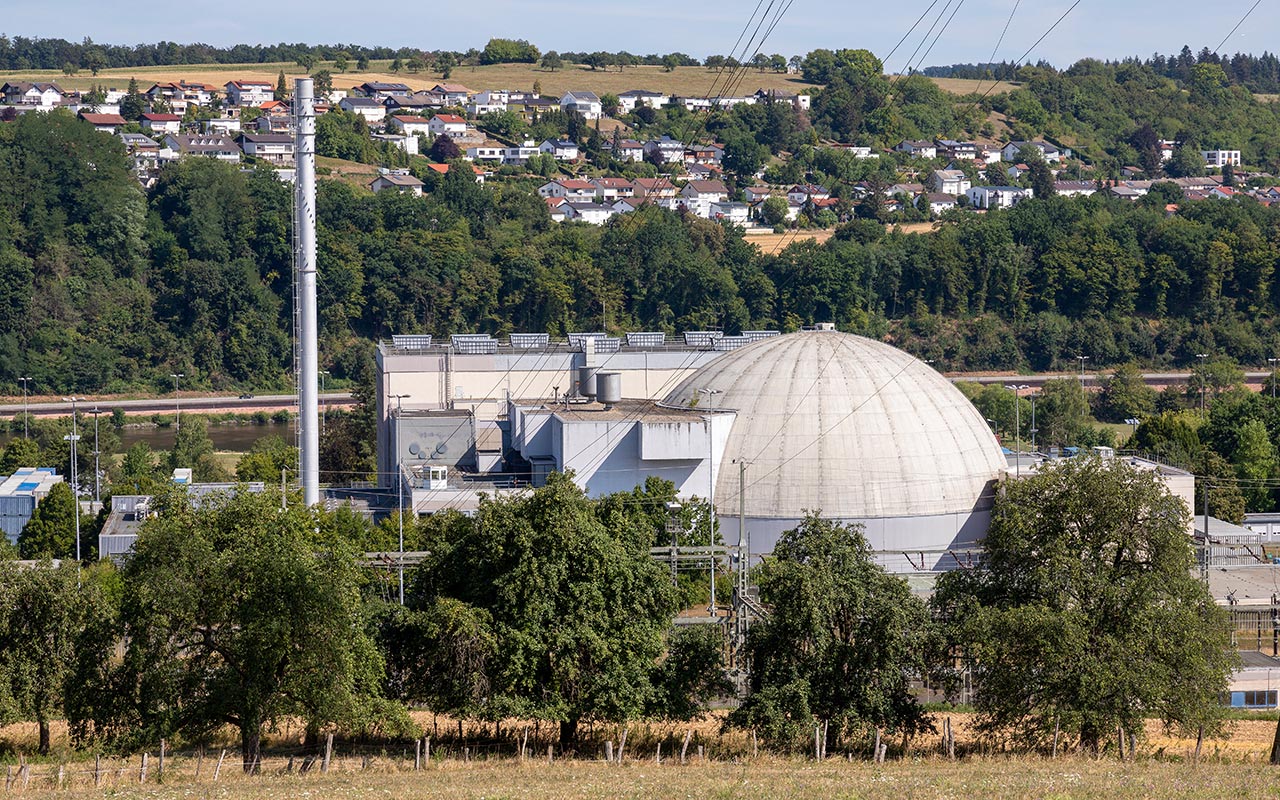
The way a nuclear facility is operated (here Obrigheim Nuclear Power Plant) can significantly influence the complexity of its future decommissioning. An important role is played by the level of activation and contamination of materials.
However, facilitating future decommissioning does not depend solely on facility design. The manner of operation throughout the entire lifetime of the plant is equally important. This includes regular decontamination of systems, continuous waste processing, and long-term preservation of technical documentation and operational records.
Preservation of specialist knowledge and personnel experience is also of great importance. Information about facility operation, implemented modifications, or historical events may be highly valuable during decommissioning and can significantly contribute to improving both the safety and efficiency of the entire process.
At the Greifswald nuclear site in Germany, full-scale mock-ups and virtual reality simulations were used to prepare complex dismantling operations.
(Greifswald Nuclear Power Plant — Decommissioning Projects)