








Early Fusion Research
5 min read

Could the Sun be made of burning coal?
Since ancient times, people have wanted to know why stars shine. The only familiar source of heat and light was fire, yet stars clearly could not simply be burning like ordinary fuel. A calculation published in Scientific American in 1863 showed that if the Sun were made of coal, it could shine for only about 5,000 years. There therefore had to be another, far more powerful source of energy.
Matter Equals Energy
Einstein’s famous equation, published in 1905, showed that mass and energy are equivalent. In 1920, British physicist Francis William Aston demonstrated that four hydrogen nuclei have a slightly greater mass than one helium nucleus, although both contain the same total number of nucleons. The missing mass could therefore be released as energy.
In the same year, Arthur Eddington proposed that stars obtain their energy by converting hydrogen into helium and suggested that heavier elements might also be formed in stellar interiors. Hans Bethe later developed the detailed theory of the proton–proton chain that powers stars like the Sun and the CNO cycle important in more massive stars; he received the Nobel Prize in Physics in 1967 for this work.
First Man-Made Fusion
With the development of particle accelerators in the early 1930s, experiments began to test the fusion idea directly. At the Cavendish Laboratory in Cambridge, Mark Oliphant, Paul Harteck and Ernest Rutherford bombarded deuterium-containing targets with deuterons. In 1934 they demonstrated deuterium–deuterium fusion and identified tritium and helium-3 among the reaction products, achieving the first laboratory demonstration of nuclear fusion.
Rutherford recognised that this approach could not produce net energy because the energy required to accelerate the particles greatly exceeded the fusion energy released. Nevertheless, the essential point had been demonstrated: fusion reactions could be produced artificially. The next challenge was to find a way to release fusion energy efficiently and on a useful scale.
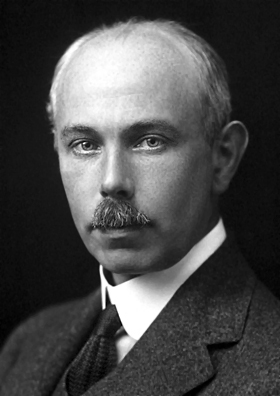
Francis William Aston.
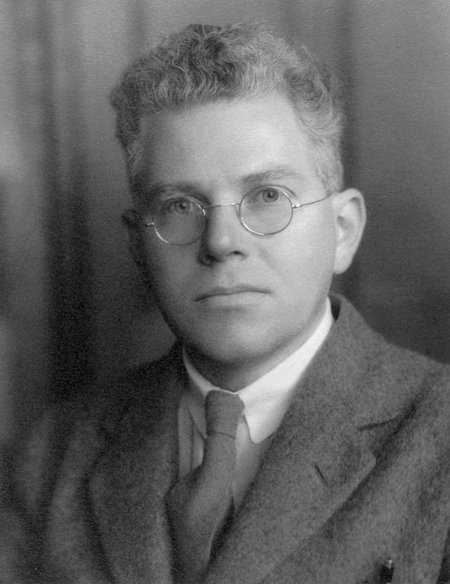
Mark Oliphant.
Early Attempts
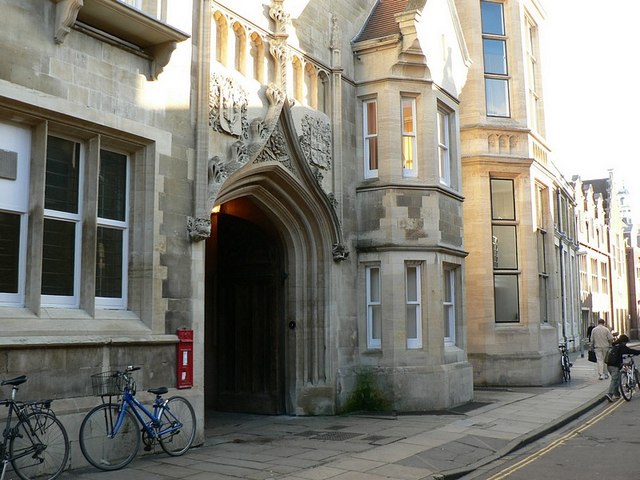
Entrance to the Cavendish Laboratory, where the first laboratory fusion experiments were performed us-ing a particle accelerator.
One of the earliest attempts to build a device for controlled fusion took place in 1938 at the National Advisory Committee for Aeronautics’ Langley Memorial Aeronautical Laboratory. Physicist Arthur Kantrowitz, working with his supervisor Eastman Jacobs, proposed a toroidal magnetic-confinement device intended to heat and confine plasma at temperatures high enough for thermonuclear fusion.
The machine, codenamed the “Diffusion Inhibitor”, consisted of a toroidal chamber surrounded by copper coils that generated a confining magnetic field. It was made largely from aircraft sheet metal and measured about 3.6 metres across. Its plasma was heated by radio-frequency power. Kantrowitz and Jacobs produced a glow discharge and observed plasma instabilities before NACA director George William Lewis discovered the project during a visit to the laboratory. Lewis was unconvinced by the results and ordered the experiment to be shut down. Kantrowitz and Jacobs did not return to fusion research afterwards.
Start of Research
The Second World War interrupted much of the early work on controlled fusion, while nuclear fission became a major focus because of its military and later energy applications. After the war, research into fusion resumed. Early plasma experiments drew on concepts such as the betatron and magnetic pinch, and attention turned both to thermonuclear weapons and to the possibility of controlled fusion for energy production. The rapid development of fission reactors encouraged hopes that controlled fusion might also become a practical source of energy within a relatively short time.
Huemul Project
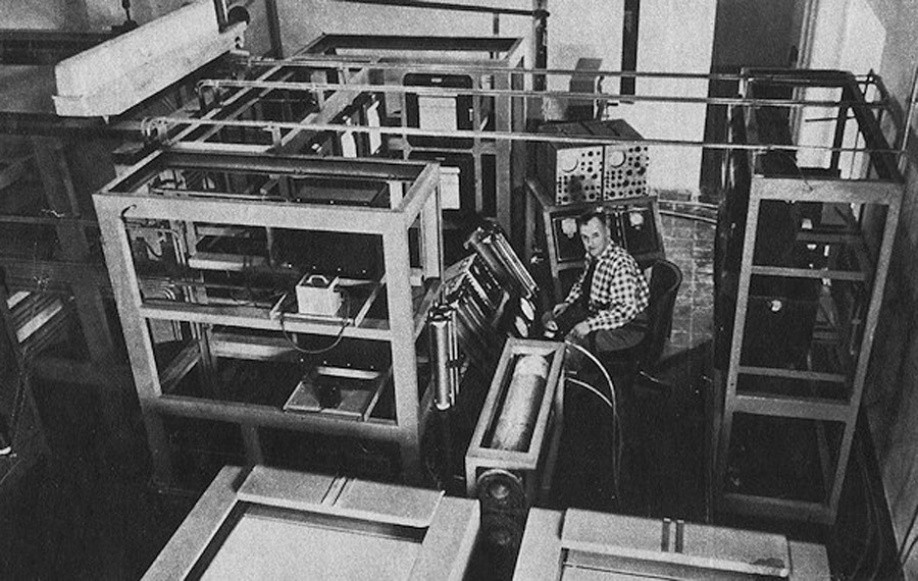
Ronald Richter working on the Huemul Project.
In 1951, Argentina announced that controlled thermonuclear fusion had been achieved in the Huemul Project led by Ronald Richter. The claimed reaction was supposed to take place in a device called a thermotron on Huemul Island. The announcement attracted worldwide attention because controlled fusion research elsewhere was still at a very early stage.
The details of the machine were not initially disclosed, and subsequent investigations showed that the claims could not be substantiated and that the device had not achieved controlled fusion. Nevertheless, President Juan Perón’s highly publicised announcement attracted international attention and helped stimulate fusion research in several countries.
The Argentine announcement helped inspire Lyman Spitzer to develop the stellarator concept in 1951. His idea led to Project Matterhorn at Princeton and to the construction of the Model A stellarator soon afterwards.
Lavrentiev’s Letter
Meanwhile, in 1950, the young Soviet scientist Oleg Alexandrovich Lavrentiev, then serving in the military on Sakhalin, wrote to the Central Committee of the CPSU outlining ideas for both a thermonuclear weapon and a controlled-fusion device based on electrostatic confinement. His proposal attracted the attention of Andrei Sakharov, who discussed the problem with Igor Tamm. Their subsequent work on magnetic confinement helped lead to the development of the tokamak concept. Argentina’s 1951 announcement further accelerated Soviet work on controlled thermonuclear fusion.