


Three Mile Island
6 min read
Video animation illustrating the course of the accident at Unit 2 of the TMI nuclear power plant (also available in the Free Downloads section).
You can view the interactive 3D model of the Three Mile Island nuclear power plant online.
Online 3D Model › PWR Reactor (Three Mile Island)
Free Downloads › Online 3D › PWR Reactor (Three Mile Island)
The Three Mile Island nuclear power plant is located near Harrisburg, Pennsylvania, USA, and originally consisted of two pressurised water reactor (PWR) units. Unit 1 began commercial operation in 1974 and operated for more than 40 years before shutting down in 2019. Plans are currently under way to return the unit to operation. Unit 2 began commercial operation in 1978, but on 28 March 1979, only a few months later, it suffered a serious accident involving a partial meltdown of the reactor core. The unit never operated again and is being decommissioned.
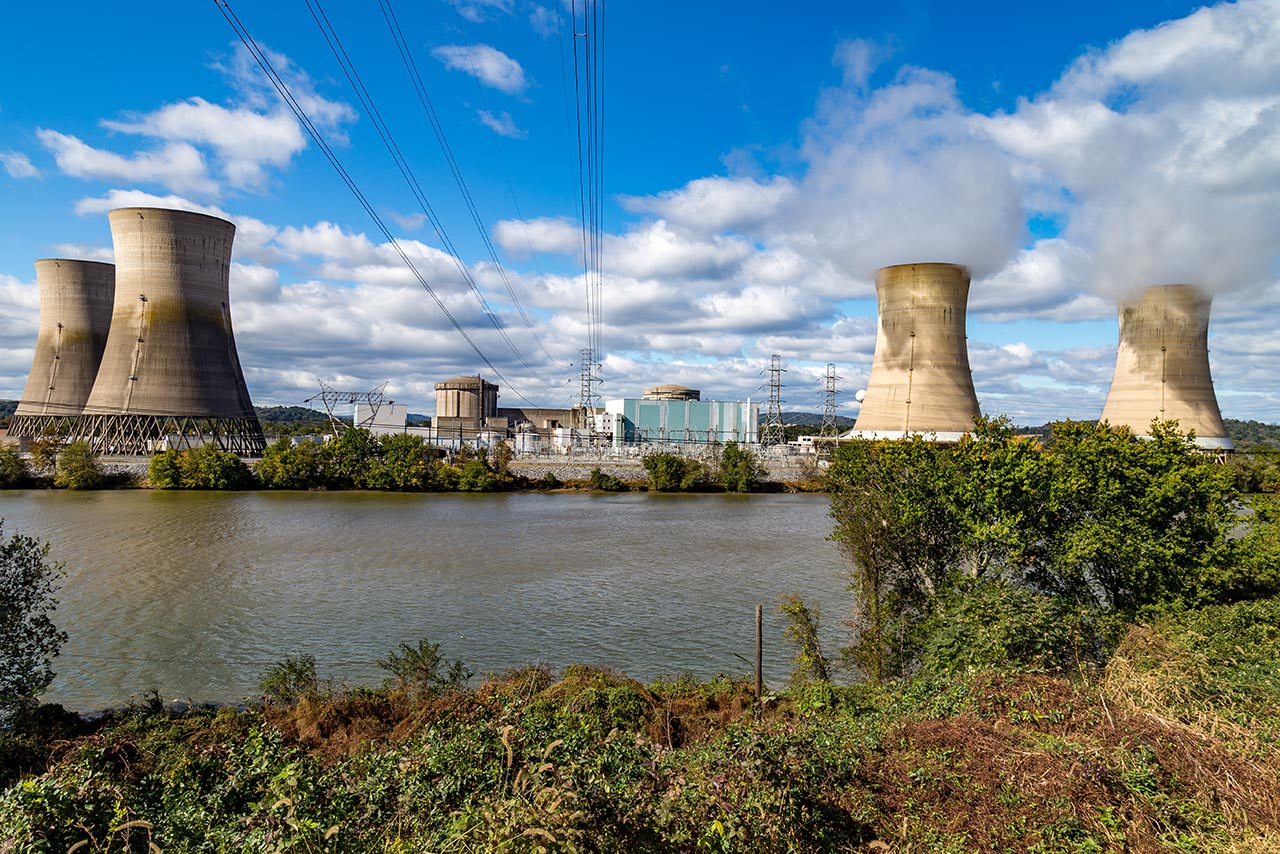
The Three Mile Island nuclear power plant was named after the island on which it is located, about three miles downstream from Middletown on the Susquehanna River in Pennsylvania, USA.
The accident began at about 4 a.m. on 28 March 1979 with a failure in the secondary system that interrupted the flow of feedwater to the steam generators. The turbine tripped and, as temperature and pressure increased in the primary circuit, the reactor automatically shut down. A power-operated relief valve (PORV) on the pressuriser opened to reduce the rising pressure. When the pressure subsequently fell, the valve should have closed, but it became stuck open. The control-room indication nevertheless showed that the electrical signal to close the valve had been sent, not its actual mechanical position. Coolant therefore continued to escape through the open valve, creating a small loss-of-coolant accident.
As the primary circuit pressure fell, the emergency core cooling system automatically injected additional water. At the same time, steam voids formed in the reactor coolant system, causing the water level indicated in the pressuriser to rise even though the total amount of coolant in the system was decreasing. The operators had no direct indication of the water level in the reactor vessel and, believing that the pressuriser was becoming too full, reduced the emergency injection of water. They were also unaware that the relief valve remained open. As coolant continued to escape, parts of the reactor core became uncovered and overheated, causing severe fuel damage and a partial core meltdown.
Radioactively contaminated water discharged through the stuck relief valve eventually entered the containment sump. Some of this water was automatically pumped to the auxiliary building outside the containment, where radioactive gases released from the water passed through the building ventilation system and into the atmosphere. The vast majority of radioactive material nevertheless remained confined within the plant.
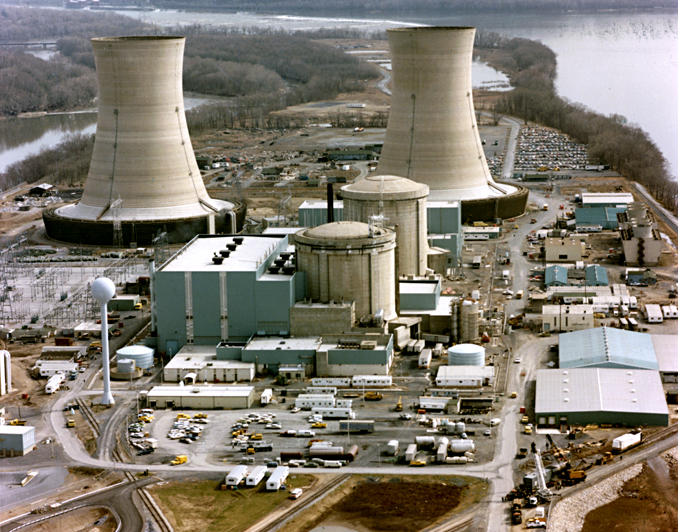
Containments and operational buildings of Units 1 and 2 at the Three Mile Island Nuclear Power Plant. The cooling towers in the background belong to the decommissioned Unit 2.
The accident was later rated Level 5 on the INES scale. It resulted from a combination of equipment failures, design deficiencies, inadequate control-room indications, shortcomings in operating procedures and training, and inappropriate operator actions. The emergency core cooling system initially responded as designed, but operators reduced its operation because they misinterpreted the information available to them. Investigations of the accident therefore demonstrated that nuclear safety depends not only on reliable equipment, but also on human factors, clear instrumentation, effective procedures and operator training.
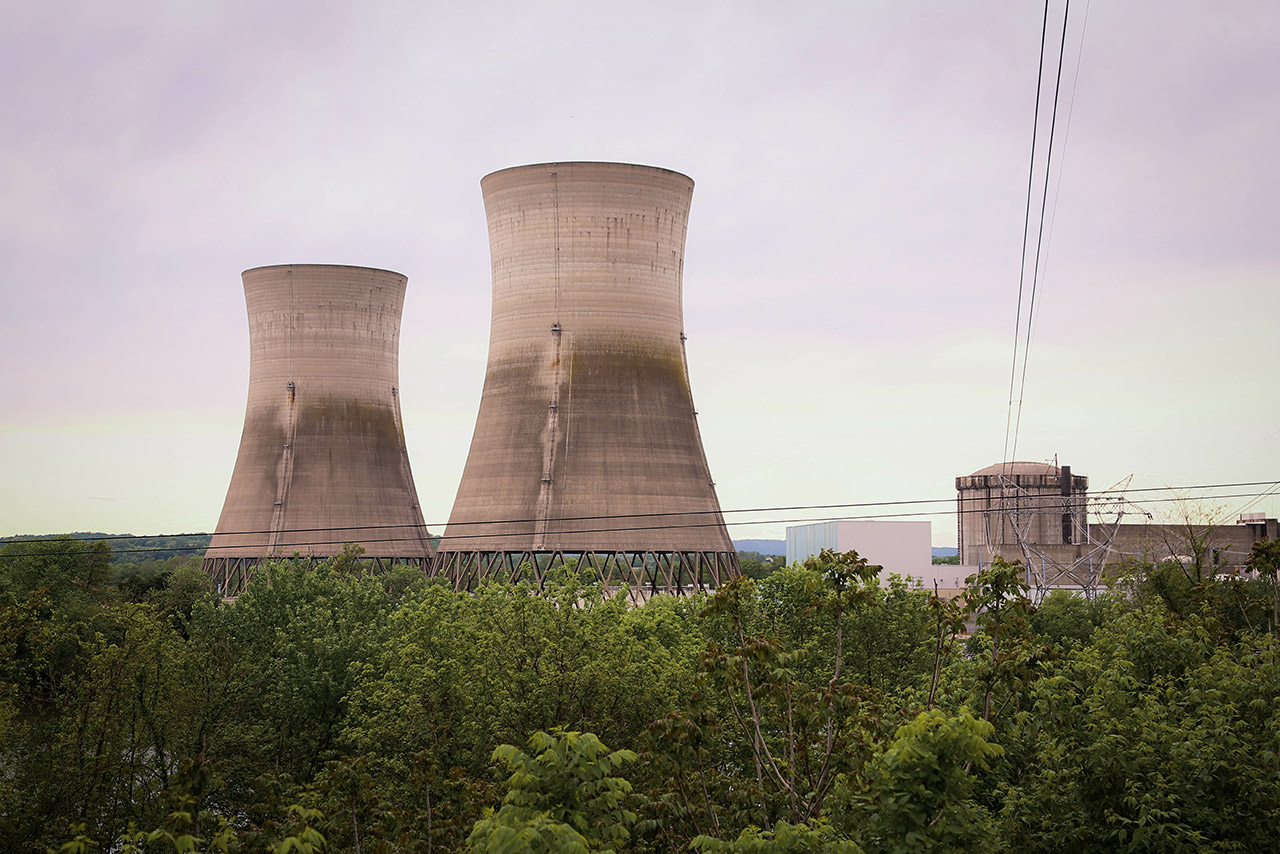
Night view of the cooling towers of Unit 1 at the Three Mile Island nuclear power plant. The TMI-2 accident led the US nuclear industry to establish the Institute of Nuclear Power Operations (INPO) in 1979. INPO promotes high standards of nuclear power plant operation through training, performance evaluation, operating experience and the sharing of good practices.
The releases of radioactive material from the accident had negligible radiological effects on the surrounding population and environment. The NRC estimated that the average additional dose to approximately two million people living near the plant was about 0.01 mSv, while the maximum potential dose to an individual at the site boundary was less than 1 mSv. Numerous health studies conducted after the accident found no detectable health effects that could be attributed to radiation exposure from Three Mile Island.
Communication during the accident was initially confused and sometimes contradictory, contributing to considerable public concern and uncertainty. No general mandatory evacuation was ordered, although the Governor of Pennsylvania advised pregnant women and young children within five miles of the plant to leave the area temporarily, and many other residents also chose to leave. The accident received intense media attention. Coincidentally, the film The China Syndrome, which depicted a fictional nuclear power plant accident, had been released only 12 days earlier and contributed to the wider public debate about nuclear safety.
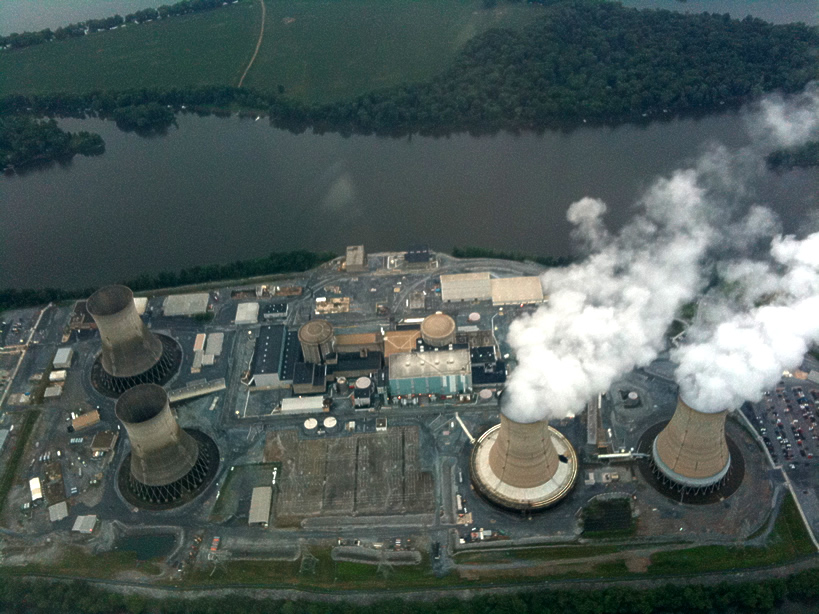
June 2010 photograph of the Three Mile Island Nuclear Power Plant, showing the deactivated Unit 2 on the left and Unit 1 on the right, which has been offline since September 2019.
The cleanup of TMI-2 lasted from 1979 until 1993 and cost approximately USD 1 billion. Most of the damaged fuel and core debris was eventually removed and transported to a US Department of Energy facility in Idaho. Unit 2 was never restarted and is now being decommissioned. The accident led to major changes in nuclear regulation, operator training, control-room design, emergency planning and the treatment of human factors throughout the nuclear industry.
The full extent of the TMI-2 core damage was not known during the accident. Only later investigations revealed that approximately half of the reactor core had melted.

