





Why Does It Work?
3 min read
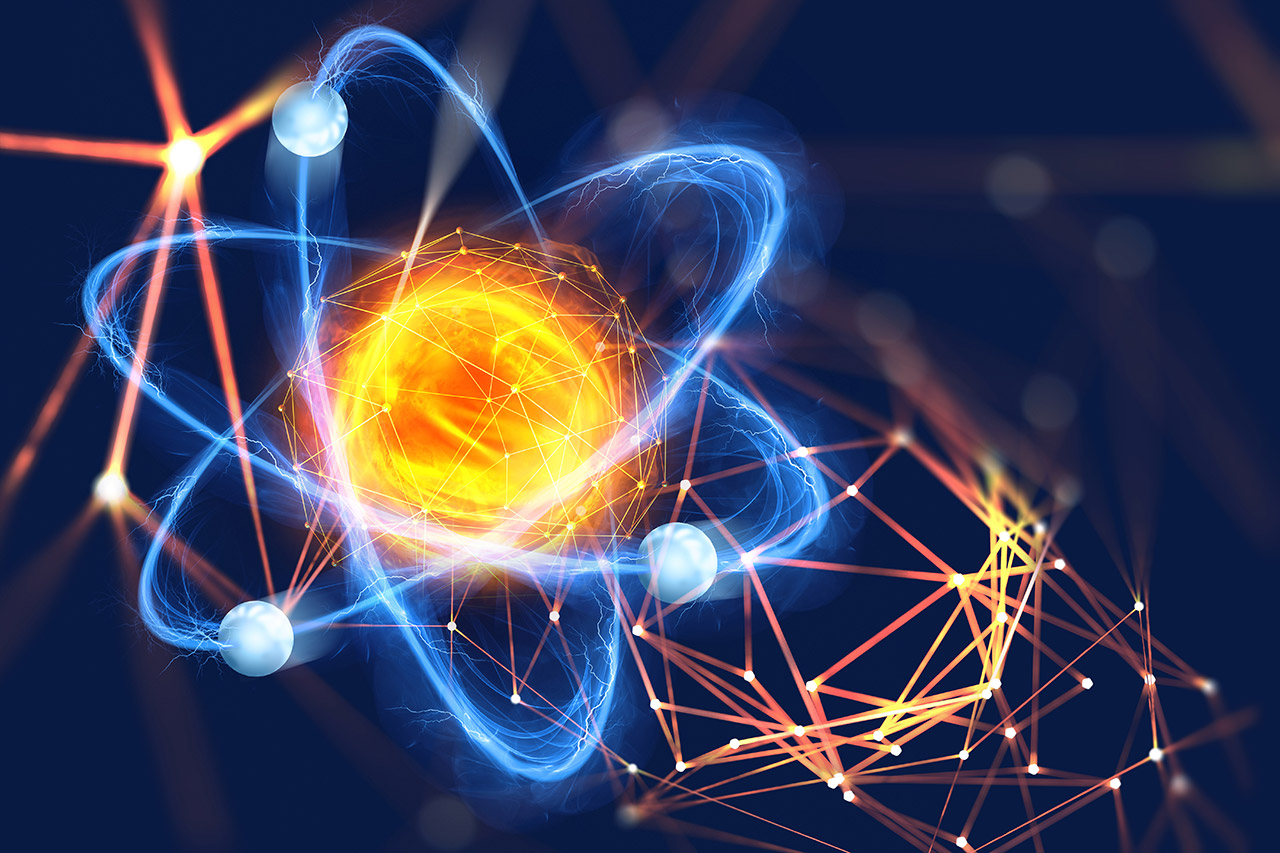
An atom consists of a nucleus composed of protons and neutrons, surrounded by electrons. Protons and neutrons (collectively known as nucleons) are held together by the strong nuclear forces. This force is very strong but acts only over very short distances. In contrast, the electrostatic force between positively charged protons is repulsive and acts over much longer distances.
In order to separate nucleons from a nucleus, energy is needed. This energy is called nuclear binding energy. The mass of a nucleus is smaller than the combined mass of its separate nucleons. This difference, called the mass defect, corresponds to the nuclear binding energy according to Einstein’s equation E = mc2. Different nuclei have different binding energies per nucleon.
Light Atoms
In light nuclei, the binding energy per nucleon generally increases with increasing mass. This is because each additional nucleon can interact strongly with other nearby nucleons and become more tightly bound. Some nuclei, such as helium-4 or oxygen-16, are particularly stable because their numbers of protons and neutrons form complete nuclear shells.
As nuclei become heavier, the binding energy per nucleon continues to increase, reaching its maximum in the region of iron and nickel. Beyond this region, it gradually decreases because the short-range nuclear attraction can no longer fully compensate for the increasing electrostatic repulsion between the growing number of protons.
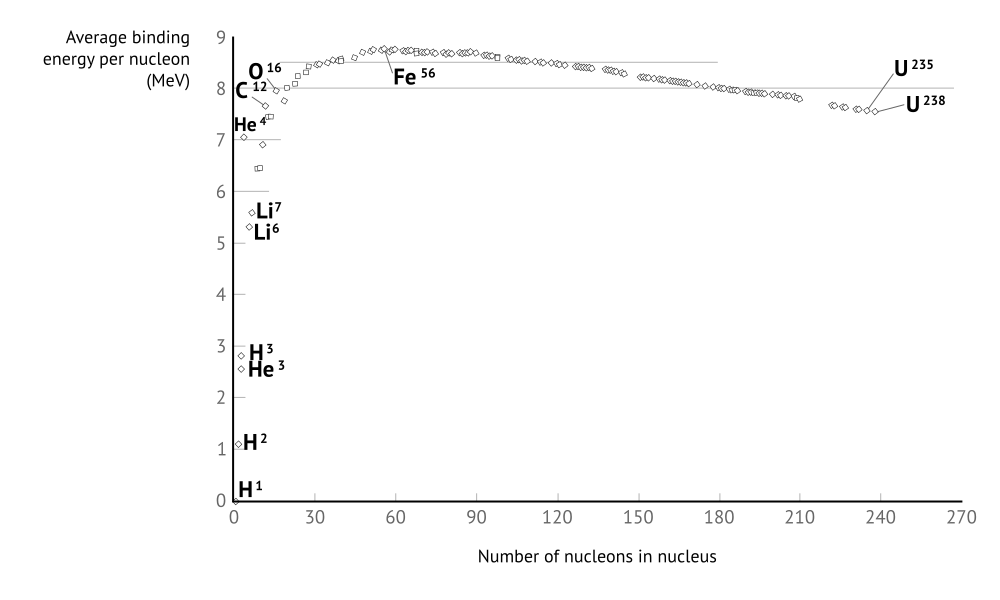
Binding energy per nucleon.
Heavy Atoms
In heavier nuclei, the increasing number of protons strengthens the electrostatic repulsion, while the short-range nuclear force acts mainly between neighbouring nucleons. As a result, the binding energy per nucleon gradually decreases beyond the iron-nickel region.
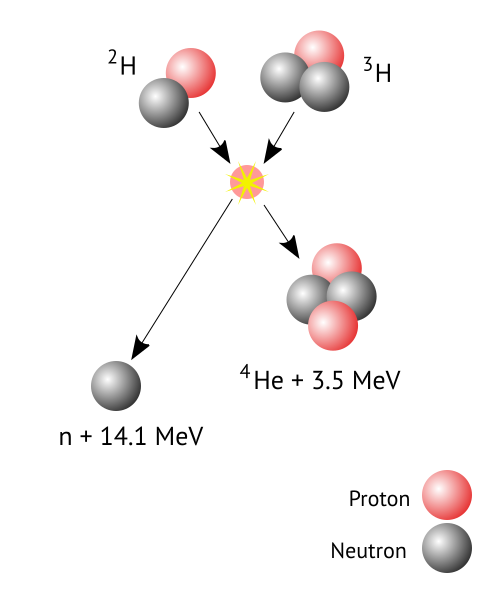
Scheme of deuterium-tritium fusion.
The point is that separating the nucleus of a light atom, such as helium, requires energy. Conversely, if light nuclei fuse to form a more tightly bound nucleus, energy is released. This remains energetically favourable as long as the resulting nuclei move towards the iron-nickel region of maximum binding energy per nucleon.
For heavy nuclei, the opposite process can release energy. Splitting a heavy nucleus into medium-mass nuclei with a higher binding energy per nucleon releases the difference as energy, while assembling such a heavy nucleus would require energy.
Fusion and Fission
Both processes can be used as sources of energy. Fission power plants rely on splitting the nuclei of fissile 235U and harnessing the released energy. Fusion of light nuclei can release even more energy per unit mass of fuel. When deuterium (hydrogen with one neutron) and tritium (hydrogen with two neutrons) fuse, the reaction releases about 17.6 MeV of energy. In comparison, the fission of one 235U nucleus releases about 200 MeV.
Recalculated per nucleon, the energy released is about 3.5 MeV for D-T fusion and about 0.85 MeV for 235U fission. Thus, ideal D-T fusion fuel can release roughly four times more energy per unit mass than 235U undergoing fission. The only challenge is to persuade the nuclei to fuse.